Category Archives: Main Gallery
What They Saw: Hoboken’s Amateur Photography Clubs 1889-1934
In the late 19th century, “camera fiends” roamed the streets of Hoboken. Lugging heavy tripods and glass negatives, these early enthusiasts captured a city in flux—from the salt-sprayed bustle of the waterfront to the smoky interiors of taverns and the sudden drama of collapsing buildings.
The Hoboken Historical Museum invites you to step into their shoes. This exhibit features rare, enlarged prints made from original glass negatives held in the collections of both the Museum and the Hoboken Public Library, revealing a city you thought you knew through the eyes of the people who lived it.
Exhibit Highlights:
-
The “Camera Fiends”: Discover the stories of a spirited cast of characters, including a police detective who photographed burglars’ tools and a rooftop photographer who later gained fame as a painter of Western scenes.
-
Vintage Tech: See the tools of the trade up close, from period-accurate cameras to a “magic lantern”—an early precursor to the modern projector.
-
Lost Hoboken: Experience the “insistent calamities” of the age, with vivid imagery of unpredictable storms, pervasive fires, and the evolving 19th-century streetscape.
The Hoboken Meadows
Jan. 26 - Dec. 23, 2025
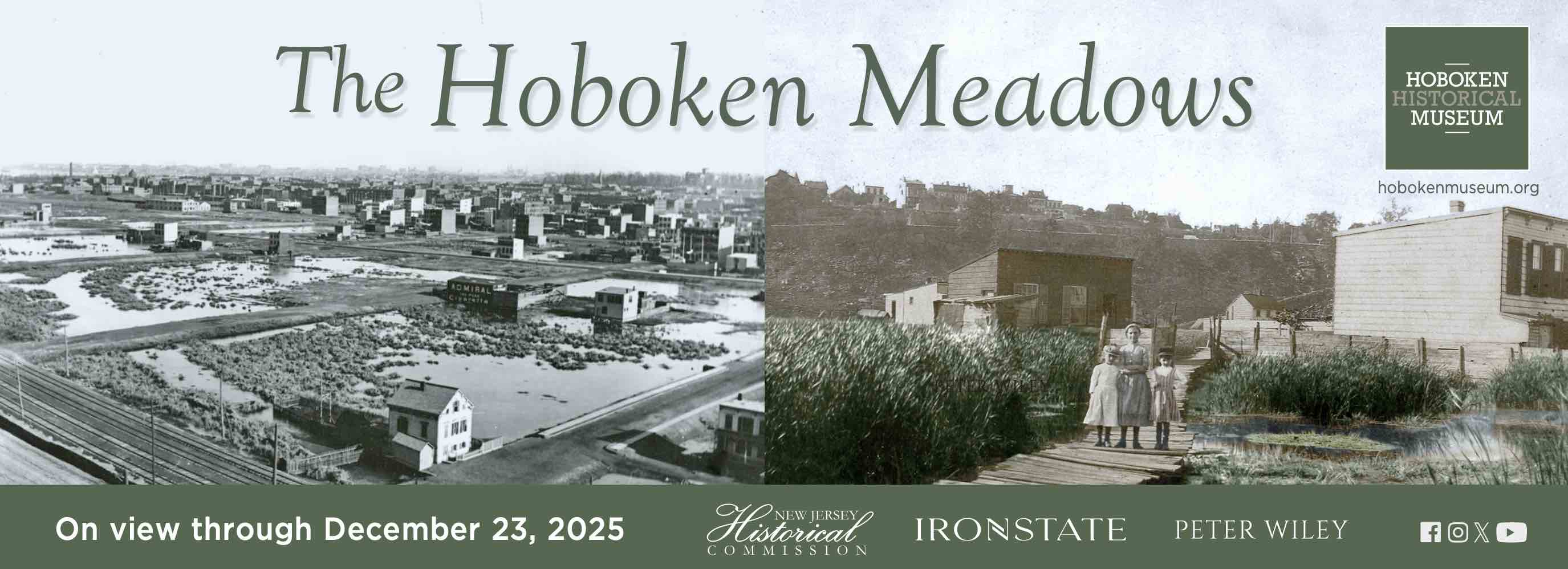
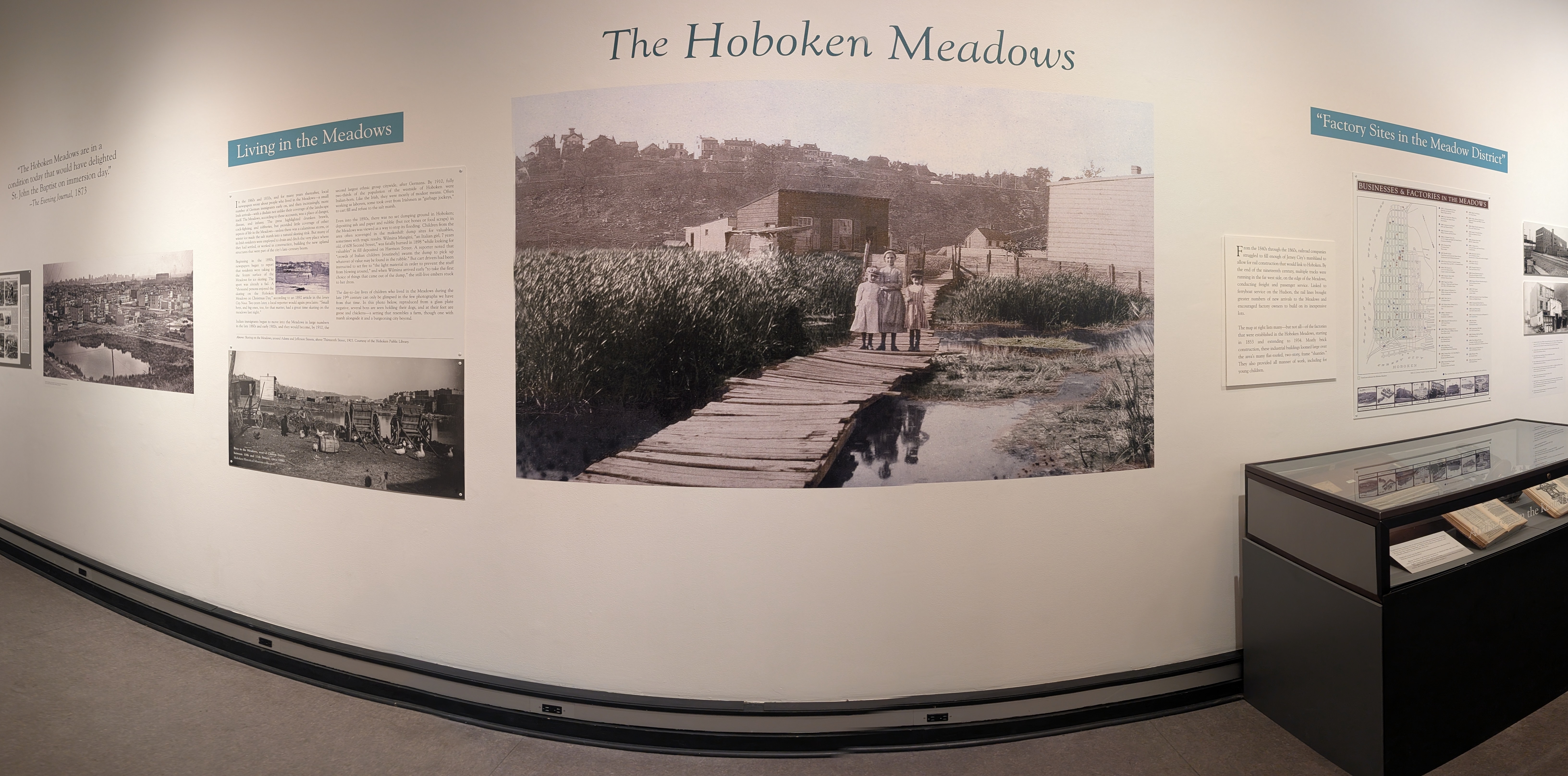
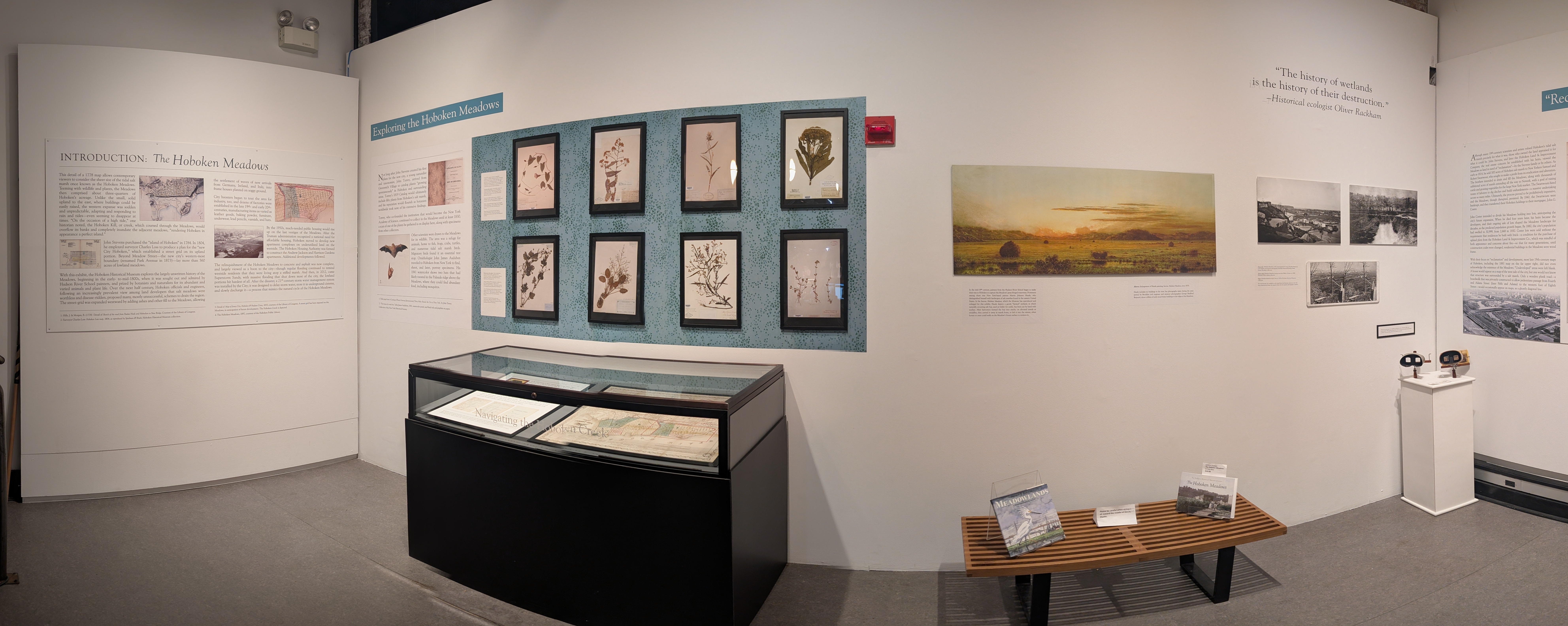
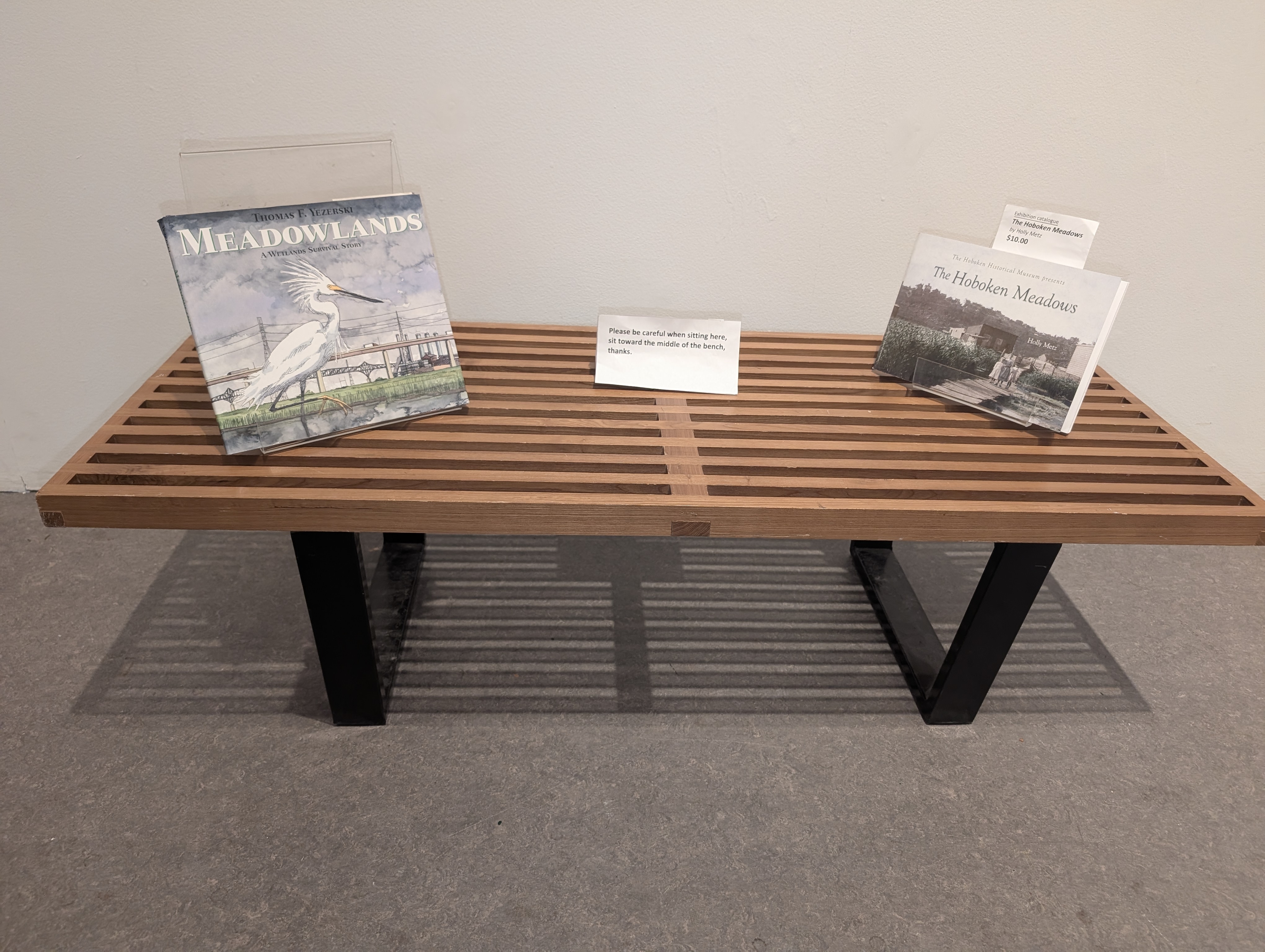
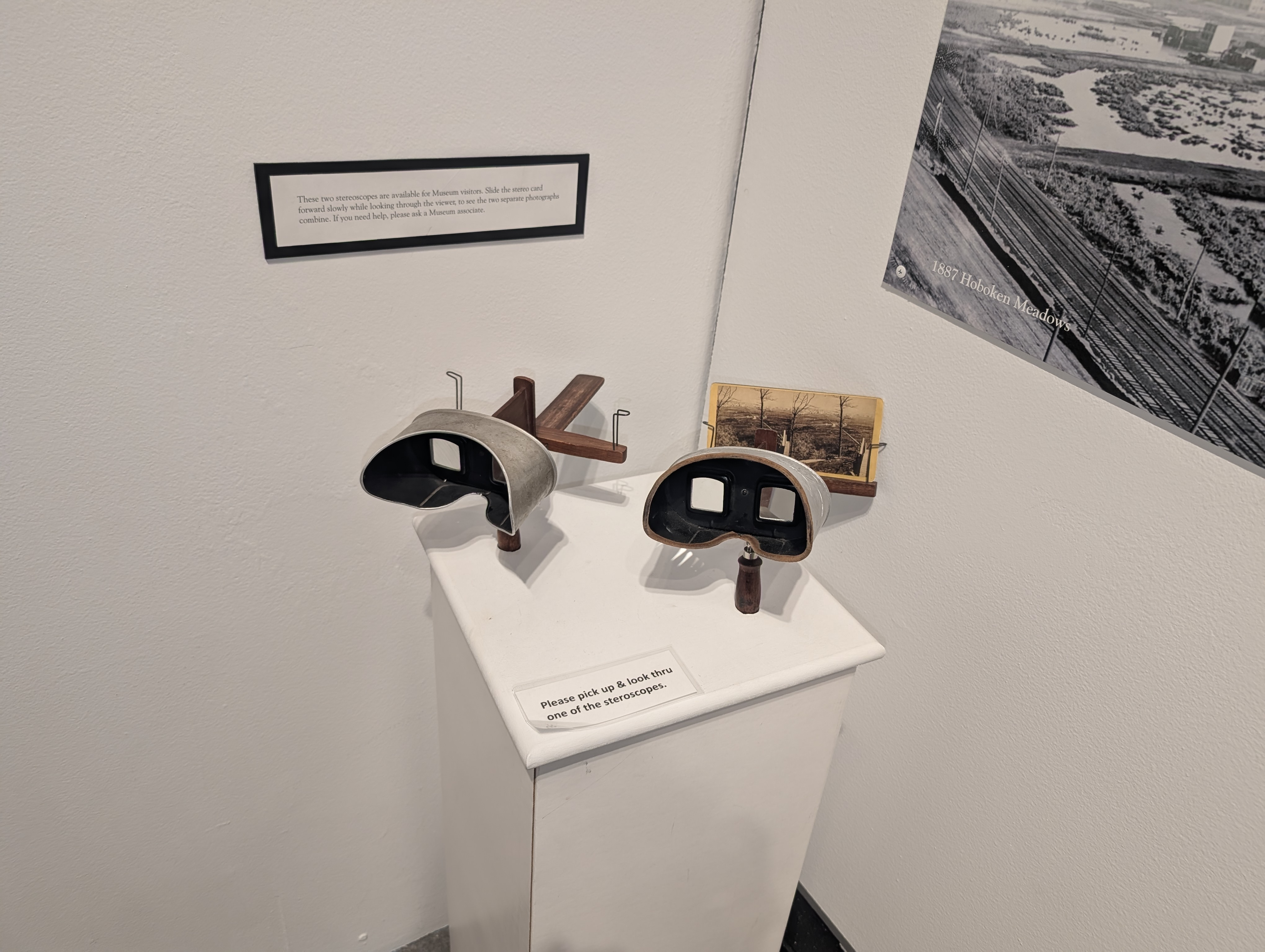
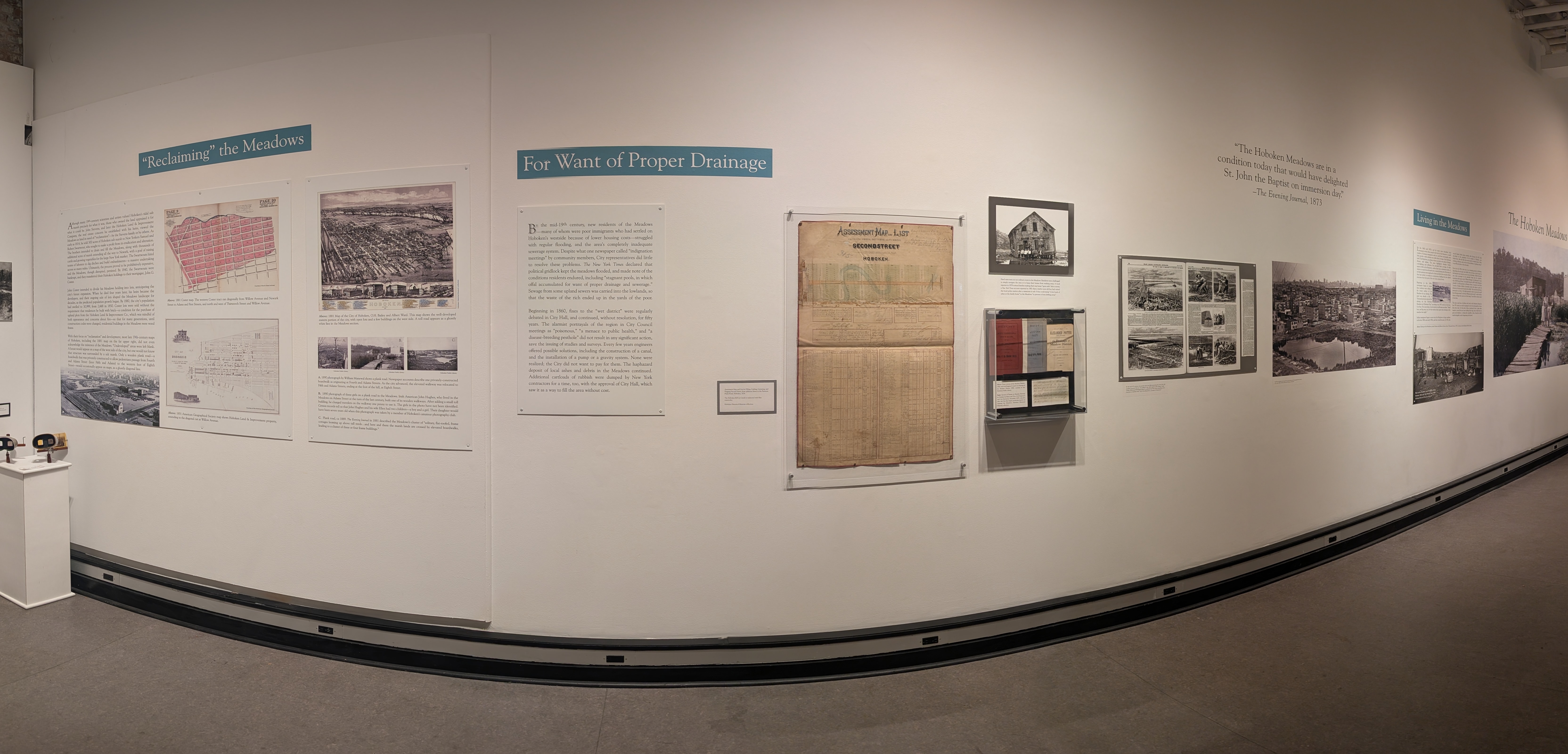
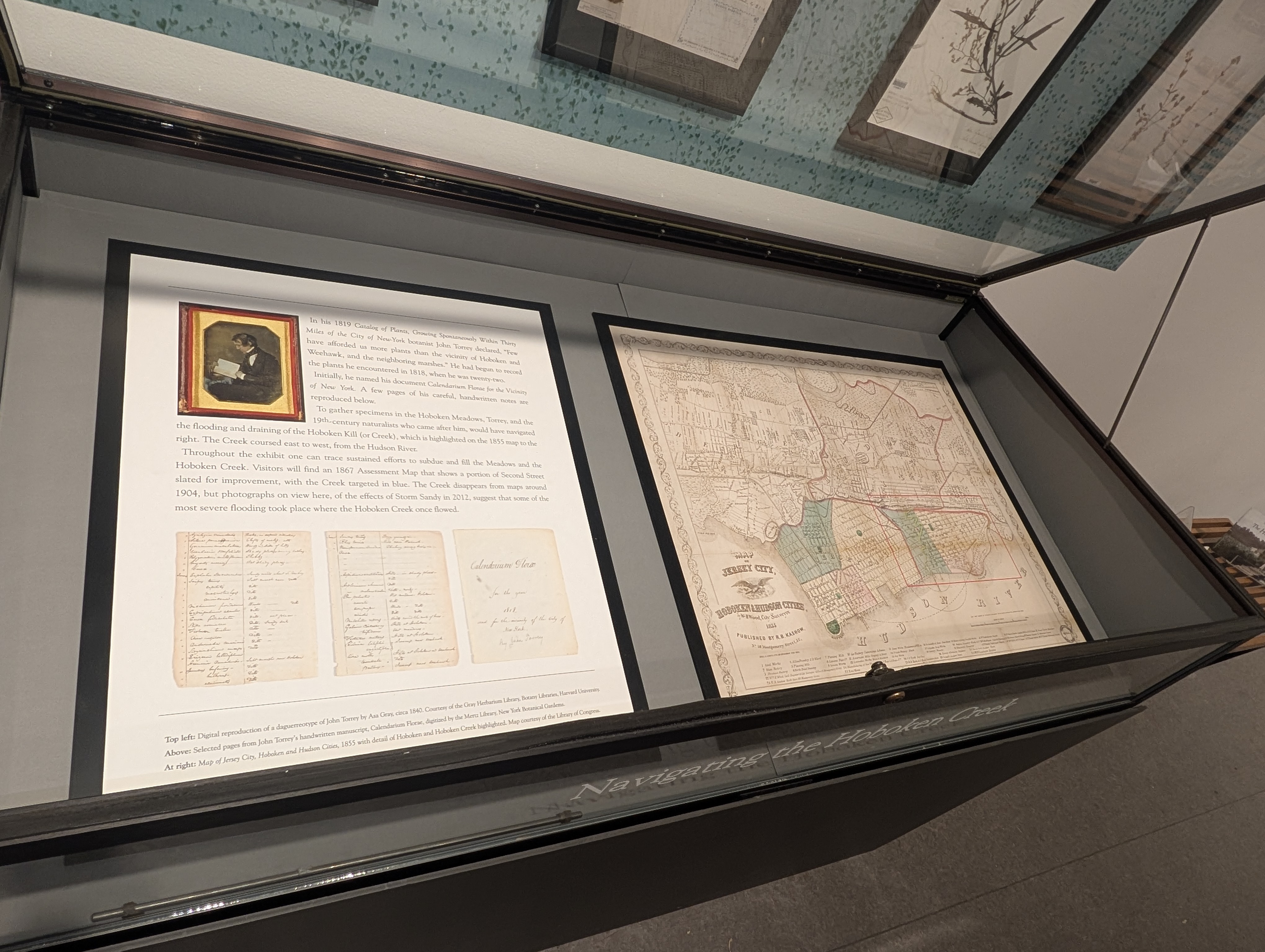
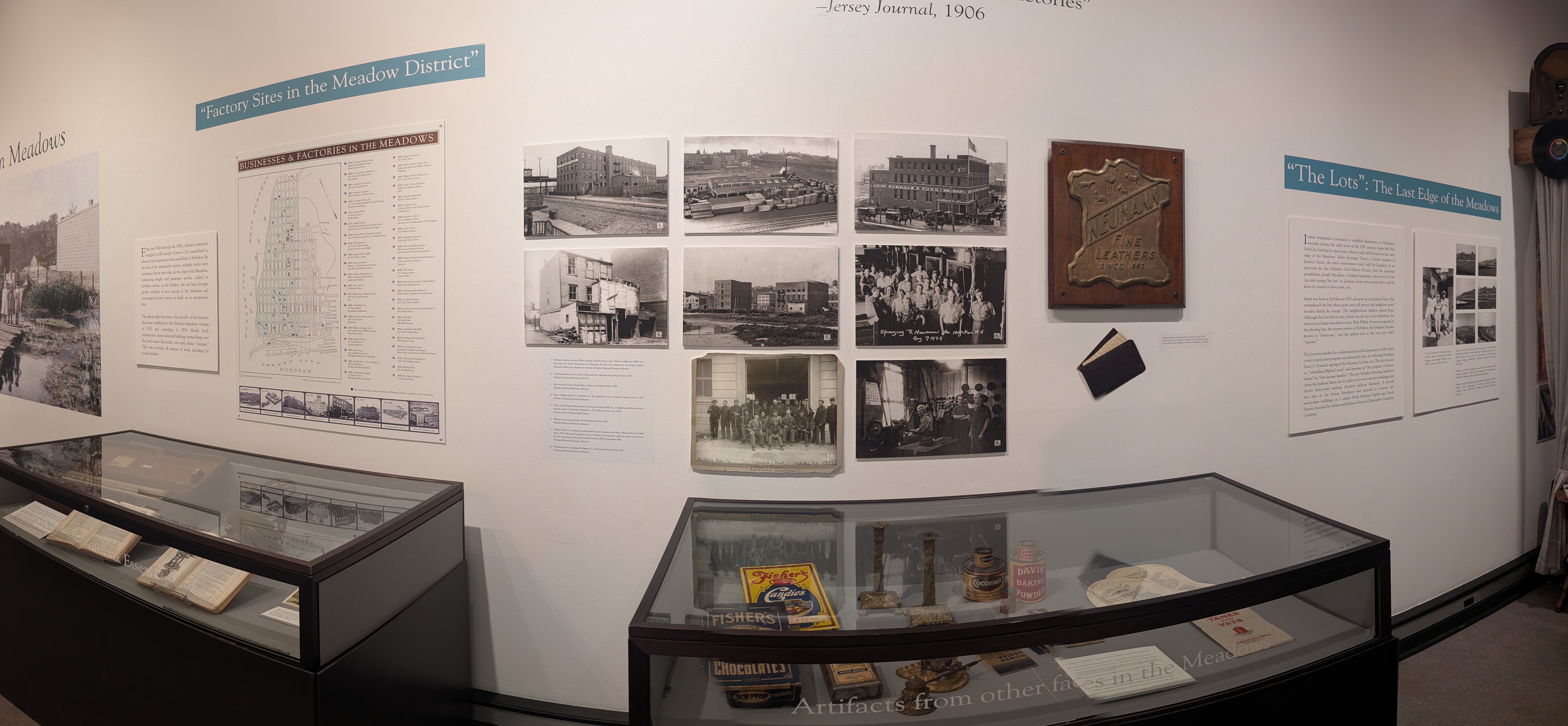
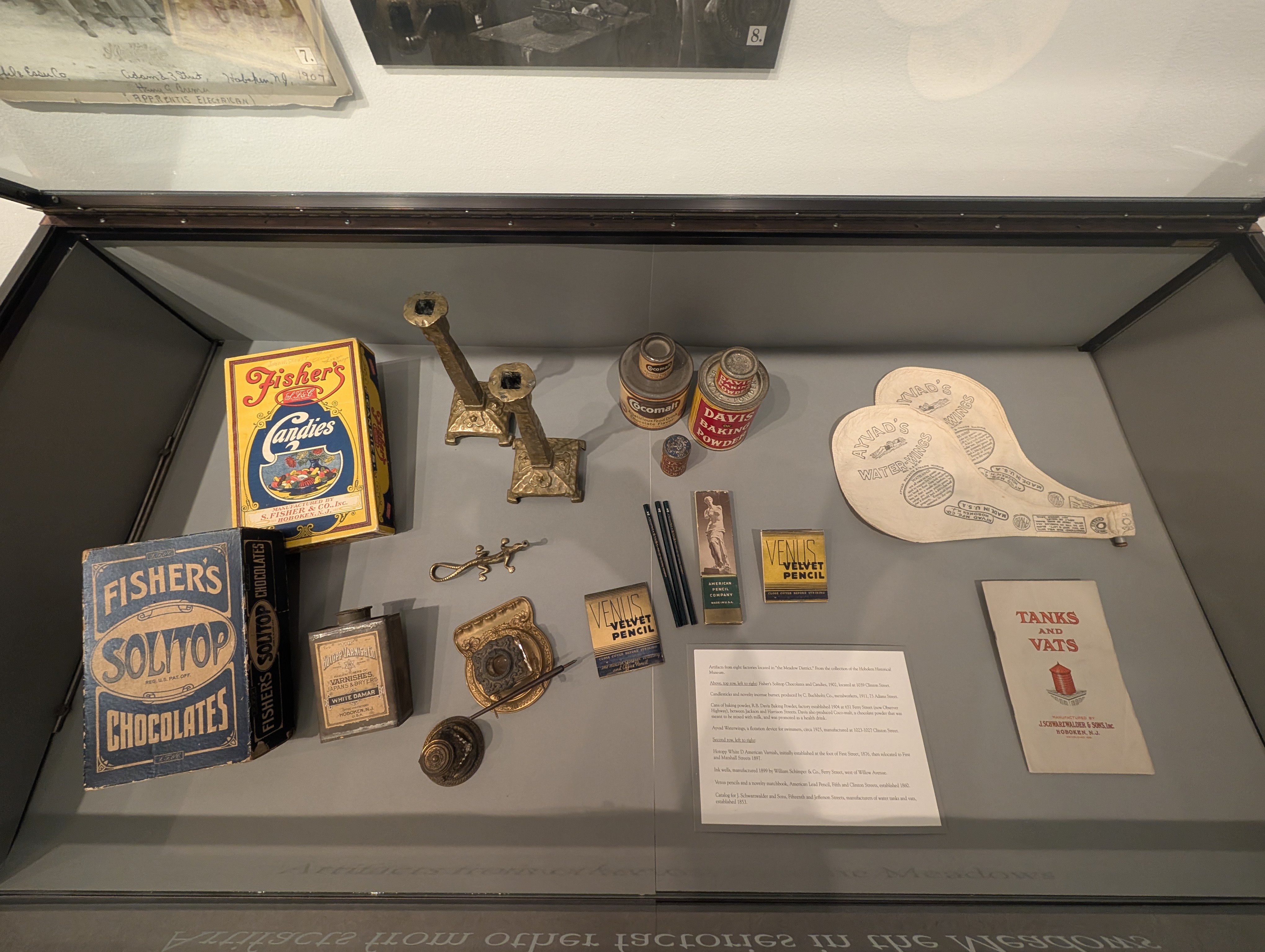
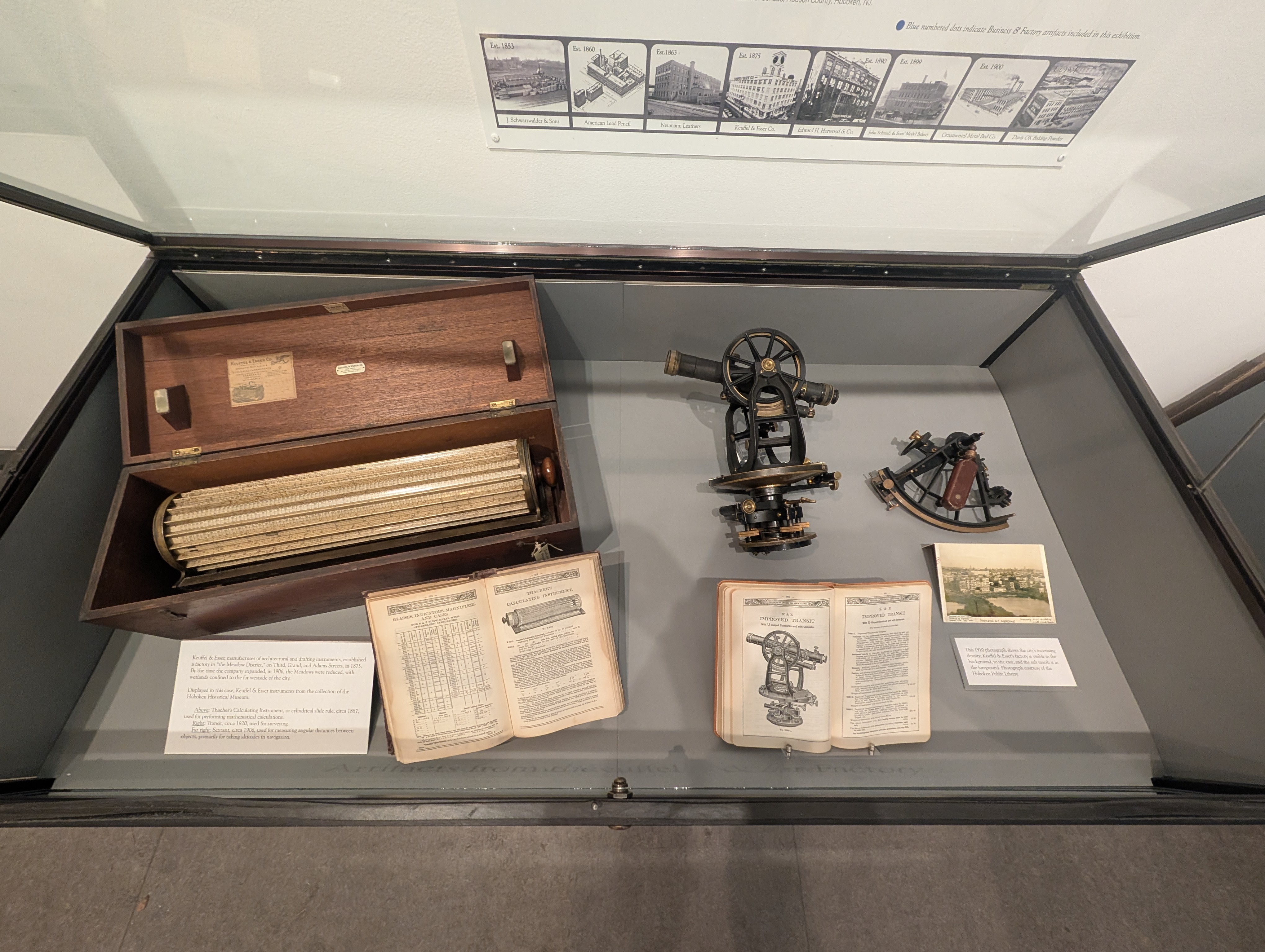
This groundbreaking exhibit uncovers the fascinating history of the western portion of Hoboken, once a sprawling salt marsh known as The Meadows. Through maps, botanist sketches, photos, paintings, newspaper articles, and oral histories, we’ll take you on a journey from the early 1800s to the present day.
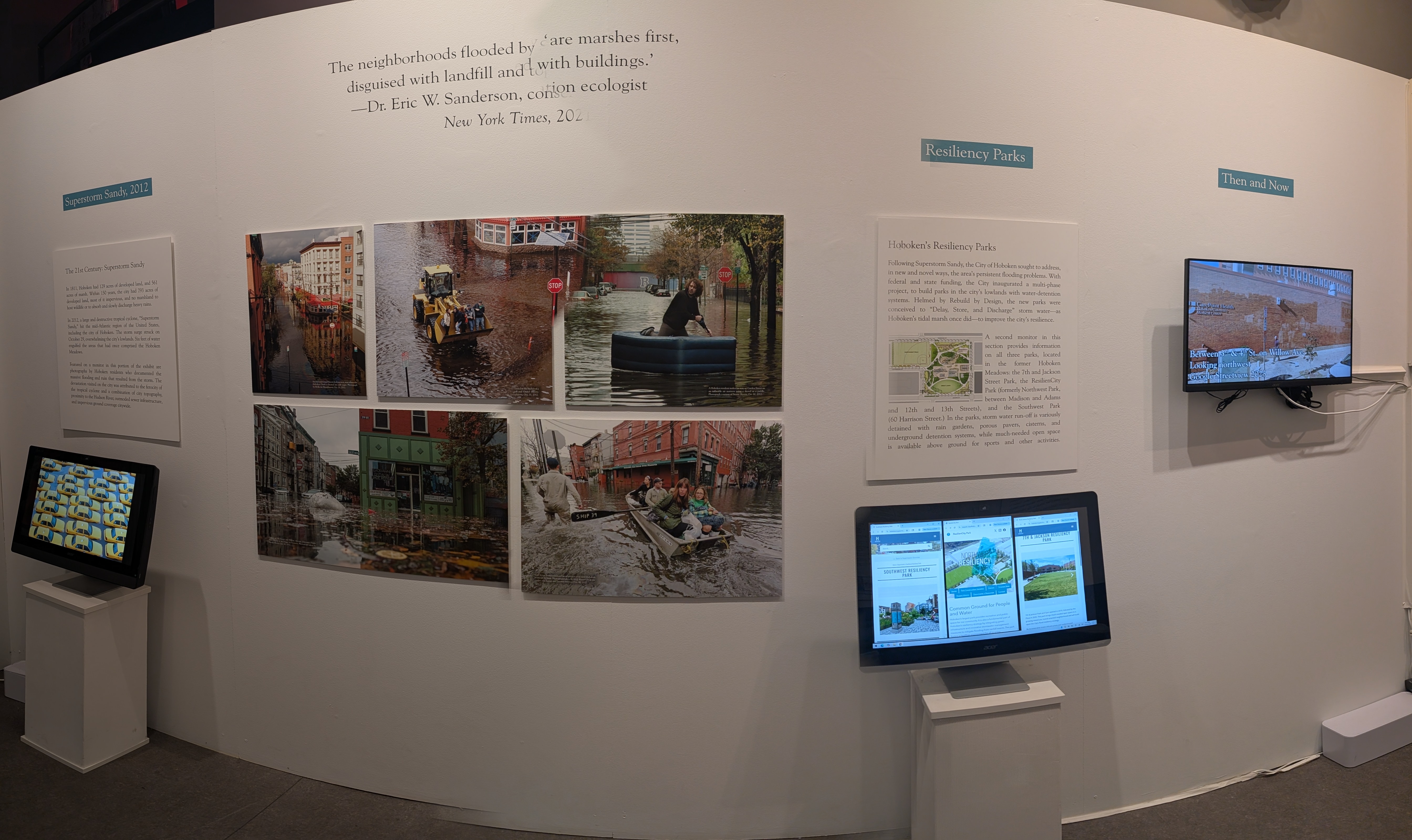
Discover how the Meadows, once teeming with plant life and wildlife and admired by Hudson River School painters and naturalists like John James Audubon, transformed over time. From the challenges faced by early settlers to the rise of industry and public housing, and even the lessons learned after Superstorm Sandy, “The Hoboken Meadows” reveals how this unique region has shaped — and been shaped by — Hoboken’s evolution.
Learn more about Hoboken’s resiliency parks:
-
ResilienCity Park (formerly Northwest Resiliency Park)
We’d like to extend a special thank you to the New Jersey Historical Commission, Ironstate, and Peter Wiley for their generous support in bringing this exhibit to life.
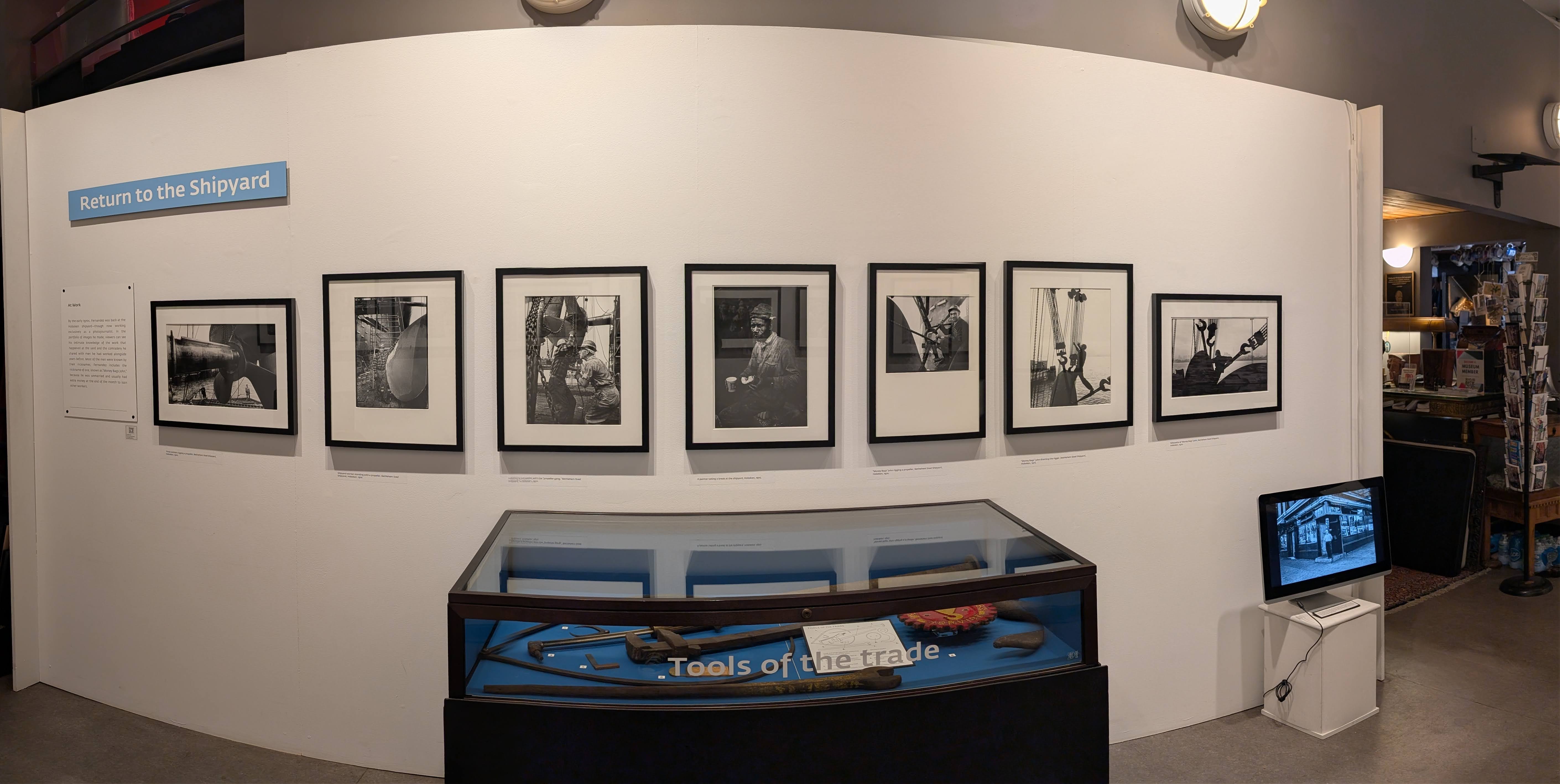
Benedict J. Fernandez, Photojournalist: From the Hoboken Shipyard to the Campaign for Civil Rights
Jan. 28 - Dec. 22, 2024
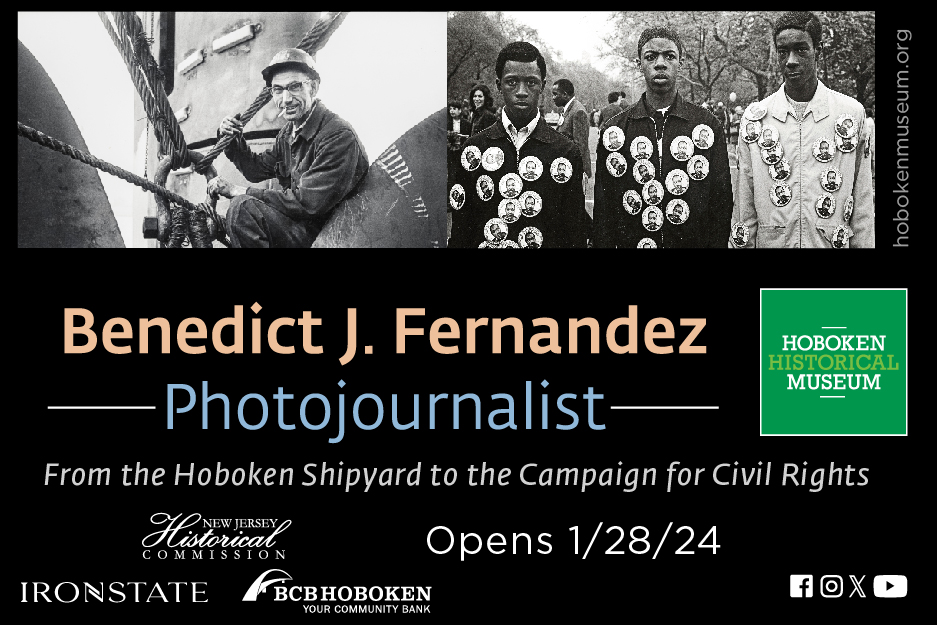
Benedict J. Fernandez was born in Manhattan on April 5, 1936. His father migrated from Puerto Rico and his mother Palma was of Italian heritage. Benedict was raised in East Harlem. As a child, he struggled with reading. Benedict later learned that he had undiagnosed dyslexia. Receiving a Brownie camera as a gift enabled Benedict to find his creative voice, and changed the trajectory of his life.
Throughout his childhood and young adulthood, Benedict’s circle of friends was very diverse, including young men who were African-American, Jewish, and Muslim. He learned to listen to and empathize with their experiences of discrimination. His friends inspired him to find his own way to challenge social prejudices later through his photography.
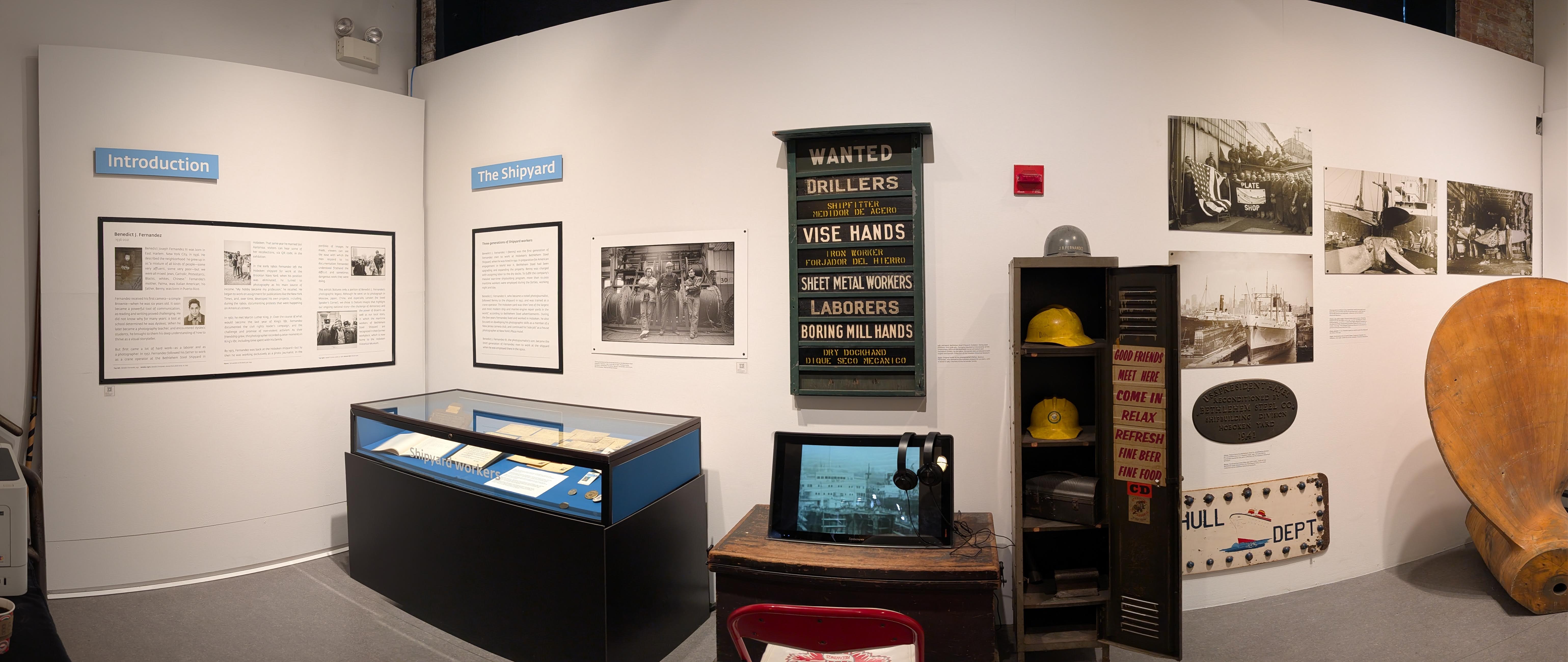
After graduating from Haaren High School, Benedict started working as an apprentice, and later, as an operating engineer/crane operator for Bethlehem Steel Shipyard in Hoboken. Benedict’s father helped him to get the job, where he also worked since 1941. Benedict worked in Hoboken for four years and developed deep friendships with the other Shipyard workers. His first major photography project was a set of stills of his colleagues in Hoboken entitled “Riggers.” He pays tribute to the sense of warmth and family present among this close circle.
Afterwards, Benedict took a job at Brooklyn Navy Yard. However, his fate changed when he was laid off from the position and the yard closed. He was then introduced to Alexey Brodovitch, the well-known art director of Harper’s Bazaar. Alexey was also a founder of the Design Laboratory, a workshop for photographers and designers. Through Alexey, Benedict received a scholarship to the Design Laboratory. He also began working at the Parsons School of Design, where he eventually helped to establish a Photography Department. Benedict had found his calling.
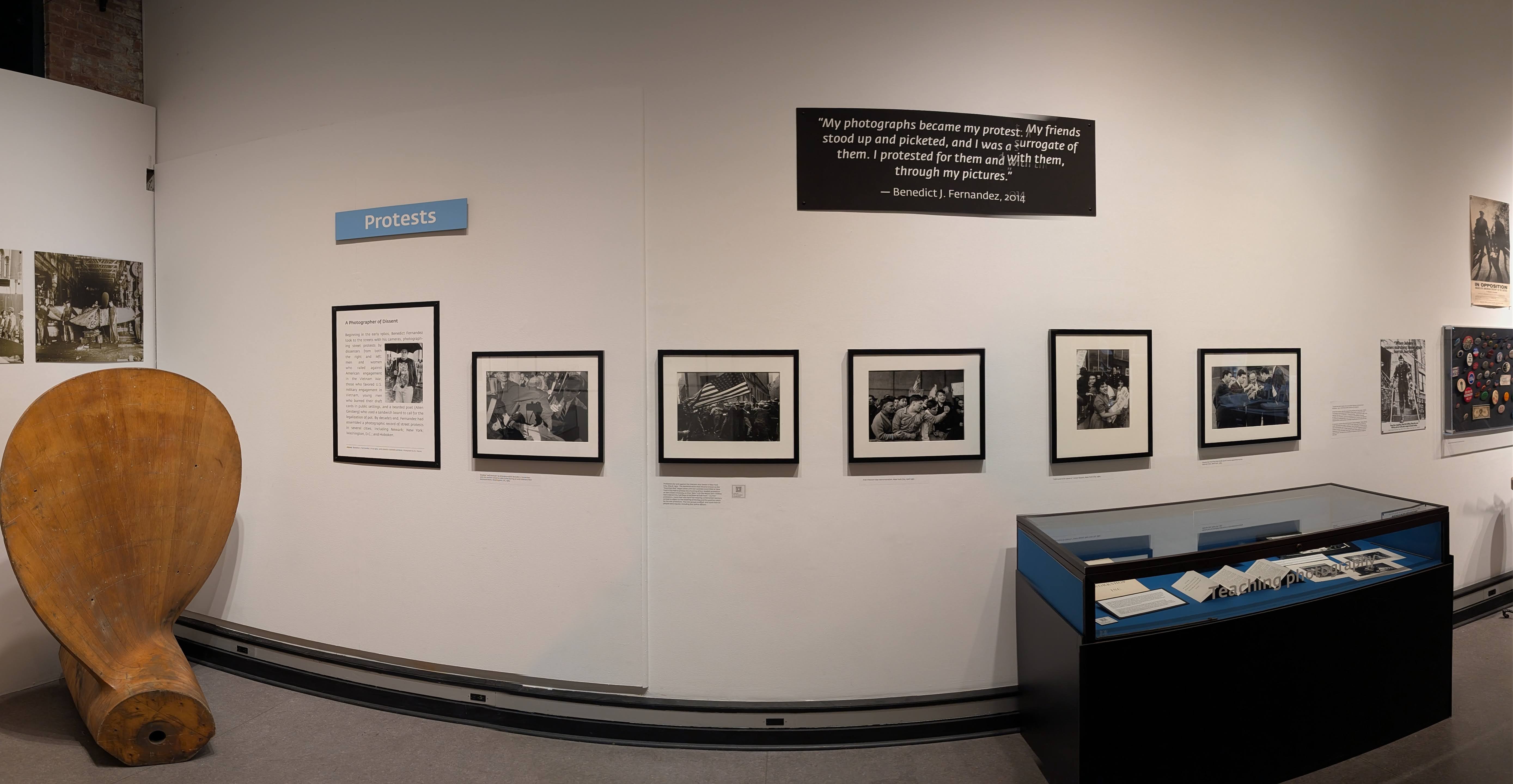
Benedict developed his power as a photographer by documenting street protests of the 1960’s, especially related to the Poor People’s Campaign and draft card burnings in protest of the Vietnam War. His striking black-and-white photos captured the intensity and sense of tumult of this moment in American history.
Benedict relayed: “When the protest movement developed, it hit a kinship in me that I felt I had to record and expose. I developed and thought it was necessary that I stood for something, and that’s where the protest photography became important.”
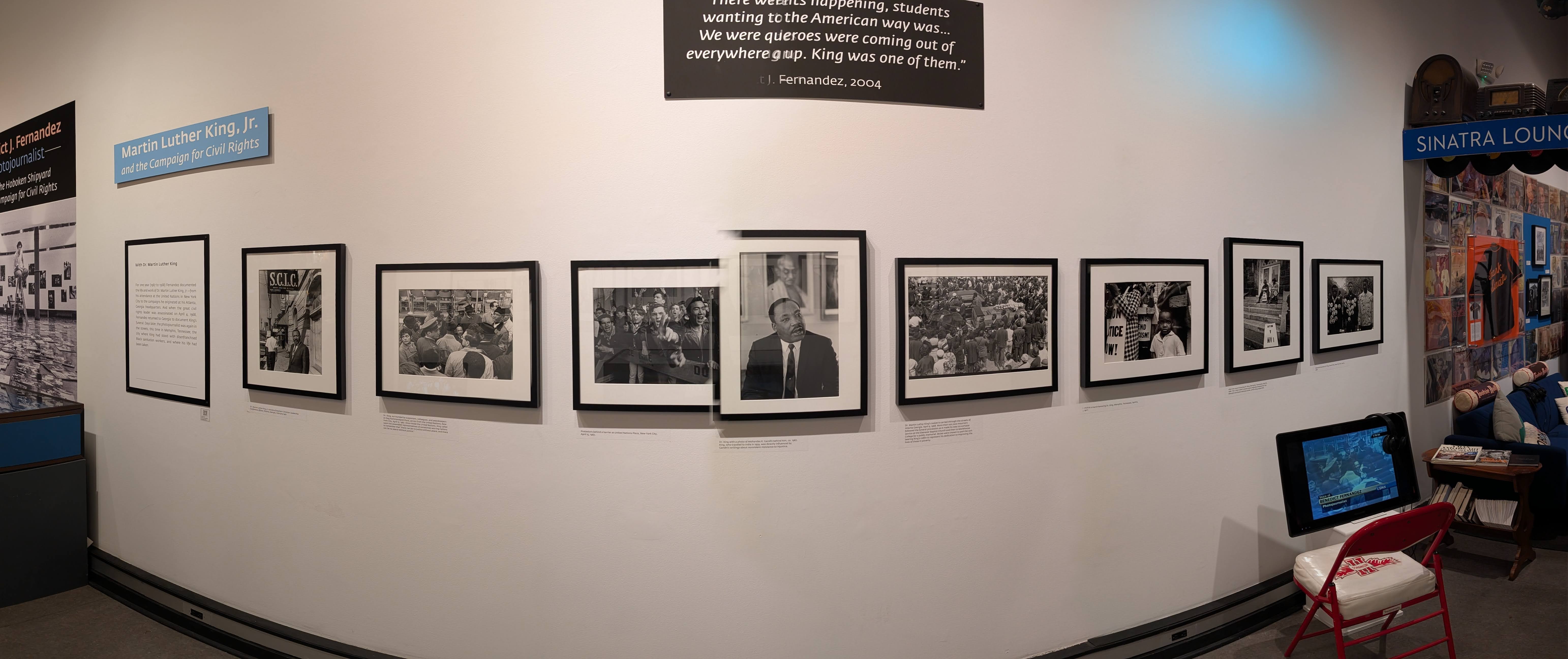
As his reputation grew as a photographer, Benedict befriended Rev. Dr. Martin Luther King Jr. Benedict visited Dr. King’s home in Atlanta, and got to know his family. Benedict developed a portfolio of 80 black-and-white prints entitled Countdown to Eternity: Photographs of Dr. Martin Luther King, Jr., which capture portraits of his life in the year before Dr. King’s assassination.
Benedict was very cognizant of the special opportunities he received as a young man thanks to his mentor, Alexey. Benedict was determined to pay it forward for the next generation. He helped to found the Photo Film Workshop, which he established in the basement of Joseph Papp’s Public Theater in Manhattan. He offered courses free of charge to young photographers. Among his students, he taught Angel Franco, who went on to work as a staff photographer for The New York Times, and won the Pulitzer Prize.
Among his many accolades, Benedict received a senior Fulbright Research Fellowship in photography and a Guggenheim Fellowship. He served as a Senior Fellow in Photography at the Corcoran Gallery of Art in Washington, D.C.
Benedict’s work is housed in permanent collections at institutions that include the Smithsonian, The National Portrait Gallery, the Corcoran Gallery of Art, the Museum of Modern Art, the Houston Museum of Fine Arts, the Norton Simon Museum of Art, the Schomburg Center for Research in Black Culture, The King Center, University of Toyo, and Bilbioteque Nationale in Paris.
Instrumental to his success was Benedict’s family, including his wife Siiri Aarismaa, his son, Benedict IV, and daughter, Tiina Polvere. Benedict’s lineage has grown to now include five grandchildren and a great-granddaughter.
Benedict died on January 31, 2021. He lived to the age of 84.
The Hoboken Historical Museum is immensely proud to showcase the work of Benedict J. Fernandez, and preserve his legacy of using photography as an act of activism for the next generation.
We would like to thank our sponsors BCB Bank, Ironstate, and the New Jersey Historical Commission for supporting this exhibit.


The Fires: Hoboken 1978-1982
January 22, 2023
We are proud to announce two exhibits by photo-based artist and arts educator, Christopher López. “The Fires: Hoboken 1978-1982” shines a light on horrific events from Hoboken’s early period of gentrification. This visual and oral history project will be on display in our Main Gallery through the summer, closing date to be announced. A companion installation “(UN)ERASED” will be on display in our Upper Gallery through Sunday, February 19. On Friday, January 20 at 7pm, López was interviewed on the Museum’s YouTube channel by Museum Director Bob Foster as part of our ongoing “Artist Talks” series. Click here to view, or simply scroll down to the “Artist Talk” link below. Scroll down to see the Sunday afternoon series of special EXHIBIT EVENTS that will provide additional data, perspective and context. Scroll down for links to SELECT ELEMENTS FROM THE EXHIBIT AVAILABLE ONLINE
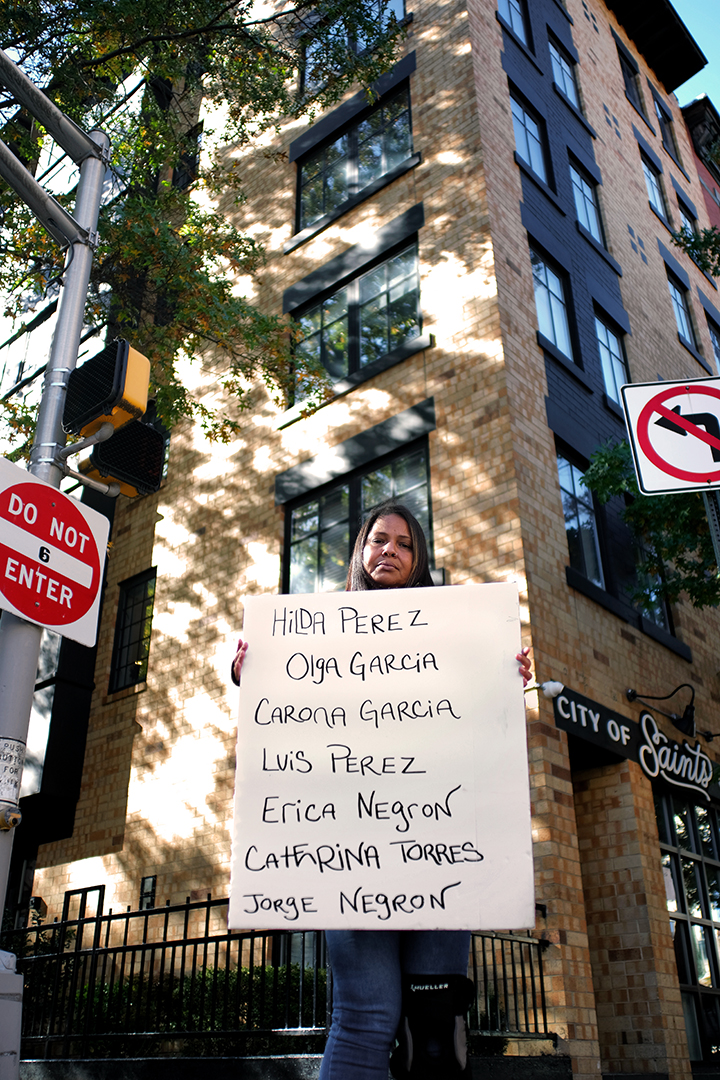
In the late 70s, as Hoboken became more desirable to ‘young urban professionals’ who could afford to pay higher rents, there was a plague of fires in buildings that housed mostly Puerto Rican families. Nearly every fire, investigators determined, was the result of arson. This exhibit addresses many factors at play at that time. It highlights the fifty-six people, mostly children, who were killed and the eight thousand that were left homeless. The exhibit also features QR codes which allow visitors to hear survivors tell their own stories.
López says, “Gentrification remains a critical subject in small cities like Hoboken as well as on a global scale creating an epidemic of displacement and violence alongside ‘urban renewal’. The visceral ramifications of gentrification are evidenced throughout the living history of Hoboken. This project is a work in progress and will be the first to offer a thorough analysis of the intersecting histories that transformed the city from a working-class community to one of the most expensive and exclusive cities in New Jersey.”
López’s work is augmented by the contributions of humanities scholars Yomaira Figueroa-Vásquez, Ph.D. and Dylan Gottlieb, Ph.D. Dr. Figueroa-Vásquez is a co-creator of The Diaspora Solidarities Lab, a multi-institutional Black feminist partnership that supports solidarity work in Black and Ethnic Studies. López says, “Yomaira grew up in Hoboken. We connected because of our shared interest in this history and the toll it took on the vast Puerto Rican community here. Yomaira is writing a book slated for release in 2024, and she will be dedicating a chapter to the fires. I’m honored to be working with her.” Of Dylan Gottlieb, López says, “He wrote a very compelling essay on the history of the fires that was tremendously influential to me and really sparked all of the work you see today. But besides his essay, there is no history. My work aims to change that.”
The companion installation “(UN)ERASED,” uses both contemporary and appropriated archival imagery to construct a visual dialogue through collage that evidences the human toll that arson played on mostly migrant communities during Hoboken’s gentrification. López says, “Stories have the potential to be erased depending on who is driving the narrative. In gentrified cities like Hoboken, it happens through this self-anointed position of pioneerism and the cultural appropriation of urban spaces. In its perversity, it picks and chooses the things it likes and discards the rest. The rest, in this case, are actual human lives. Gentrified cities are very cookie cutter and are not actually designed by people, but rather, by developers and banks to meet the demands of an upper tier consumerism. The palpable sense of community is no longer present. The creation of this absence is exacting in its design and predominant function, which is to rebrand a city’s already existing cultural capital and replace it with a newer fiscal capital.”
Christopher López (b.1984), was born in The Bronx and was raised between New York and Northern New Jersey. He has been working as a visual artist since 2005. To date, many of his works have been made on the island of Puerto Rico. Often by exploring diminishing histories, his photographs celebrate the richness of culture as well as portray the complexities of identity both on and off the island. His work was most notably exhibited in the exhibition, “Caribbean; Crossroads of the World” which spanned three museums in New York City and showcased over 100 years of Caribbean art from the region’s most prominent artists.
Christopher has been awarded fellowships at The Laundromat Project and The Diaspora Solidarities Lab. He is a current member of Diversify Photo, an initiative started to diversify the photography industry and has given lectures at Barnard College and Cornell University among others. His artworks are currently in the permanent collections of El Museo Del Barrio, The World Trade Center Memorial Museum, and The Smithsonian National Portrait Gallery.
EXHIBIT EVENTS take place on Sunday at 4pm, and are free unless otherwise noted
February 19: “Yuppies Invade My House at Dinnertime” Reading of a hybrid /documentary play by Mile Square Theatre’s playwright-in-residence Joseph Gallo. Nearly every word is taken verbatim from primary source documents of the time. Dylan Gottlieb, PhD, Historian of American Cities and Capitalism leads the talkback. Tickets are $20, available here.
March 5: Pastor Elaine Thomas, Rector of All Saints Episcopal Parish. Thomas will speak on her doctoral dissertation, “The Mile Square Cathedral: The Church as Community Healer.”
March 12: Janet Ayala, survivor of the fire at the Pintor Hotel which killed 13 people, including 7 children. Exhibit curator Christopher López will be present.
March 26: Bill Bayer, photographer for the Hudson Dispatch newspaper during the time of the fires.
April 2: “The Fires and the founding of The Hoboken Shelter”. Mark Singleton in conversation with the Museum’s Collections Manager Rand Hoppe: Mark grew up in Hoboken and was board president of the Hoboken Shelter for many years. Rand is a long-standing Shelter board member.
April 16: Yomaira C. Figueroa-Vásquez, Ph.D. Hoboken-born consultant on the exhibit. Award-winning writer, scholar, and associate professor of afro-diaspora studies at Michigan State University.
SELECT ELEMENTS FROM THE EXHIBIT AVAILABLE ONLINE
The Introduction – The Hoboken Fires: A Call to Witness, by Yomaira C. Figueroa-Vásquez
Text from the Timeline, based on Hoboken Is Burning: Yuppies, Arson, and Displacement in the Postindustrial City by Dylan Gottlieb
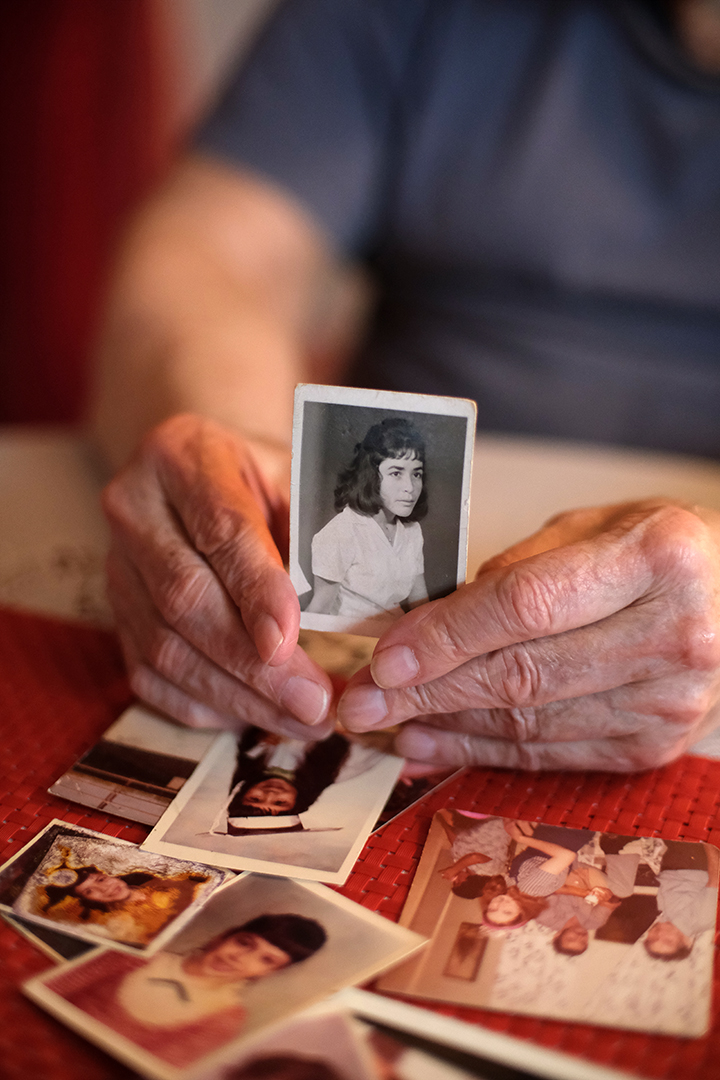
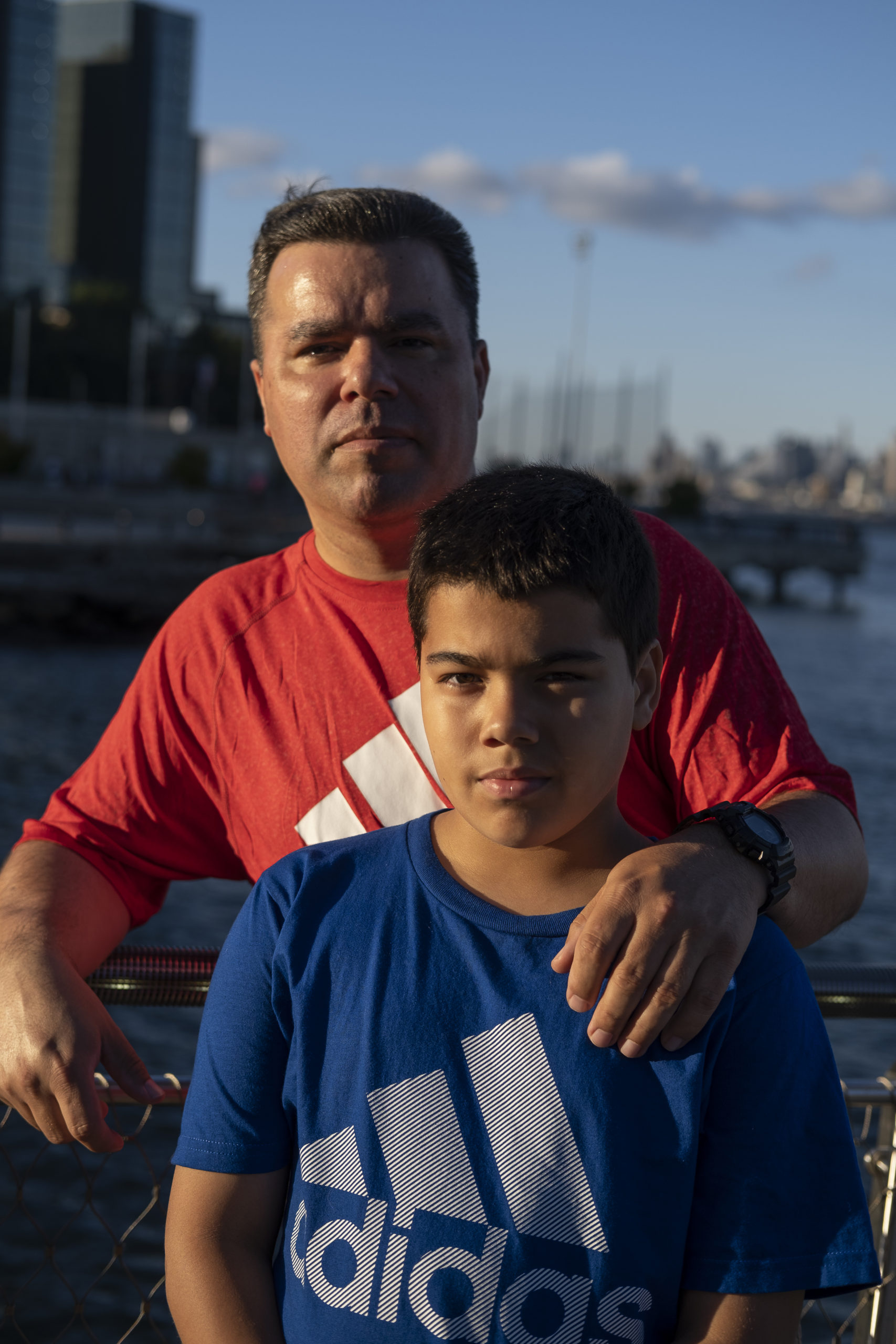
Click on the portraits below to be taken to a YouTube video where you can hear each person’s Oral History recording
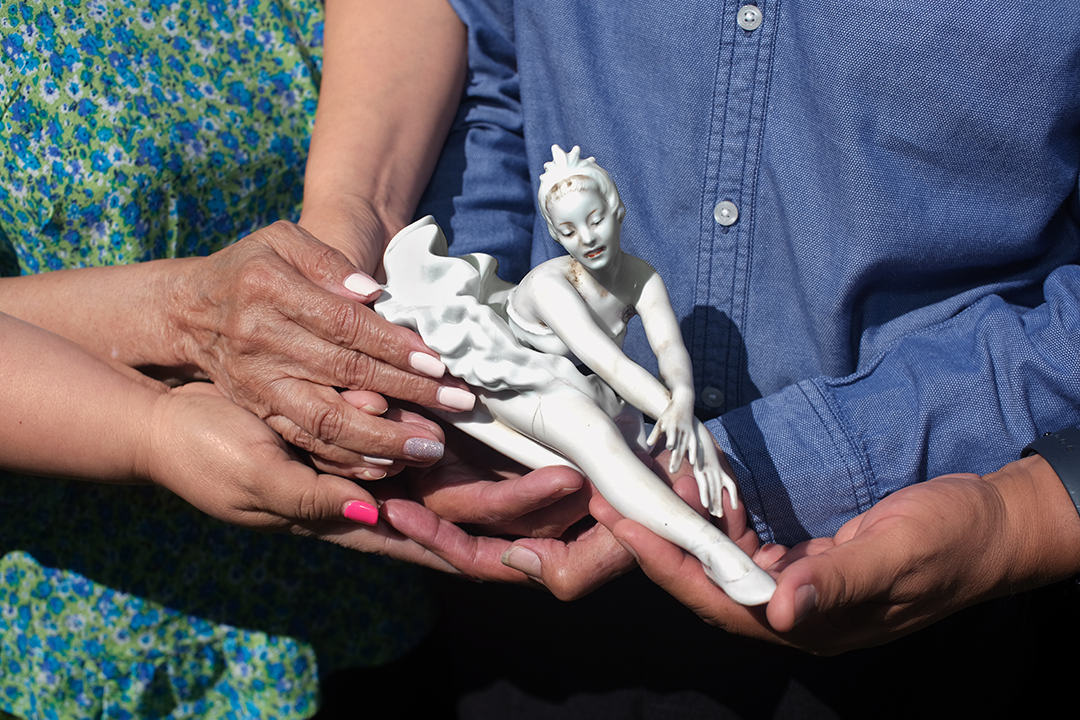
Tapia Family |
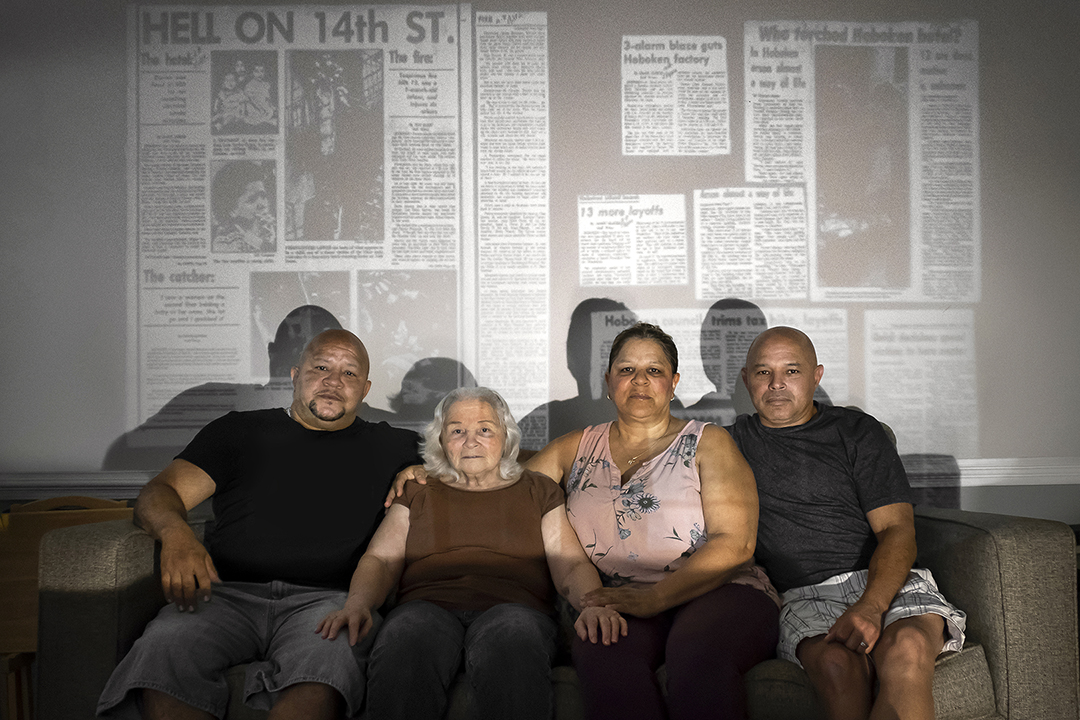
Tirado Family |
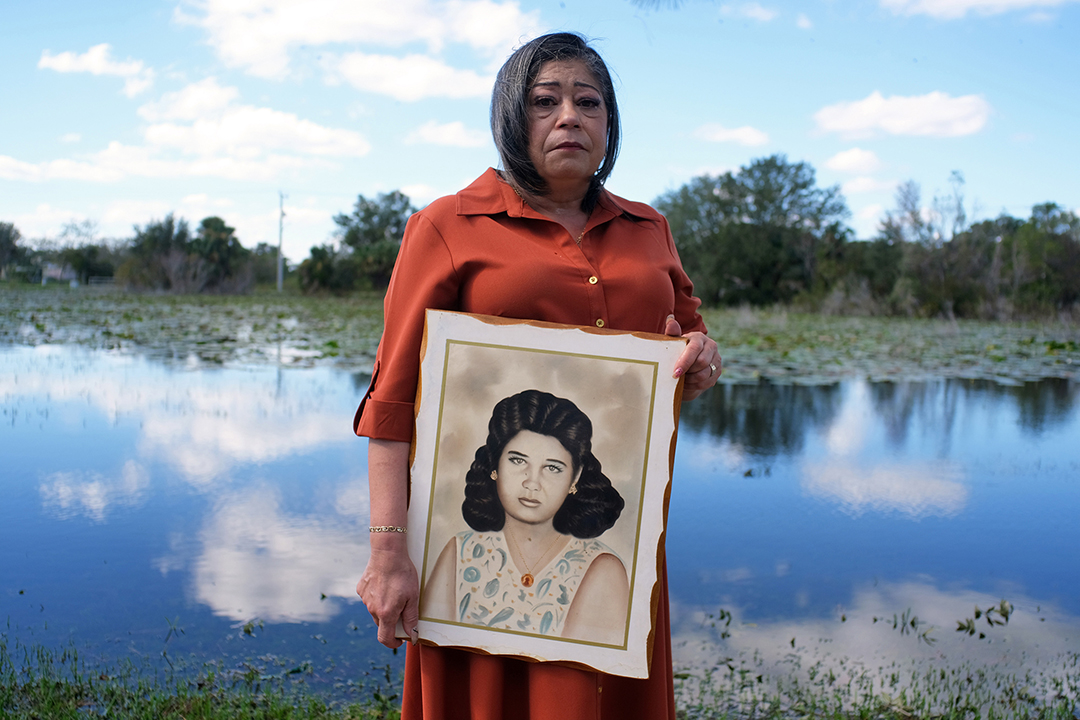
Janet Ayala |
|
Marisol Zenon |
Ana Mercado |
Antonio Olavarria |
|
Robert Burzichelli |
Bill Bayer |
Rose Orozco |


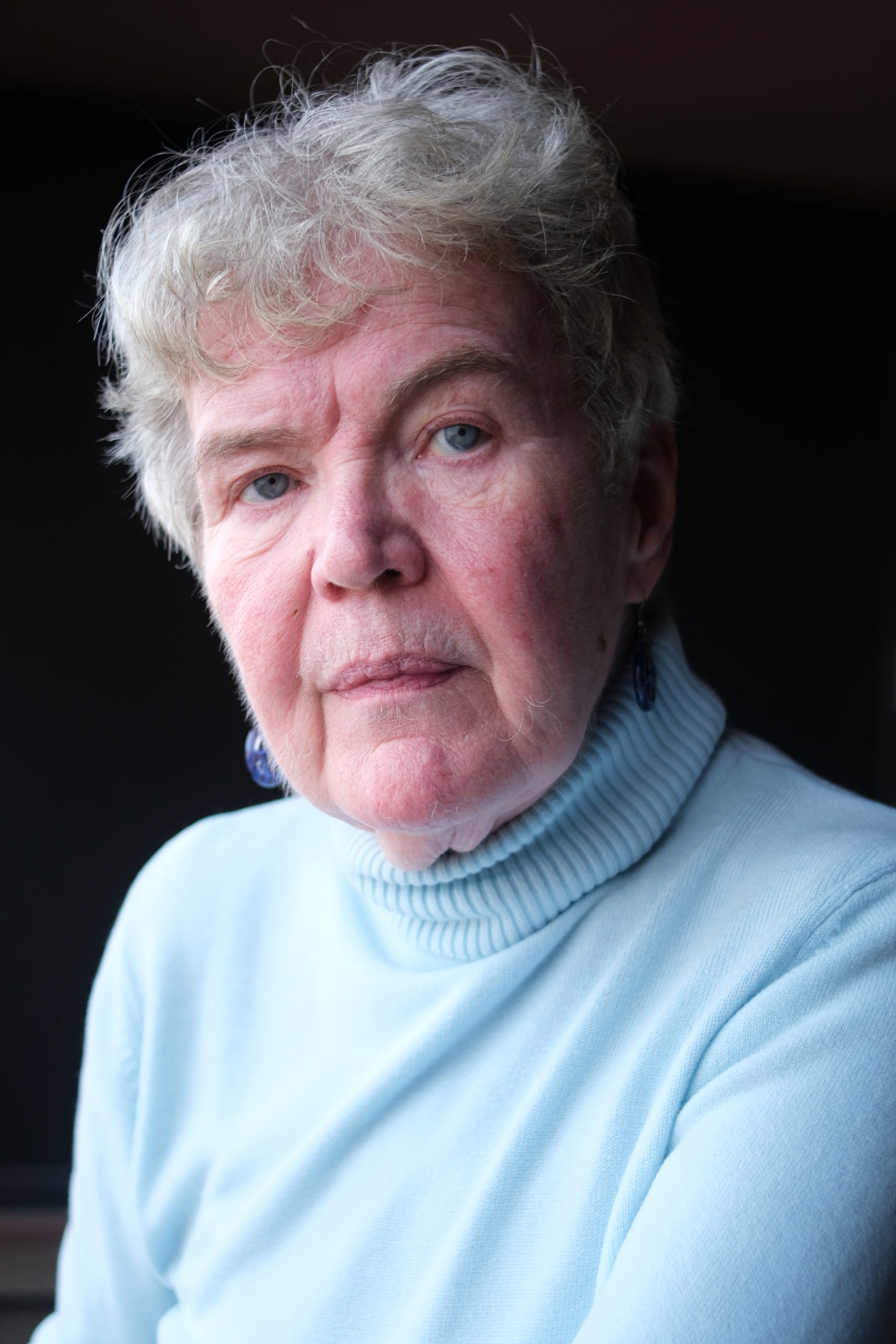
“The Fires: Hoboken 1978-1982” was produced by Christopher López, in partnership with the Hoboken Historical Museum.
These exhibits were made possible with funds from The New Jersey Council for the Humanities, The Diaspora Solidarities Lab, and with support from a block grant from the State/County Partnership program for the Arts, administered by the Hudson County Division of Cultural and Heritage Affairs.
The Avenue: A History of Washington Street
August 1, 2021 - December 23, 2022
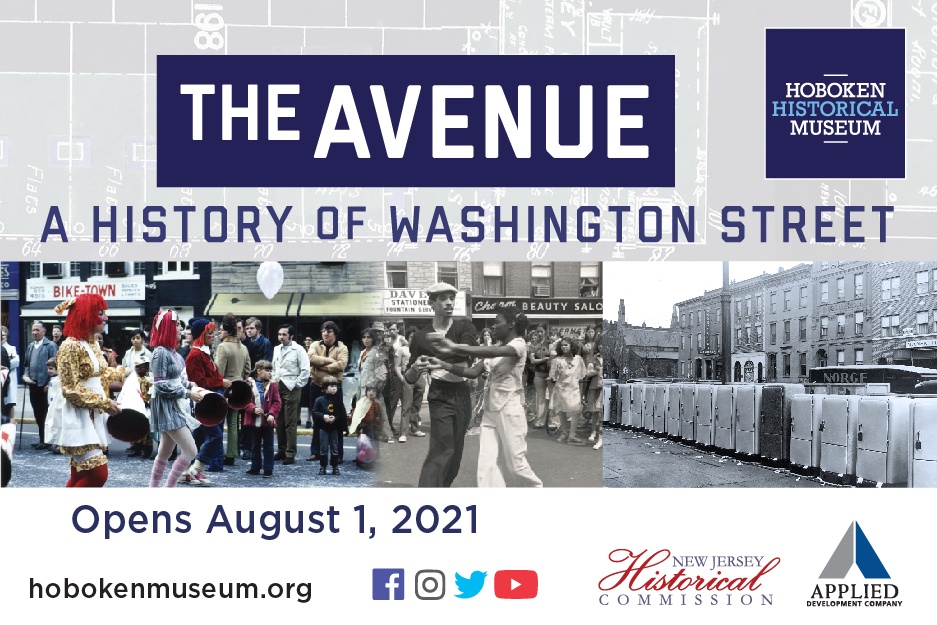
There’s an old Hoboken saying: “If you can’t find it on Washington Street, you’re not looking hard enough.” The Museum’s curatorial team has taken up the challenge with its latest exhibition: “The Avenue: A History of Washington Street.”
Visit the Digital/Virtual Exhibit “The Avenue!”
Tracing almost two centuries of vibrant community and commercial life along Hoboken’s main artery, the exhibit packs in hundreds of artifacts and photographs from scores of beloved and largely family-owned establishments that have drawn people to The Avenue for generations.
Visitors can figuratively stroll the length of “The Avenue,” teleporting back and forth in time, as they search for artifacts from their favorite businesses and discover the wide variety of businesses that catered to earlier residents of the Mile Square City. Stretching nearly the full length of the Museum’s north wall, an enlarged, detailed reproduction of the 1951 Sanborn fire map (from the Jersey City Library’s Hudson County History collection) shows every building block-by-block from Observer Highway to 14th Street.
Above and below the map are displays from the Museum’s collections of both physical artifacts and interactive photo screens, near the corresponding addresses on the property maps. Vintage signs from long-time Washington Street stalwarts such as Schnackenberg’s and Kelly’s Pub are on view, along with an 1899 silk banner from the United Decorating store and a clock customized by Mayor Tom Vezzetti that reads, “Welcome to Your City Hall.”
Over the Museum’s 35 years of collecting, many families of former business proprietors have donated cherished items from their parents’ and grandparents’ businesses to the Museum. For example, the Museum has a rich collection of items from Schnackenberg’s luncheonette (1110 Washington), Schoning’s City Hall Bake Shop (95 Washington) and United Decorating (421 Washington) that illustrate the history of Hoboken’s enterprising immigrant populations.
Also on display are film clips and images from many parades, especially the 1955 celebration of Hoboken’s centennial, with floats from major manufacturers Maxwell House and Tootsie Roll, along with high-stepping baton-twirlers and marching bands. This celebration was immortalized in the Swiss photographer Robert Frank’s black-and-white images, “City Fathers” and “Parade, Hoboken, NJ,” published in ‘The Americans,” a photo essay on mid-century America.
The bunting, flags and costumes that decorated the floats and festooned the buildings along the route were mostly supplied by the Kirchgessner family’s United Decorating. The exhibit includes a bust of The Avenue’s namesake, George Washington, which once stood proudly in United Decorating’s window.
Mile-Wide Photo Project
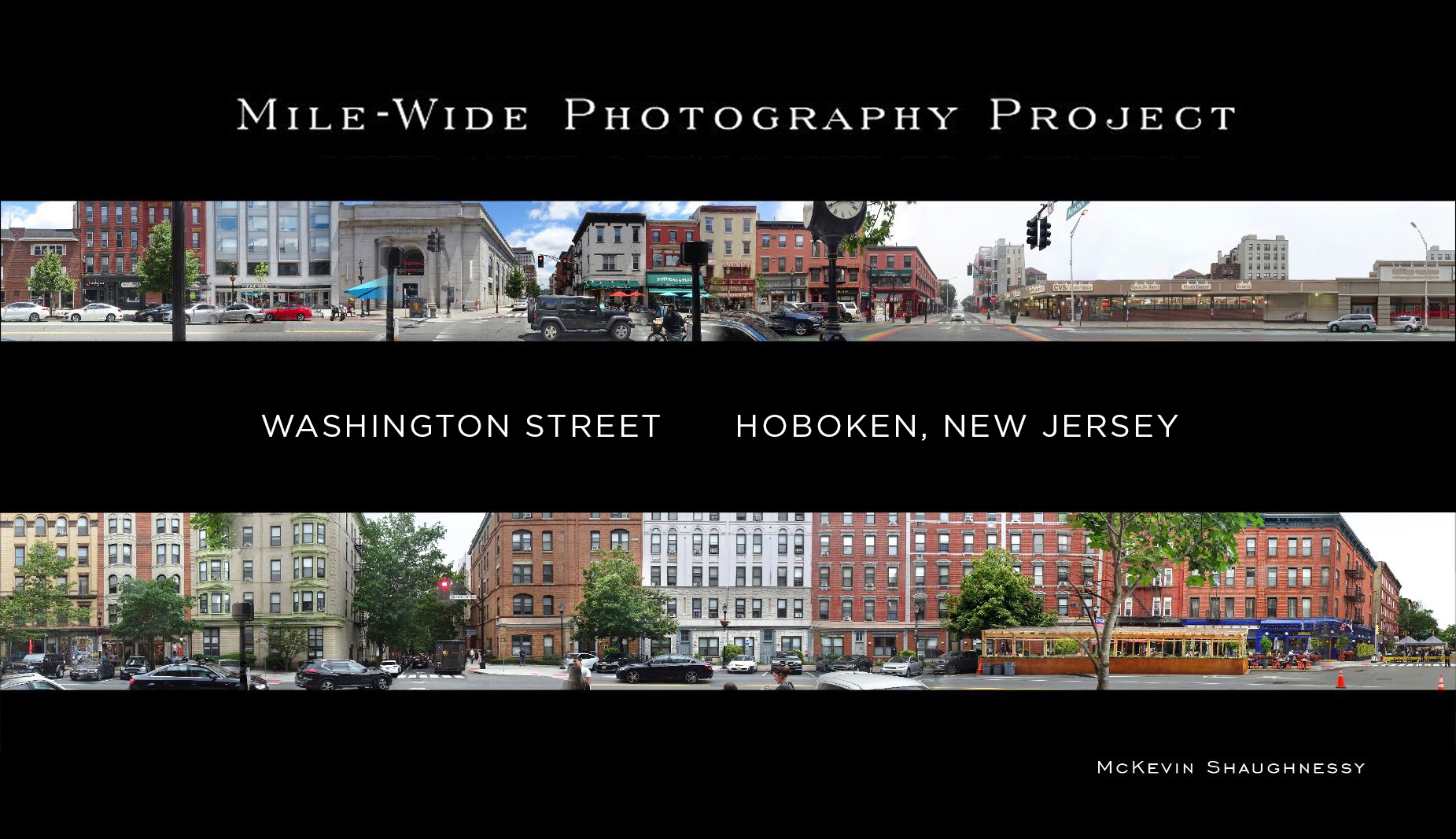 For reference, graphic designer McKevin Shaughnessy has stitched together a hyper-detailed, continuous panoramic photo of contemporary Washington Street, so visitors can compare the current streetscape to The Avenue of years past. For even deeper context, the exhibit also includes early renderings of Washington Street in 1851, when it was a sleepy little town, by lithographer John Bornet, from the collections of the New-York Historical Society.
Among the more curious artifacts is a set of vintage bowling pins salvaged by woodworker Anton David from a Washington Street property. They were donated to the Museum collections, and executive director Bob Foster says the building had been home — at different times — to both the local Democratic and Republican committees, each of which applied for bowling operator licenses in the 1920s-1940s.
Accompanying the exhibition will be a full range of educational programs, including a lecture series and walking tours. For school children of different ages, we offer exhibit-related programs — contact the Museum director at info@hobokenmuseum.org or call 201-656-2240 for details. The Museum welcomes visits from almost every grade and every school in Hoboken – public, charter and private.
THE AVENUE was produced by Melissa Abernathy, Bill Curran, Robert Foster, Frank Hanavan, Rand Hoppe, Holly Metz, and McKevin Shaughnessy.
Greetings from Hudson County: A Postcard History Then & Now
January 27, 2019 - July 4, 2021
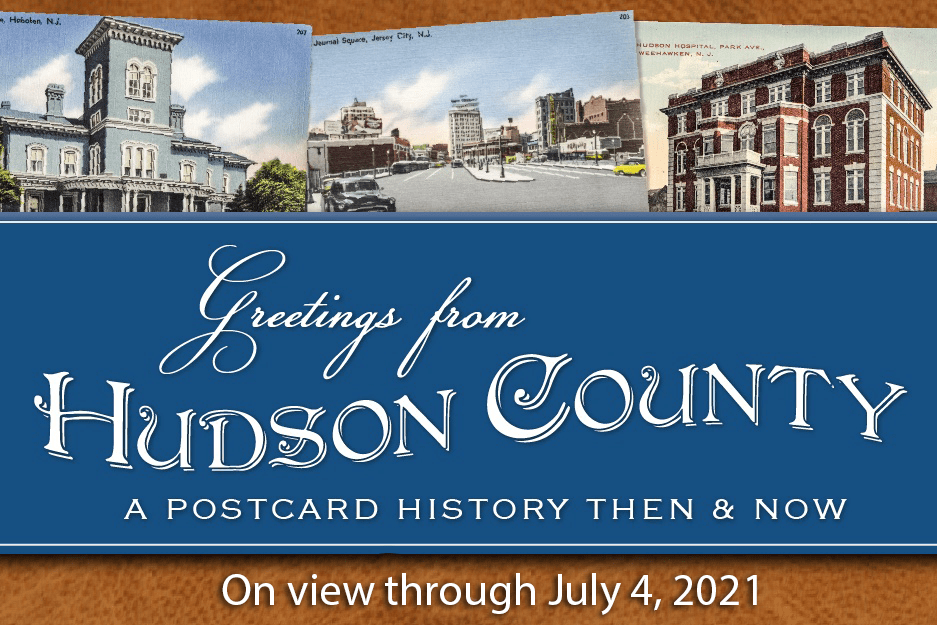
“Greetings from Hudson County: A Postcard History Then and Now” comprises over 700 historic postcards from all 12 cities and towns of Hudson County. Most of the postcards date from the Golden Age of postcards, the 1900s – 1920s, showing parks, street scenes, scenic views and important municipal buildings, churches, schools and factories, when they were brand new and the pride of Hudson County.
Bringing the exhibit into the present is an augmented reality (AR) app that will enable visitors to compare current views to the historic images. Curated by Stevens professor Christopher Manzione, the app allows visitors to hold a smart phone in front of a postcard to see how the same street view looks today. Professor Manzione is a contemporary artist pushing the boundaries of technology and art. As the founder and director of the Virtual Public Art Project, he is a pioneer in using AR technology to produce original artists’ works in public spaces.
Each view old and new is narrated in the AR app in the voices of a diverse cast of Hudson County residents. We hope the exhibition will inspire visitors to explore our County in depth, to learn more about what was here before and what is there now. Can you name all 12 municipalities?
Click here to see a demo of the AR app
We also encourage visitors to revive the tradition of sharing experiences through sending postcards to friends and family. A vintage mailbox from 1880 will be installed in the Museum, and postcard stamps will be available for purchase in the gift shop. Mail will be delivered to the US Postal Service daily.
Accompanying the exhibition will be a full range of educational programs, including a lecture series and walking tours. For school children of different ages, we offer exhibit-related programs — contact the Museum director at info@hobokenmuseum.org or call 201-656-2240 for details. We welcome visits from almost every grade and every school in Hoboken – public, charter and private. With community support, we can expand our reach across all 12 municipalities in Hudson County. Please consider making a donation now to support our educational program offerings. Click on the “Donate” button at the top of this page.
Funds from the David Webster Memorial Fund were used to purchase some artifacts for this exhibition, including items from the estate of John DePalma. The exhibit was curated by Bob Foster and Rand Hoppe, with the AR app curated by Christopher Manzione. Holly Metz wrote the narrated captions in the app, and the captions for each of the municipalities is based on text provided by Cynthia Harris, manager of the New Jersey historical collections of the Jersey City Free Public Library.
World War I Centennial, 1917-2017: Heaven, Hell or Hoboken
August 6, 2017 - December 23, 2018
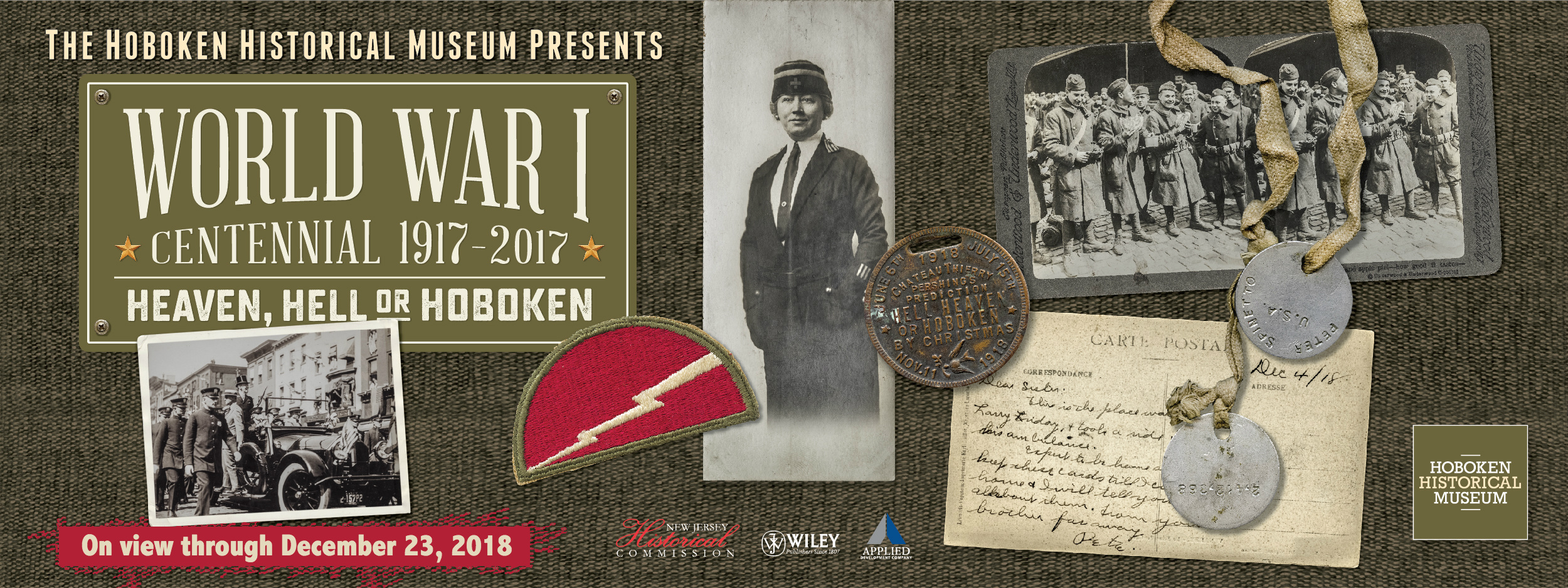
“World War I Centennial, 1917-2017: Heaven, Hell or Hoboken” explores how Hoboken and its residents were transformed by the United States entry into World War I on April 6, 1917. The city was declared the main point of embarkation for the U.S. Expeditionary Force bound for Europe.
Almost overnight Hoboken became a military town, as hundreds of officers and thousands of enlisted men took residence here to facilitate the logistics of the Embarkation Service. With an additional 14,000 civilian employees, they would oversee the transit of an estimated two million American servicemen to Europe—and then the soldiers’ return—from 1917 through 1919.
Soldiers arriving in Hoboken from boot camps soon began to use the phrase “Heaven, Hell or Hoboken,” referencing John J. “Black Jack” Pershing, the commander general of the Army forces destined for Europe. Pershing had predicted they would be in “Heaven, Hell or Hoboken”—return into America—“by Christmas” 1917.
As the Great War raged on, servicemen retained the saying for Christmas 1918, and when about 5,000 men returned to Hoboken just days before the holiday, the City fathers lined the march route with flags, bunting, and a banner bearing that slogan. The men marched from the trains of the West Shore Railroad, from Jersey City Heights into Hoboken, up First Street, to Hoboken’s waterfront piers, and new destinations—including home. A Jersey City solider, Thomas T. Gavin, told the local Hudson Dispatch: “It certainly is fine to know we accomplished what we set out to do: “’Hell, heaven, or Hoboken by Christmas.’ I am lucky that it is Hoboken.” As he and the returning men marched along First Street, flag-waving residents, gathered in throngs, cheered and sang.
There would be many more returning servicemen and parades, but there would also be sorrowful reckoning and recognition of the soldiers’ great sacrifice, as transport ships increasingly brought back wounded men, and the bodies of those who had died from battle wounds or disease. The influenza epidemic was especially deadly, claiming the lives of nearly as many soldiers as died in combat.
The Great War lasted nineteen months, and many Hoboken men served. Women on the home front also volunteered to assist the war effort in many ways. “World War I Centennial, 1917-2017: Heaven, Hell or Hoboken” displays some of the personal letters, postcards, official documents, and photographs of these men and women, allowing us, 100 years later, to consider their unique perspectives and contributions, and the way the war changed them and their hometown.
— Introduction written by Holly Metz
The exhibition is on view from August 6, 2017 – December 23, 2018. Other highlights in the exhibition include:
- The official ledger book – measuring 3 ft. by 4 ft.! – in which a Hoboken city clerk inscribed the names, addresses and ages of all the men ages 18 – 45 who were required to register for military duty under the country’s first Selective Service Act.
- Twenty-five patriotic posters (on loan from the Jersey City Free Public Library) issued by the US government to rally all citizens to contribute to the war effort, through military service, buying bonds, or conserving food.
- Archival film footage of soldiers and YMCA volunteers busy with preparations for shipping out or returning home.
- An authentic, hand-cranked Victor Victrola, made in Camden, NJ, in 1918, and stereoptical images of the bustling Hoboken waterfront in wartime, with both an original and a modern viewer for enlarged versions of the cards.
- Artifacts from the Warriors’ Shrine at the former St. Paul’s Episcopal Church, on Hudson St. (now a residential condo building), including a sanctuary chair containing a stone from the bridge across the Marne River at Chateau-Thierry in France.
Funds from the David Webster Memorial Fund were used to purchase some artifacts for this exhibition, including items from Peter Spinetto’s estate and the estate of John DePalma. Additional thanks to the Jersey Room at the Jersey City Free Public Library and the Librarians Cynthia Harris and John Beekman. We would also like to thank Ronald Magnusson for his research on Peter G. Spinetto, and the following Museum staff and contributors for making this exhibit possible: Melissa Abernathy, Robert Foster, Rand Hoppe, Eileen Lynch, Holly Metz, and McKevin Shaughnessy.
World War I Centennial, 1917 – 2017: Heaven, Hell or Hoboken
August 6 – December 23, 2017

All are invited to the opening reception for our next exhibition, “World War I Centennial: Heaven, Hell or Hoboken,” August 6 from 2 – 5 pm. The exhibition focuses on the transformation of Hoboken and its residents after the U.S. entered World War I and converted the city into the main port of embarkation for the U.S Expeditionary Forces destined for Europe.
The exhibit will evoke life in Hoboken during the Great War through silent films of soldiers gathered at the Hoboken port and government war posters, on loan from the Jersey City Free Public Library, that were designed to boost local draft registration, and urge those on the “home front” to purchase war bonds, conserve resources, and help with the war effort.
In addition, personal photographs, letters, uniforms, and commemorative items reveal the unique contributions and perspectives of Hobokenites, including Mrs. Frank R. Markey, who worked with the Red Cross assisting soldiers, and Peter G. Spinetto, who regularly wrote postcards from the fields of war in France to his large family on the city’s west side. They will be displayed along with Spinetto’s helmet, adorned on the interior brim with the names of places he traveled to, as well as the photographs he sent to his loved ones back home.
The opening reception is free to the public. A companion series of lectures and other programs will be announced soon.
Hoboken People and Places, 1976-1994: Photographs by Michael Flanagan
January 22 – July 2, 2017
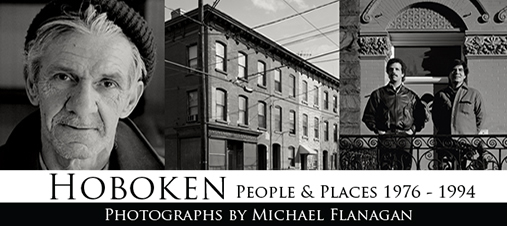
When he moved to Hoboken in the mid-1970s, Michael Flanagan was already a seasoned photographer with a passion for developing his own prints through meticulous experimentation.
His camera of choice was a large format, four-by-five-inch Linhof view camera, mounted on a tripod. The equipment was bulky and cumbersome, but under his skilled hands, it yielded crisp, detailed black and white images. He even toted this same camera and tripod on his many trips abroad.
From 1976 to 1994, Flanagan lived near the corner of Bloomfield and 10th Streets, and many of his photographs document the changing storefronts of this uptown location. He was determined to capture a feature of Hoboken life that was swiftly fading during the course of that decade: Mom-and-Pop shops, and the blue-collar residents that populated the city.
Only a few of the corner businesses recorded in Flanagan’s photos survive today: Lisa’s Deli, Truglio’s Meat Market, and, on the northeast corner of his block, the Bloomfield Launderette. Through his photographs we can see what has long been lost: Pierro’s Butcher Shop before it closed, and its owner, Al Pierro, during its last days. Today, it’s a kids’ yoga studio.
On the southeast corner, we see the interior and exterior of Kusseluk’s Shoe Store, which maintained an ancient display of footwear during the years Mike lived in the neighborhood. That it remained open at all during the 1980s was paradoxical, as potential customers would have to beg Sam Kusseluk to sell them a pair of shoes-—and rarely succeeded. Today, the building hosts Anthony David’s restaurant and an adjacent tattoo parlor.
Opposite Kusseluk’s was Nellie’s Store, where a customer might find just about anything available at the city’s one big supermarket, but in smaller quantities. Like so many who owned and ran the corner stores in Hoboken in the 1980s, Nellie lived in the building, and seemed to be in the shop night and day, offering warm greetings along with candy bars, cans of soup, and cartons of milk.
Flanagan photographed other longtime residents: barkeeps, plumbers, mailmen, retired longshoremen, and many seniors, often snapped while sitting in folding chairs on the sunny side of the sidewalk, as if the public pathway were a corner of their own backyard. Some were known as the “mayors” of their block-—the characters, the ones who told the best stories, the ones you sought out when you wanted to learn the news behind the news. One barkeep he photographed, “mayor” Tom Vezzetti, actually became Mayor of Hoboken in 1985.
Like most photographers, Mike did not set out to create a comprehensive visual record of the city. There are, for example, no photographs of the music scene at Maxwell’s, which was at its height during the late 1970s and 1980s, and there is but one image that attests to the spate of arson that terrified Hoboken’s tenement dwellers during the same period. It is a haunting memorial for the eleven tenants, including seven children, who died in the 1981 fire in the Eldorado on 12th Street.
But in their close observation of textures and absences and the uses of public space, Flanagan’s photographs allow current residents and visitors to reflect upon significant changes, over time, in the life and landscape of Hoboken. The exhibition also includes festival and political posters, t-shirts and video footage from the period, including the critically acclaimed “Delivered Vacant,” Nora Jacobson’s sensitive documentary showing the personal consequences of gentrification.
The most striking changes are visible in his images of the waterfront and of city parks. Hoboken’s young family population had declined by the 1980s, and some of the city’s old school buildings were sold for condominium development. The parks in that period were crumbling and seem nearly abandoned-—barely recognizable compared with the green, equipment-filled spaces that teem with activity today.
The Museum is indebted to the Estate of Michael Flanagan, for sponsoring this exhibition, with additional financial support from: Lizzy Flanagan; Michael Flanagan and Christine Allen; Abigail, Luke and Liam Flanagan; Liz Flanagan and Nancy Wilkinson; Hoboken Improvement Company; Justin Silverman; and Robert Foster; and thanks also to Steven and Lily Zane for their generous donation of Michael Flanagan’s photographs, negatives and slides to the permanent collection of the Hoboken Historical Museum.
Frank Sinatra Centennial
August 2, 2015 – July 3, 2016
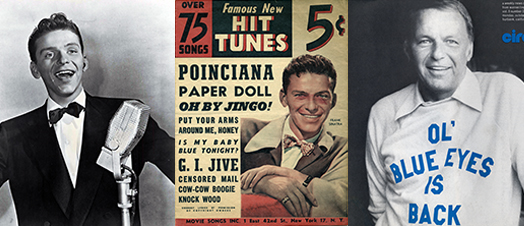
Frank Sinatra: The Man, the Voice, and the Fans
Honoring the 100th anniversary of the birth of Hoboken’s most famous native son, the exhibition, “Frank Sinatra: The Man, the Voice, and the Fans,” will open on Sunday, Aug. 2, with a free opening reception from 2 – 5 p.m. The exhibit will feature interactive displays and videos, period-appropriate listening stations, and cherished fan photographs and artifacts to illustrate the singer/actor’s formative years in Hoboken, highlights from his remarkable 60-year career, and memories from legions of fans. The exhibit will be accompanied by packed schedule of singers, films and authors, and a big birthday bash on Dec. 12, 2015.
Sinatra was, as writer Bruce Bliven put it, “a kid from Hoboken who got the breaks.” He emerged from a blue-collar, working class, urban setting, where most guys, he once told an audience, became fighters or worked in factories. His own father, Martin, a recent immigrant from Sicily, started out as a boxer, fighting under the assumed name of Marty O’Brien to gain access to Irish-controlled gyms that wouldn’t admit Italians.
Though he was born in a cold-water flat in a neighborhood of newly arrived immigrants in Southwest Hoboken, his life wasn’t as rough as some biographers have portrayed. He was a rare only child, whose mother, Dolly, used her political savvy and facility with languages to improve her family’s station, securing Marty a position with the city’s fire department. By the time he was 12, the Sinatras had moved to better housing and he earned the derisive nickname of “Slacksy O’Brien” for the dress pants he sported. In the 1920s and 30s, Hoboken was bursting with young singers who performed on street corners, in pool halls and clubs, and in private homes–wherever they could get an audience.
His big break came in 1935, when a Hoboken trio calling themselves the Three Flashes invited him to join them for a shot at the American Idol program of its day, the radio program, “Major Bowes and His Original Amateur Hour.” The Hoboken Four were a hit, and went on a tour sponsored by the radio program for the next several months. Then Sinatra went solo, performing at the Rustic Cabin in Englewood, NJ, which was broadcast on WNEW’s radio program, Dance Parade, leading to an invitation to join the nationally popular Harry James band. In 1939, he joined the Tommy Dorsey band and soon earned the name “Swoonatra,” for causing teenage girls to faint at his concerts.
He would go on to sell more records than any previous singer, and also to pursue a successful Hollywood film career, including an Oscar-winning performance in “From Here to Eternity.” He and his pals in the “Rat Pack” defined the image of American cool in the 1950s and 60s, and he continued to tour and record successful records into his later years. When he died in 1998, fans swarmed Hoboken to mourn the man whose music and movies had meant so much to them.