
Category Archives: Explore
Historic Highlights
Hoboken is Burning
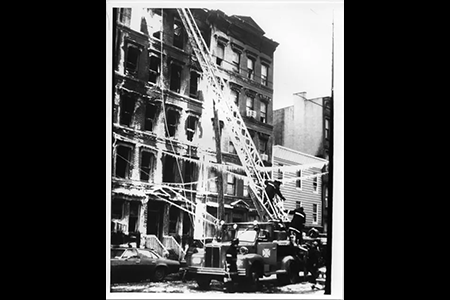
Hoboken is not the only city to struggle with gentrification, but the fires that plagued the city in the 1970s and ’80s displaced thousands of people, killed dozens and scarred the city’s landscape and social fabric. This page brings together some resources for learning more about the period.
Sybil’s Cave Yesterday and Today
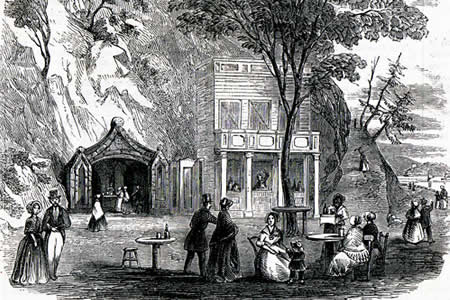
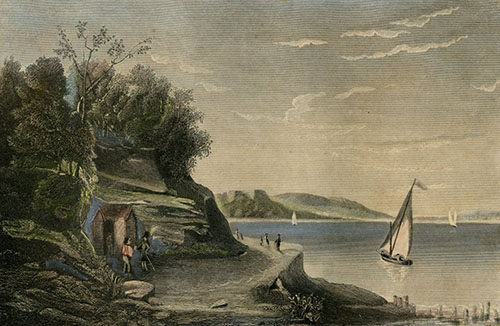
Sybil’s Cave is the oldest manmade structure in Hoboken, created in 1832 by the Stevens Family as a folly on their property that contained a natural spring. By the mid-19th century the cave was a recreational destination within walking distance from downtown Hoboken. A restaurant offered outdoor refreshments beside the cave. When the Stevens’ family property became Stevens Institute, the cave became property…
A City in Wartime: Hoboken, 1914-1919
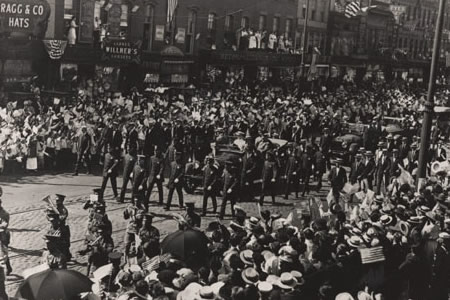
In the summer of 1914, Europe went to war. Although the United States did not enter the Great War until the spring of 1917, the conflict that would later be called World War I had an immediate impact on Hoboken, a port city with large immigrant communities. When America formally entered the war on April 6, 1917, Hoboken’s waterfront became central to the war…
Frank Sinatra, The Voice
Old Blue Eyes. The Voice. Chairman of the Board. Or, in Hoboken, simply “Frankie.” Frank Sinatra is Hoboken’s most famous son. Though the talented singer moved out of town after he achieved fame, his Hoboken upbringing shaped his early…

The Stevens Family
The Stevens family had a strong influence on the development of American yachting. On July 30, 1844, John Cox Stevens hosted the organizational meeting of the New York Yacht Club on his yacht Gimcrack. He would serve as First Commodore of the club until 1854. Despite the name, the club met in Hoboken. A clubhouse was built on Stevens family land just north of Castle Point.
On the Waterfront
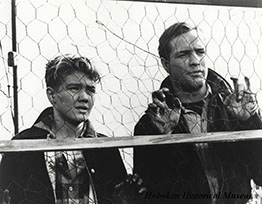
The 1954 film On the Waterfront was shaped by its setting in Hoboken. On the Waterfront featured Marlon Brando as Terry Malloy, a tough guy struggling with his conscience and his loyalty to a waterfront gang. While most movies at the time were filmed on studio stages, On the Waterfront was filmed on location, mostly in Hoboken. Many Hoboken residents played extras or even minor characters.
The Stevens Family
The Family
The grandfather of Hoboken’s founder, also named John Stevens, emigrated from England to New York City in 1699 at the age of seventeen. He served a seven year indenture as a clerk to a crown official in New York, then pursued interests in land and mining. He came to the Jerseys after hearing about copper mining in Rocky Hill, near Princeton. He soon found the business of land to be more profitable (though he would eventually acquire the…
Building Hoboken
While living in Manhattan with his wife, Colonel John Stevens became interested in building an estate. In 1783 he explored some land across the river. William Bayard’s farm had stood there, but it was confiscated by the colonial government of New Jersey because Bayard sided with the British Crown. On May 1, 1784 Stevens bought Bayard’s old farm from the State of New Jersey for 18,340 Pounds sterling, or about $90,000. He settled on the name Hoboken, a…
Steamboat Innovation
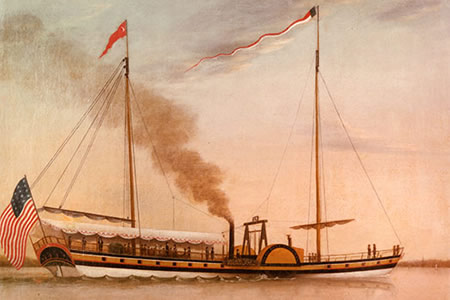
According to legend, Colonel Stevens was riding near the Delaware River in 1787 when he happened to see John Fitch’s experimental steamboat travelling up the river. He was so intrigued he followed the boat to its dock and thoroughly investigated it. Whether this chance meeting happened, or if it was regular correspondence with other learned men that sparked Stevens’ interest in steam power, by the late 1780s he was driven to work on the steam engine’s applications for…
First Family in American Railroading
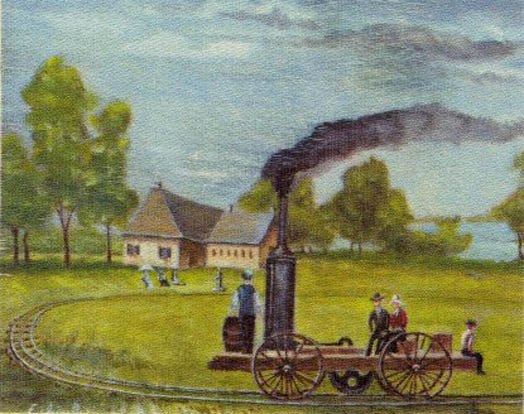
The railroads that stretch out of Hoboken and across the country are in large part the fruit of the brilliant minds of John Stevens and his son Robert.
John Stevens was a visionary advocate of steam-powered railroads at a time when few could even imagine how they would work. Around 1810 he turned the steamboat operations over to his capable sons and devoted himself to improving overland transportation. In 1811 he applied for a railroad…
Racing Yachts
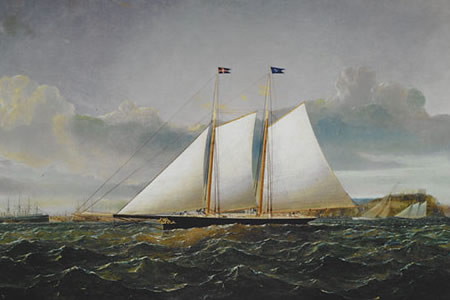
The Stevens family had a strong influence on the development of American yachting. On July 30, 1844, John Cox Stevens hosted the organizational meeting of the New York Yacht Club on his yacht Gimcrack. He would serve as First Commodore of the club until 1854. Despite the name, the club met in Hoboken. A clubhouse was built on Stevens family land just north of Castle Point.
The NYYC’s ship…
Naval Warfare
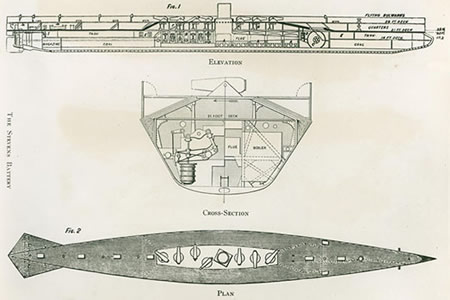
The pioneering work of Robert and Edwin Stevens in warship engineering was not as successful as the railroad, but it likely influenced advances in naval warfare in the mid nineteenth century. The Stevens Battery, an ironclad warship that was planned but never completed, demonstrated and likely inspired advances in warship construction.
The battery had a long history. During the War of 1812, Colonel John Stevens wrote a proposal for…
Hoboken Grows
As the Stevens family’s innovations and businesses continued to blossom, the town they founded grew.
Attracted in part by the efforts of the Hoboken Land and Improvement Company, big European shipping companies began establishing docks in Hoboken in the 1840s. The town’s population swelled, in large part from German and Irish immigrants. In 1849, the township of Hoboken was formed and its boundaries separated from North Bergen. On March 28, 1855, Hoboken was incorporated as a city.
Between…
Horticulture and Water Works
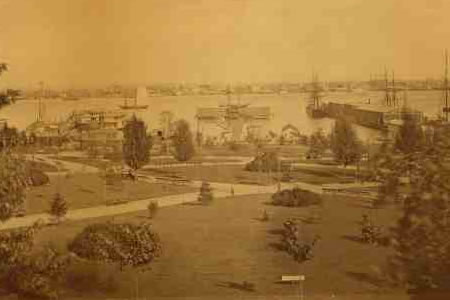
Though their fame is primarily the result of work in other areas, the Stevens’ contributions to American horticulture and water supply infrastructure are fascinating examples of their broad interests.
Colonel John Stevens had a keen interest in horticulture. Early after clearing the land at Hoboken, he planted many fruit trees that were new to the region. In 1797 he imported the first red camellia from England to America, and in 1798 he imported the first chrysanthemum…
The Castle
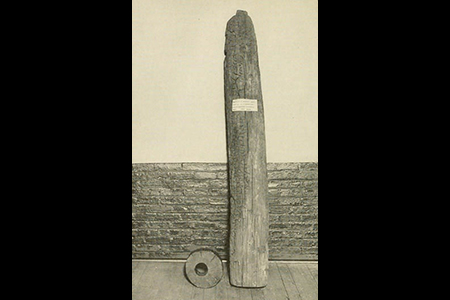
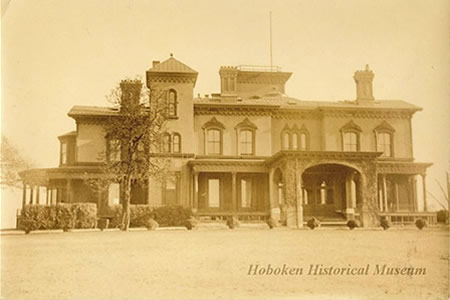
The family built the Stevens Castle in the 1850s. The new family residence was designed by Alexander Jackson Davis, a prominent architect of the time. It stood on the highest point in Hoboken, on a bluff overlooking the Hudson River.
The Castle contained numerous rooms for the many members of the Stevens family, as well as rooms for entertaining guests. Rooms were decorated with portraits of the family and ornate flourishes. A greenhouse was on the grounds as…
Stevens Institute of Technology
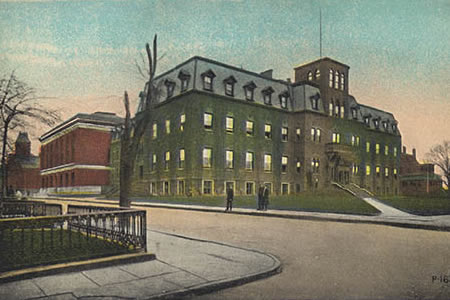
Appropriate for a family of pioneering engineers, the first college in America dedicated to mechanical engineering carries the Stevens name.
Edwin Augustus Stevens died in 1868, leaving a legacy of innovation and successful business management. His will provided for the establishment of a technical university, the first of its kind in America. In 1870, the Stevens Institute of Technology opened its doors to students. The university offered a rigorous course of study in engineering, scientific principles,…
Civic Engagement
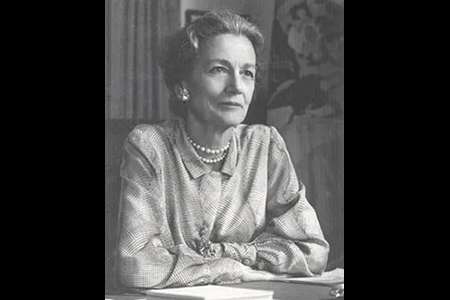
Continuing the civic sprit demonstrated by Hoboken’s founder in war and peace, several descendants of Colonel John Stevens have had important roles in philanthropy and politics.
The Stevens family never served in elected offices in Hoboken, preferring other roles in civic life. Edwin Stevens served as tax commissioner, public works commissioner and trustee of the local Episcopal Church. He also served the State of New Jersey as chairman of the commission that established the Interstate Palisades Park, a…
Legacy
While the descendants of Colonel Stevens no longer live in Hoboken, the family’s legacy can be seen around town.
The Stevens Institute overlooks the river along Castle Point and stretches across the last lands the Stevens family bequeathed. At the university’s Davidson Laboratory, experiments in ship design echo the work of the Stevens brothers in improving maritime engineering. The Church of the Holy Innocents, the charming small homes on Willow Terrace, and the Hoboken Land and Improvement Company building…
On the Waterfront
On the Waterfront: A Classic Film Created in Hoboken
The 1954 film On the Waterfront was shaped by its setting in Hoboken. On the Waterfront featured Marlon Brando as Terry Malloy, a tough guy struggling with his conscience and his loyalty to a waterfront gang. While most movies at the time were filmed on studio stages, On the Waterfront was filmed on location, mostly in Hoboken. Many Hoboken residents played extras or even minor characters.
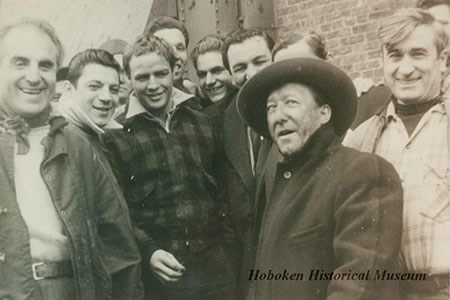
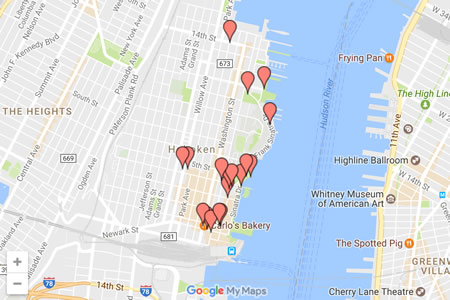
On the Waterfront Map
On the Waterfront was filmed almost entirely in Hoboken, New Jersey. This map marks locations found in the movie. Much has changed since On the Waterfront was filmed in 1953.
Hoboken is Burning
Hoboken is Burning: Gentrification, Arson & Displacement, 1970s-1980s
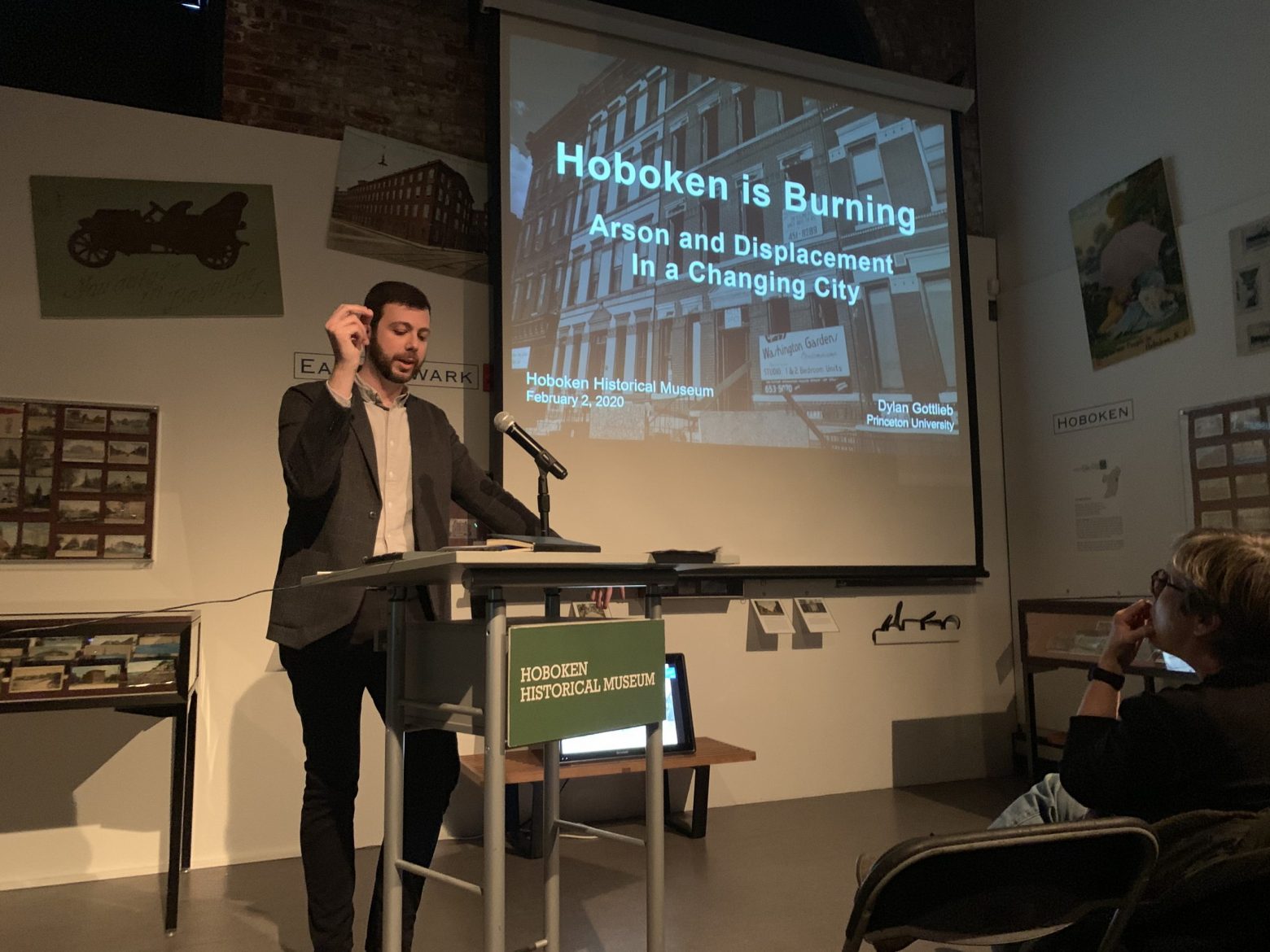 In February 2020, the Museum welcomed Gottlieb for a talk on the subject, “Hoboken is Burning: Gentrification, Arson, and Displacement in the 1970s,” and presented a screening of Nora Jacobson’s documentary, “Delivered Vacant,” which explores the same themes and was shot in the late 1980s – early 1990s.
Sybil’s Cave Today and Yesterday
Sybil’s Cave Today and Yesterday
Sybil’s Cave is the oldest manmade structure in Hoboken, created in 1832 by the Stevens Family as a folly on their property that contained a natural spring. By the mid-19th century the cave was a recreational destination within walking distance from downtown Hoboken. A restaurant offered outdoor refreshments beside the cave. When the Stevens’ family property became Stevens Institute, the cave became property “of the Institute and periodically opened to the public in the early 20th century. By the late 20th century the building had been covered in building debris.
Take an interactive virtual tour of the cave by clicking here or on the image below.  The page with the panorama includes a Google map.
In 2007 the cave was rediscovered and cleared by the City of Hoboken. With limited research, the City erected a new cast stone arch and fence that marks the cave, but prevents entry.
The Hoboken Historical Museum received a grant in 2009 from the New Jersey Historic Trust for a geo-ecological plan for mitigating the environmental changes caused by the recent opening of the cave and developed a plan for an appropriate use of the Cave and interpretive programming. A comprehensive archeological excavation was performed of the interior to learn as much as possible from the site with the least intervention but with careful attention to the site’s integrity. An engineering firm was engaged to establish the safety of the Cave’s structural integrity and the quality of the spring water.
Two documents were created from these investigations:
Geotechnical Condition and Water Quality Analysis for Sybil’s Cave. (Black & Veatch, January 2011); Appendix: Detailed Water Quality Sample Results.
Archaeological Assessment, Sybil’s Cave, Frank Sinatra Drive, City of Hoboken, Hudson County, New Jersey (Richard Grubb & Associates, May 2012)
Text of these documents may be read in full in this article, or you can click on one of the document page images to see the entire document including illustrations and tables.
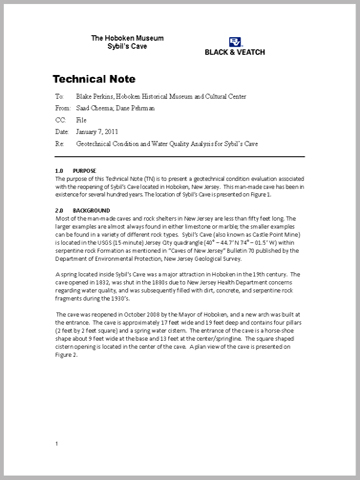
Appendix: Detailed Water Quality Sample Results.
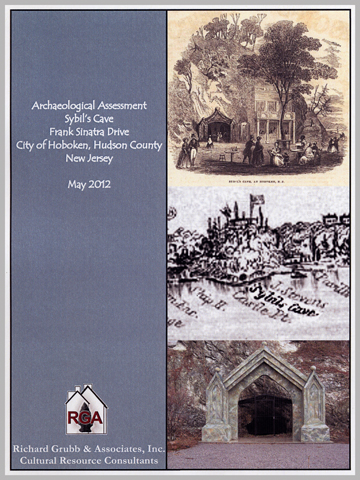
On the next two pages you will find the text of these documents; to see the illustrations and documentary materials use the links on document images above or at the top of each of following pages.