Category Archives: Explore
The Family
The grandfather of Hoboken’s founder, also named John Stevens, emigrated from England to New York City in 1699 at the age of seventeen. He served a seven year indenture as a clerk to a crown official in New York, then pursued interests in land and mining. He came to the Jerseys after hearing about copper mining in Rocky Hill, near Princeton. He soon found the business of land to be more profitable (though he would eventually acquire the Rocky Hill mines). While living in the Princeton area he met Ann Campbell, whose father owned land as a shareholder and proxy for New Jersey’s Proprietors. John and Ann married in 1714, and John Stevens now joined in Ann’s father’s land business. They left many scattered tracts of land in New Jersey to their children when John died in 1737.
The father of Hoboken’s founder, the Honorable John Stevens (1716 – 1792) was a prominent merchant. He served on the New Jersey Royal Governor’s council until he resigned to support the cause of Independence. He was also a slaveholder, at least for part of his life. His wife, Mary Alexander, was a daughter of the surveyor-general of New York and New Jersey. He had two children, John in 1749, and Mary in 1752. The Honorable John Stevens would serve in the New Jersey legislature after Independence as well.
⚡ Stevens Family: Fast Facts
- The Founder: Colonel John Stevens (1749–1838) founded Hoboken and was a leading advocate for the first U.S. patent laws.
- Transportation Firsts:
- Designed the first American-built steam locomotive.
- Operated the Phoenix, the first steamboat to successfully navigate the open ocean.
- The “T-Rail”: Robert L. Stevens invented the T-rail, the inverted “T” shape for tracks that became the global standard for railroads.
- The America’s Cup: John Cox Stevens founded the New York Yacht Club and led the syndicate that won the very first America’s Cup in 1851.
- Educational Legacy: Edwin A. Stevens bequeathed the land and funds to establish the Stevens Institute of Technology, the first U.S. college dedicated to mechanical engineering.
- Philanthropy: Martha Bayard Stevens was a prolific philanthropist, funding the construction of the Church of the Holy Innocents and numerous civic projects in Hoboken.
John Stevens (1749-1838), often referred to as Colonel John Stevens, was Hoboken’s founder, a patriot, attorney, and civic-minded inventor. He was a pioneer, even a visionary, in steam powered transportation on sea and land. Charles King, president of Columbia University, wrote of him in 1852: “Born to affluence, his whole life was devoted to experiments, at his own cost, for the common good… Time has vindicated his claim to the character of a far-seeing, accurate, and skillful, practical experimentalist and inventor… The thinker was ahead of his age.”
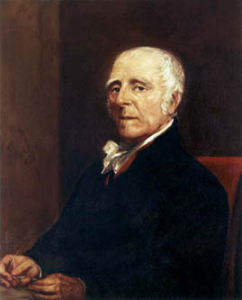
John was born in New York City in 1749, but spent most of his childhood at the family home in Amboy. In 1760, the family established a winter home in Manhattan. John graduated King’s College (now Columbia) in 1768, then studied law and became an attorney in New York in 1771.
Young John and his sister forged close relationships with the powerful Livingston family. In 1771 Mary Stevens and Robert Livingston Jr. were married. The Livingstons had significant influence in New York politics in the colonial and early republican eras. Their influence would not benefit the Stevens family when John Stevens and Robert Livingston were on opposite sides of a steamboat navigation dispute in the 1800s.
Like his father, young John Stevens joined the Patriot cause and offered his services. On July 15, 1776, he was appointed Treasurer of New Jersey. Successfully carrying out his duties in war-torn New Jersey required him to navigate the state on horseback evading British and Tory troops as he raised funds and paid bills for the state. His service earned him the rank of colonel.
Rachel Cox, a beautiful daughter of Colonel John Cox, caught John’s fancy and the two of them married in October 1782. After hostilities with Britain ceased, they moved to the Stevens home in Manhattan and planned to acquire land and raise a family. John looked across the river to the future.
Colonel John Stevens and his wife Rachel would have 13 children. Their most well-known sons are John Cox Stevens (1785-1857), Robert Livingston Stevens (1787-1856), and Edwin Augustus Stevens (1795-1868).
| John Cox Stevens | Robert Livingston Stevens | Edwin Augustus Stevens | |
| Primary Focus | Maritime & Sport | Engineering & Rail | Business & Education |
| Key Invention | Organized Yachting | The T-Rail (Standard Track) | The “Stevens Battery” (Ironclad) |
| Famous First | Won the first America’s Cup | Built the first steam locomotive in the U.S. | Founded America’s 1st mechanical engineering college |
| Organization | New York Yacht Club | Camden & Amboy Railroad | Stevens Institute of Technology |
| Defining Trait | The Visionary Diplomat | The Inventive Genius | The Strategic Philanthropist |
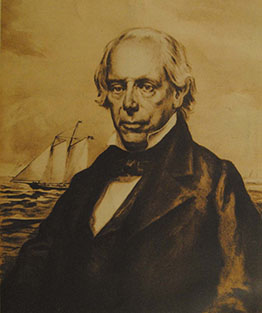
John Cox Stevens represented the family in business when needed and enjoyed sailing as often as he could. As a founder of the New York Yacht Club, he sailed the America to victory in the race that would become the America’s Cup.
Robert’s creative imagination was noticed at an early age and as a youth he was given tools and mathematical training. Robert made an incredible number of advances in the construction of railroads and ships. He had attended Columbia like his father, but left before graduating to learn about mechanical operations in Hoboken machine shops.
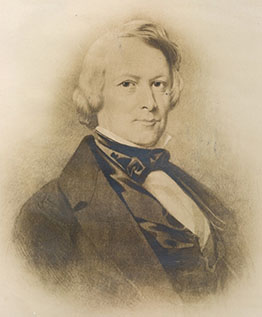
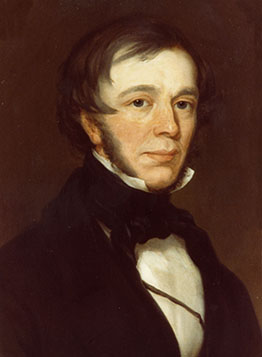
Edwin had a mind for engineering and business, and he often worked with his brother Robert on joint ventures. Edwin firmly anchored the Stevens legacy in Hoboken by founding the Stevens Institute, America’s first college devoted to mechanical engineering.
There were proud civic leaders among the women in the Stevens family.
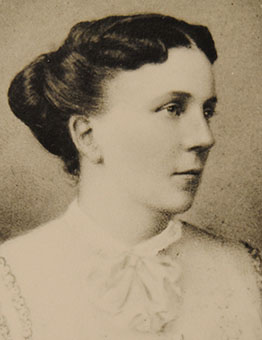
Martha Bayard Stevens, wife of Edwin Augustus, was known for her philanthropic contributions to Hoboken.
Caroline Bayard Stevens was so well regarded for her civic work that her death was mourned at the White House.
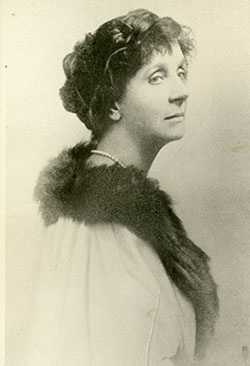

Millicent Fenwick, a great-granddaughter of Edwin, was a respected member of the United States Congress.
In 1897, Abram S. Hewitt fondly recalled the Stevens family in an address at the Stevens Institute. Hewitt had been a mayor of New York City, a member of Congress, and a leader in the ironworks business. Yet when he first visited the elderly John Stevens at Castle Point, he was a curious young boy, the son of a mechanic who had developed a friendly relation with John while working on his steam engines. Hewitt was impressed by the genuine enthusiasm and friendliness shown by the man in his eighties who was still possessed of an active and alert mind.
“I was welcomed to Castle Point in my early youth just as I would be today by the honored mistress of that mansion. They did not believe that the acquisition of wealth was sufficient for the development of human nature… The sense for beauty was manifest in all that they did.”
Sources
Archibald Douglas Turnbull. John Stevens, an American Record. Archive.org.
Charles King, Preface to Stevens, “Documents Tending to prove the Superior Advantages of Rail-ways and Steam Carriages Over Canal Navigation.” iii-vi. Archive.org.
George Iles. Leading American Inventors. Family History, 5-6; Hewitt praising the Stevens family, 35, 37-38. Archive.org.
Leading Innovation: A Brief History of Stevens, Stevens Institute of Technology. www.stevens.edu
J. Elfreth Watkins, “John Stevens and His Sons,” 3,6. Stevens Family Collection.
Mary Stevens Baird Recollections, Stevens Family Collection. V, 3.
Frank Sinatra, The Voice
Francis Albert Sinatra (1915 – 1998)

Old Blue Eyes. The Voice. Chairman of the Board. Or, in Hoboken, simply “Frankie.”
Frank Sinatra is Hoboken’s most famous son. Though the talented singer moved out of town after he achieved fame, his Hoboken upbringing shaped his early career and imparted a cocky but relatable image, which helped make him an icon. The trajectory of his family’s life in Hoboken reflected the opportunities and divisions in early twentieth century urban America.
To download a PDF of our Sinatra Walking Tour map, click here.
He was, as one writer put it, “a kid from Hoboken who got the breaks.” And in the course of his sixty-year career, that skinny kid the others called “Slats” reshaped American popular music and ideas about style.
Frank Sinatra was America’s first teen heartthrob, earning another nickname – “Swoonatra” – after girls started fainting at his concerts during the 1940s. Boys imitated his slicked-back hair and cocky demeanor. All across the country – and then the world – sighing, swooning, swaggering fans fell in love with that voice, with an intimate style of singing that brought the listener inside the song, alongside the singer.


Perhaps that is why former bobby-soxers and zoot-suiters – sometimes with their kids and grandkids in tow – have journeyed for years to Sinatra’s birthplace, or packed into local taverns to celebrate the birth of this city’s most famous native son. Younger fans mention the Rat Pack and the Chairman’s cool, but many also cite his musical artistry as inspiration.
And when the news broke on May 14, 1998, that Frank Sinatra had died, the fans came again to Hoboken, to pay respects and to mourn. The bronze star the Hoboken Historical Museum had installed at the singer’s birthplace two years before was soon surrounded by candles, handmade signs, flowers, notes, photographs, and even a loaf of coal-fired oven bread, a Hoboken specialty that the singer sometimes had shipped to California.
Francis Albert Sinatra was born on December 12, 1915. Frank, who was an only child, lived at 415 Monroe Street until he was twelve years old. His mother, “Dolly,” whose maiden name was Natalie Della Garavente, was a midwife and ward leader during her years on Monroe Street. His father, Anthony Martin Sinatra, was a boxer who, though born in Sicily, went by the name of “Marty O’Brien” in order to be allowed to fight in Hoboken’s Irish-only gymnasiums. Marty later became a tavern-owner and firefighter.
The four-story, eight-family, wood-frame, cold-water apartment house of Sinatra’s youth no longer exists. After a major fire in 1967, the building was seized by the city and demolished a year later. In 1996, the Hoboken Historical Museum designed and installed a 3-foot-square bronze plaque in the sidewalk commemorating Sinatra’s birthplace.
Writer Pete Hamill noted in a tribute to Sinatra that when the singer’s career began, “there was an America that now doesn’t exist very much, a kind of blue-collar America, industrial America… and nobody had represented that before.” Sinatra could easily summon images from working-class, urban life. In his neighborhood, he told a radio audience in 1980, boys became fighters or they worked in factories. And Sinatra knew more than a little about street-tough guys, from spending time in smoky nightspots like the Cat’s Meow – one of nearly 200 social clubs in the city during the thirties. Today, about a half-dozen remain.
And yet, Frank’s growing-up years weren’t nearly as rough as some biographies have suggested. He was a rare only child, in a family whose fortunes increased through his mother’s savvy political connections. In fact, one of young Frank’s other nicknames, “Slacksy O’Brien,” stemmed from his family’s ability to buy him so many pairs of dressy pants. Although it’s certainly true that Frank was born in a cold-water flat, many immigrant families made homes in such apartments. And the Sinatras, after all, did not remain on Monroe Street for long.
As a third ward leader, Frank’s mother Dolly was a significant cog in the city’s political machine, gaining Democratic votes for higher-ups and dispensing and gaining favors. Like most Hoboken residents, she was aware of the division of power – and the city – between the Irish and Italians, but her close involvement with those in power allowed her to literally cross those lines. In 1920s Hoboken, Italians didn’t dare cross Willow Avenue, a kind of dividing line between the Italian and Irish neighborhoods; and yet, the Sinatras – sometimes calling themselves “the O’Briens” – moved across Willow, and then moved again, each time closer to the prestigious Irish/German section of town.
The Hoboken of the 1920s and 1930s was also a city bursting with younger singers, who performed on street corners, in clubs, in private homes, and in pool rooms – wherever they could get an audience.
Young Frank’s usual haunts included his father’s bar, Marty O’Brien’s at 333 Jefferson Street; the Crystal Ballroom, at 530 Jefferson St., now a condo building; and Tutty’s Bar, at Sixth and Adams Streets. The Cat’s Meow, at 604 Grand Street, not only offered him a stage, but also an occasional opportunity to sleep under the pool table when he wanted to get away from his mother. As his confidence and skill improved, he snagged a $40/week gig at Hoboken’s popular Union Club (600 Hudson St.), for dances and banquets. The Union Club was one of the first successful banquet halls owned by the upwardly mobile Italians who were making Hoboken their own, as Paul Samperi describes in one of the Museum’s Oral History chapbooks, A Fine Tavern.
In September 1935 Sinatra joined up with a Hoboken trio, The Three Flashes, to form the Hoboken Four. They sang on the nationally broadcast radio show, Major Bowes and His Original Amateur Hour, and were voted its most popular act.
The group toured the country for several months, then Sinatra went solo, singing at dances at Hoboken clubs, until he got a gig at the Rustic Cabin in Englewood Cliffs. Bandleader Harry James heard Sinatra on a WNEW Dance Parade broadcast from the Cabin and offered him a position as a vocalist. In late 1939, he joined the Tommy Dorsey band.
When Dorsey’s lead singer quit the band, Frankie and Tommy became a popular musical duo before Sinatra left in 1943 to embark on a hugely successful solo career. Though his later career had ups and downs, he would record hit songs and star in movies for decades.
But by the early 1940s, Frank had already left Hoboken. He married his sweetheart Nancy Barbato, whom he met at the Jersey Shore, and moved into Jersey City before relocating to California. Marty and Dolly remained in Hoboken, finally settling in a grand house at 909 Hudson Street that Frank had bought for them.
In 1947 Frank Sinatra made his last public appearance in the city for nearly forty years – until he returned to accompany Ronald Reagan to St. Ann’s Feast in 1984. On October 30, 1947, Hoboken celebrated Sinatra Day, the final event in a month-long March of Progress celebration orchestrated by Mayor Fred M. DeSapio with the assistance of his dedicated ward leader, Dolly Sinatra. Twenty thousand people lined Washington Street in the pouring rain to catch a glimpse of the star, who announced, “I’ve met people in cities all over the country, but folks here in Hoboken, well, they’re just wonderful – that’s all.”
More than a few Hobokenites will return the compliment. As one man wrote to “Blue Eyes” in the sign-in book at Sinatra’s birthplace: “I was much younger than you, but grew up in this town, and all my family knew you and your legacy growing up here. Thanks for the world.” Hoboken has thanked Frank Sinatra by dedicating its main post office, a waterfront park, and a street along its picturesque waterfront, to the city’s most famous son.
Sinatra’s fans inspired the Museum to create a Sinatra Walking Tour map. You can begin the tour by picking up a copy at the Museum at 1301 Hudson Street. As you take the tour, note the changing architecture of each Sinatra family home. You may gain a sense of what life was like here during the singer’s early years – and what remains from that time. Imagine the life of a teenaged Sinatra and his family, and also the long-vanished social clubs, pool halls, and bars of the thirties, where Frank and his contemporaries sang
The Museum also dedicated an issue of its magazine, Hoboken History, to the singer and his changing relationship with the Mile Square City. You can download a PDF from our collections.
In addition to the materials featured above, the Museum also has a large collection of Sinatra memorabilia in our digital collections.
–Edited by Darian Worden
Drawn from the following sources: Sinatra Tour Map text by Holly Metz, Hoboken Historical Museum, 1998, as well as “Frank Sinatra Sang Here…,” by Melissa Abernathy, July 22, 2013, in hMAG, and Frank Sinatra Biography, Rolling Stone magazine.
Thank you for visiting our page. Come visit us at 1301 Hudson Street for changing exhibits about Hoboken’s rich and varied history.
A Short History of Hoboken
The Birth of “Hopoghan Hackingh”
Hoboken’s modern history began in 1609 when Henry Hudson’s navigator, aboard the Half Moon, noted the area’s distinctive green-veined rock. Long before European feet touched the shore, the Lenni Lenape used this “island” as a seasonal camp. They called it Hopoghan Hackingh, or “Land of the Tobacco Pipe,” named for the green serpentine rock they carved into smoking pipes.
In 1658, Dutch Governor Peter Stuyvesant “purchased” the land from the Lenape for a collection of goods including wampum, cloth, kettles, guns, and half a barrel of beer. By 1784, after the land was confiscated from a Loyalist during the Revolution, Colonel John Stevens—a patriot and visionary inventor—purchased the island at auction for about $90,000. It was Stevens who settled on the name “Hoboken,” beginning a family dynasty that would change American industry forever.
An American Laboratory
Colonel Stevens didn’t just see a marshy island; he saw a resort and a hub of innovation. He developed the “River Walk” to lure New Yorkers across the Hudson for Sunday picnics, but his true passion was technology. Hoboken became the site of several world-changing milestones:
-
1811: The first steam-powered ferry began service between Hoboken and Manhattan.
-
1826: Stevens designed and operated the first experimental steam locomotive in the U.S. on a circular track in Hoboken.
-
1844: John Cox Stevens founded the New York Yacht Club in Hoboken; the first America’s Cup was named after their yacht, America.
Gateway to the World
By the late 19th century, Hoboken had evolved from a weekend resort into a global shipping powerhouse. The waterfront “sprouted” with massive piers serving lines like Holland America and Hamburg-American. Because of this infrastructure, the Federal government chose Hoboken as the primary port for the American Expeditionary Forces in World War I. Over three million soldiers passed through the city, sparking the hopeful rallying cry: “Heaven, Hell, or Hoboken… by Christmas.”
This era saw a massive population boom, turning the city into a vibrant “melting pot.” German immigrants arrived first—giving the city the nickname “Little Bremen”—followed by waves of Irish, Italians, and Latinos. It was in this bustling, immigrant-heavy town that Hoboken’s most famous son, Frank Sinatra, was born in 1915.
The Silver Screen and the Docks
Hoboken’s gritty, industrial soul was immortalized in the 1954 cinematic masterpiece On the Waterfront. Starring Marlon Brando, the film was shot entirely on location on Hoboken’s piers, rooftops, and parks. Locations like Elysian Park, Church Square Park, and Our Lady of Grace Church remain largely recognizable today. The film captured the real-life struggles of the city’s longshoremen just as the shipping industry began to change forever.
Resilience and Renaissance
The 1960s brought a turning point. The rise of containerized shipping—which required vast open spaces for cranes and containers—made Hoboken’s traditional finger piers obsolete. This led to a severe economic decline that reached its lowest point in the 1970s.
This era of disinvestment brought a dark chapter to the Mile Square: a wave of suspicious fires that plagued the city’s aging tenements in the late 1970s and early 1980s. These tragic events resulted in the loss of many lives and the displacement of families, leaving scars on the community that remain to this day. Yet, this period of grief also galvanized local residents and activists to fight for the survival of their neighborhoods, sparking a movement to protect and stabilize the city’s housing.
Ironically, while this period was defined by hardship, the lack of large-scale development during those decades is what ultimately preserved the city’s historic 18th and 19th-century architecture. Instead of being leveled for modern high-rises, Hoboken’s brownstones and cobblestones remained. By the late 1980s, this preserved character, combined with the city’s unparalleled proximity to Manhattan, sparked a renaissance—transforming Hoboken from a struggling port town into a premier residential destination.
Hoboken Today
Today, Hoboken has transcended its industrial roots to become one of the most dynamic small cities in America. While the cobblestones and brownstones remain, they now serve as the backdrop for a diverse community of young professionals, growing families, and lifelong residents. The city is no longer defined just by the cargo on its docks, but by the energy of its local businesses, a world-class educational landscape, and a commitment to urban resilience.
It is a place where the echoes of the old waterfront meet a forward-thinking global culture—a square mile that feels like a neighborhood, yet pulses with the ambition of the metropolis just across the river. Hoboken is more than a historic site; it is a living, breathing testament to how a community can reinvent itself while staying fiercely proud of where it began.
Walking Tour Highlights


Erie Lackawanna Railroad and Ferry Terminal, foot of Hudson Place, 1907.
Kenneth Murchison, Architect; Lincoln Bush, Engineer; Beaux Arts. Built by the Delaware Lackawanna & Western Railroad to serve rail and ferry passengers. The entire structure, built over water on a steel and concrete foundation, accommodated six ferry slips and fourteen rail lines. The individually roofed train shed arches are an innovative design by Bush. The entire structure is sheathed in copper. The terminal’s clock tower is a replica of the original clock tower, which was removed in the 1950s after storm damage. The current clock tower was completed in 2008 and replaced an obsolete communications tower that stood where the original clock tower had been torn down.
Hoboken Land & Improvement Company, 1 Newark Street, 1889.
Charles Fall, Architect; Myles Tierney, mason. Housing the offices of the Steven’s family real estate holding corporation the Hoboken Land & Improvement Company. From this building the city’s street plan and development of its residential, business, and industrial areas was overseen. The building is notable for its high quality brickwork, with recessed panels and contrasting color mortars. the Stevens family requested the central staircase be designed to resemble a ferry’s staircase. On the south facade, a terra-cotta clock is surrounded by sea motifs and the company’s monogram. The rail tracks are remnant of Hoboken’s once extensive trolley system.
Hoboken City Hall, 94 Washington Street, 1883.
Francis George Himpler, Architect; Second Empire modified to Beaux Art Classicism. This square block, donated by Colonel John Stevens, was originally a public marketplace. The design was modified in 1911 to include two projecting bays, an enlarged third floor, and a jail in the rear of the building. The original entrance remains the same. You may want to check out the City of Hoboken’s Official Web Site.
Assembly of Exempt Firemen, 213 Bloomfield Street, Circa 1864.
Francis George Himpler, Architect; Italianate/Second Empire. This early example of Himpler’s work is one of two architecturally intact Hoboken firehouses, the other is at 212 Park Avenue. The second floor features a plaster ceiling roundel of working firemen with the gas line interpreted as a fire hose. Exempt Firemen were excused from public duty after seven years of volunteer service. Today the building serves as a firefighter’s union hall and museum of Hoboken firefighters’ memorabilia.
Jefferson Trust Company, 313-15 First Street, 1912. Revival.
The Trust was founded in 1905 by a diverse group of Hoboken businessmen who chose the name as representative of their democratic and community service ideals. The bank prospered as the town assimilated successive groups of immigrants. By 1912 the Trust was in an appropriately impressive granite and brick building of monumental scale. The coffered ceiling borders a flat-domed, leaded glass skylight, and the richly detailed plaster interior remains practically unaltered. After the bank failed during the Great Depression, the property changed hands many times before its present owners undertook its restoration and adaptive reuse.
Keuffel & Esser Manufacturing Complex, Third Street at Grand and Adams Street, 1906. Architect unknown.
In 1867 Keuffel and Esser, Hoboken residents, began importing precision instruments for the architectural, engineering and drafting professions. Their products were used in planning the Brooklyn Bridge. As demand grew, they began manufacturing. In 1891 their New Jersey factory produced the first slide rule manufactured in the United States. They supplied the Navy with periscopes in World War I, the Army with range-finders in World War II. Spiders were raised in the basement to supply web filament as cross hairs for gun sights. The West Plant, known locally as the Clock Tower Building, was built of reinforced concrete to replace a prior structure that burned. In the mid-1960s, Keuffel & Esser relocated. In 1975 the building was converted to housing and has been cited as a premiere example of adaptive reuse of an industrial building.
Our Lady of Grace Church, 400 Willow Avenue, Circa 1878.
Francis George Himpler, Architect; German Gothic. Once the largest Roman Catholic Church in New Jersey, Our Lady of Grace Church was constructed after a design by Himpler. Gifts of paintings and ceremonial vessels were donated by Victor Emmanuel, Emperor Napoleon III and other Italian and French royalty when the church was dedicated.
Church Square Park, bordered by Fourth, Fifth, Garden Streets and Willow Avenue.
On land given to the city by Colonel John Stevens in 1804, the park plan dates from 1873. Near Willow Avenue is the Firefighters’ Monument dating from 1981. Taps, a former mascot, is buried at its base. On the other side of the park is the Four Chaplains Monument honoring four clergy of differing faiths who died while attending to the crew of the torpedoed USS Dorchester in World War II. The pedestal commemorates Marconi, the inventor of the wireless. Since 1987 free summer concerts have been presented from the park’s bandstand.
Free Public Library, 500 Park Avenue, 1897. William Beyer, Architect; Italian Renaissance.
When the library was dedicated in 1897, it became the third library in New Jersey. It is built of Indiana limestone, with upper stories in yellow brick and terra-cotta. The dome was originally sheathed in copper.
Church of the Holy Innocents, Willow Avenue at Sixth Street, 1874.
Edward Tuckerman Potter and Henry Vaughn, Architects; High Victorian Gothic. Dedicated to Julia Stevens, daughter of Martha Bayard and Edwin Augustus Stevens, who died in Rome at age seven from typhoid fever. Built to serve German and Irish immigrants, it did not charge a pew fee to be seated, the norm for the time. Potter’s banded arches emphasize the polychromatic exterior of brownstone and white and red sandstone. The choir was added in 1913, the baptistery in 1932. Though no longer in use, the exterior details of this Episcopal church remains largely intact.
Willow Terrace, Sixth and Seventh Streets, between Willow Avenue and Clinton Street. Circa 1880.
In this usage, “terraces” are streets serving a section of row houses. These compact homes were commissioned by Martha Bayard Stevens for workers at Stevens Castle and the Hoboken Land & Improvement Company. They were patterned after similar workers’ houses she had seen on a trip to Scotland.
Stephen Collins Foster House, 601 Bloomfield Street.
The composer (1826-1864) lived here in 1854 when “Jeanie with the Light Brown Hair” was published. “Hoboken” is penned on the original manuscript. This address is Foster’s only known intact residence. Some other compositions by Foster are “Camptown Races,” “Oh! Susanna,” and “Beautiful Dreamer.”
Lawton-Turso Funeral Home, 633 Washington Street. Architect unknown.
Established in 1855 as the A.J. Volk Funeral Home, this is the oldest active funeral home in Hoboken. Its beautiful 800-piece, leaded and beveled glass window was imported from Europe and dates from 1913. The name change occurred in 1949 when the business changed hands.
Court Street, runs between Hudson and Washington from Seventh to Newark Streets.
Court Street originally provided access to the residents’ mews or stables. Today it is used as an alley and access for homes and garages. The original cobblestone remind Hoboken of its past.
All Saints Episcopal Church, 701 Washington Street, 1856.
Richard Upjohn, Designer; Deutsche & Dietz, Hoboken Architects; Gothic. All Saints was originally consecrated as Trinity Episcopal. It was subsequently enlarged and re-consecrated as All Saints. The church serves an active congregation today and is notable for its vaulted interior and fine stained glass.
Elks Lodge, 1005 Washington Street, 1906. G.B. McIntyre, Designer.
Lodge #74 was founded in Hoboken in 1888 in the Gayety Theatre building at 1015 Washington Street. Now at 1005 Washington Street, this is the oldest lodge in New Jersey, designated as the Mother Lodge. Bowling lanes, which still remain, were constructed in the basement. The Lodge frequently hosts community gatherings.
Yellow Flats, east side of 1200 Washington Street. Circa 1890
Build by Hoboken Land & Improvement Company, these apartments were once home to one of the wealthiest women of her day, Hetty Green, nicknamed the “Witch of Wall Street.” Her reluctance to spend money is legendary. It is said that her injured son lost a leg because she was unwilling to pay for his medical attention.
Hoboken Fire Department Engine Company No. 2, 1313 Washington Street, 1880.
Charles Fall, Architect; Neo-Romanesque. This firehouse was restored outside and modernized within, following a severe fire in the 1980s. Hoboken’s firehouses provide distinctive examples of 19th-Century architecture; six are listed on the National Register of Historic Places.
Standard Brands/Lipton Tea Building, Fifteenth and Washington Streets. Architect unknown.
Visible the length of Washington Street, the building was recently converted to luxury rental apartments and renamed the Hudson Tea Building. On the north side of the building is an inlet from the Hudson River. Ship delivering cargoes of tea anchored alongside the building to unload directly on to its dock. Sir Thomas Lipton became a member of the Hoboken Chamber of Commerce in 1919.
The Machine Shop 1200-1400 Hudson Street.
This two-and-a-half story, thirty-six bay brick structure is the oldest building on the Hoboken waterfront. Built by the W. & A. Fletcher Company in 1891, then acquired by Bethlehem Steel, it was at the center of the region’s vital shipbuilding and repair industry. During World War II Bethlehem Steel employees were reported to have worked on more than 4,000 ships. The Machine Shop was in use around-the-clock, employing as many as 11,000 workers. The shop closed in 1984. The building was recently incorporated into the Shipyard development and now houses luxury apartments, retail shops, and the Hoboken Historical Museum.
Hoboken Historical Museum 1301 Hudson Street.
Housed in the Machine Shop, the Hoboken Historical Museum’s permanent space opened in 2001. Designed by architect Dean Marchetto, the revitalized historic building serves as the museum’s home. It provides much needed exhibit space and a showcase for our growing collection. Stop by to view our exhibits, talk to our knowledgeable staff, and purchase historical mementos.
Maxwell House Coffee Plant, Hudson Street at Eleventh Street, 1939.
The field were General Foods Corporation built their coffee processing plant is acknowledged as the 1846 site of the first organized baseball game. During the plant’s operation, Hoboken residents became accustomed to the pervasive aroma of roasting coffee beans, especially prominent when rain was forecast. The huge rooftop neon sign, illustrating Maxwell House’s “Good to the Last Drop” slogan, portrayed coffee drops falling from the rim of a cup. The plant was closed in 1992 and the sign was disassembled in 1993. The Maxwell Place condominiums now occupy the site where the plant was demolished.
The Columbia Club, northeast corner of Bloomfield and Eleventh Streets, 1891.
French, Dixon and DiSaldern, Architects; Romanesque Revival. The Columbia Club was built in 1891 by a gentlemen’s society composed of one hundred men from Hoboken and New York City. The design, with a conical tower, rounded archways and horizontal bands, reflects the influence of Henry Hobson Richardson, whose interest in Romantic architecture sparked a style known as Richardson Romanesque (for example, the Edwin A Stevens Hall) and Romanesque Revival. The building today houses luxury condominiums. The same firm designed the First Baptist Church at 9th and Bloomfield.
Stevens Institute of Technology
Enter at Ninth Street. Stevens Institute is America’s first college of mechanical engineering. Founded in 1870 with a land grant and $650,000 bequeathed by Edwin Augustus Stevens, Stevens Institute currently has 1,400 undergraduate and 2,200 graduate students from twenty-one states and twenty countries. Notable alumni include the co-inventor of bubble wrap, the designer of the Quonset hut and Alexander “Sandy” Calder, a 20th-Century American sculptor and artist known for his mobiles. The Williams Library collection includes a Calder mobile.
Entrance to Stevens Castle, Sixth Street off River Road, circa 1856.
The oldest structure of the Stevens estate is constructed of the same serpentine rock mentioned in Hudson’s log. It was the grand entrance through which all guests approached the Castle, a haunting structure built for the Steven’s in 1854. The Gate House remains; the Castle was demolished in 1959.
Original Stevens Administration Building, Fifth Street at Hudson Street, 1870.
Richard Upjohn, Architect; Italianate/Second Empire. The “A” Building was the first on campus and houses classrooms, offices and a lecture hall. Upjohn also designed Trinity Church in New York City.
Stevens Park, bordered by Fourth, Fifth, Hudson Streets and Sinatra Drive.
Originally Hudson Square Park, it was renamed in 1955 in honor of the Stevens family who donated the land. The Civil War statue facing Hudson Street was dedicated by William Tecumseh Sherman 1888. The adjacent cannons are from the USS Portsmouth which was decommissioned at the Fifth Street pier in 1901.
Saints Peter & Paul Roman Catholic Church, Hudson and Fourth Streets.
Founded in 1889, built in 1928. Architect unknown. The church has an exterior of imported Dutch brick trimmed in Indian limestone. The interior is hand-made brick from Virginia with details of Sienna marble. Interiors were shot here for On The Waterfront.
World War I American Expeditionary Forces Memorial Bolder
Recently relocated from Second and River to the foot of First Street, 1925. Dedicated by Knights of Columbus in 1925, this memorial honors the three million A.E.F. troops who passed through Hoboken, the port of embarkation for all troops during World War I. President Woodrow Wilson sailed from Hoboken in 1918 to attend the Paris Peace Conference, during which he proposed the formation of the League of Nations, forerunner of the United Nations.