Collections Item Detail
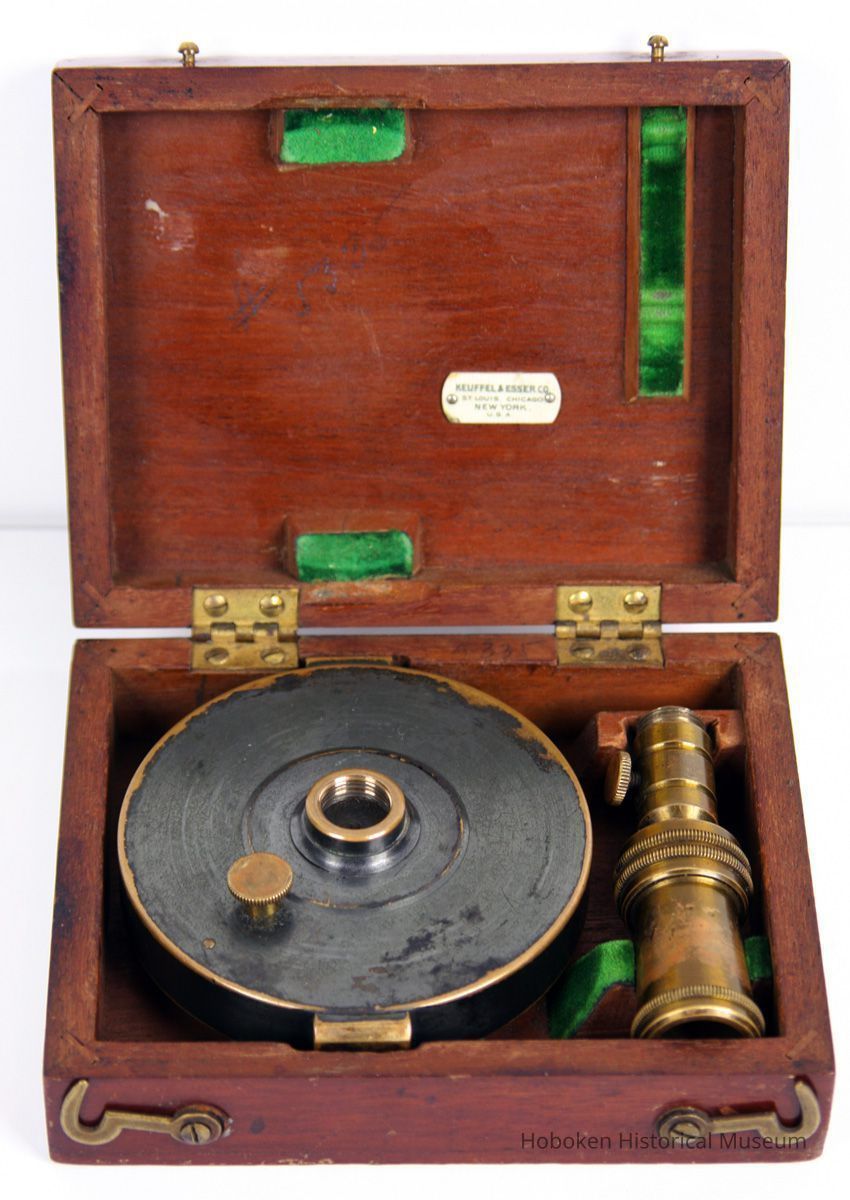
Surveying compass, model 5335, 2-1/2" needle, made by Keuffel & Esser Co., N.Y. N.d., ca.1894-1900.
Object/Artifact
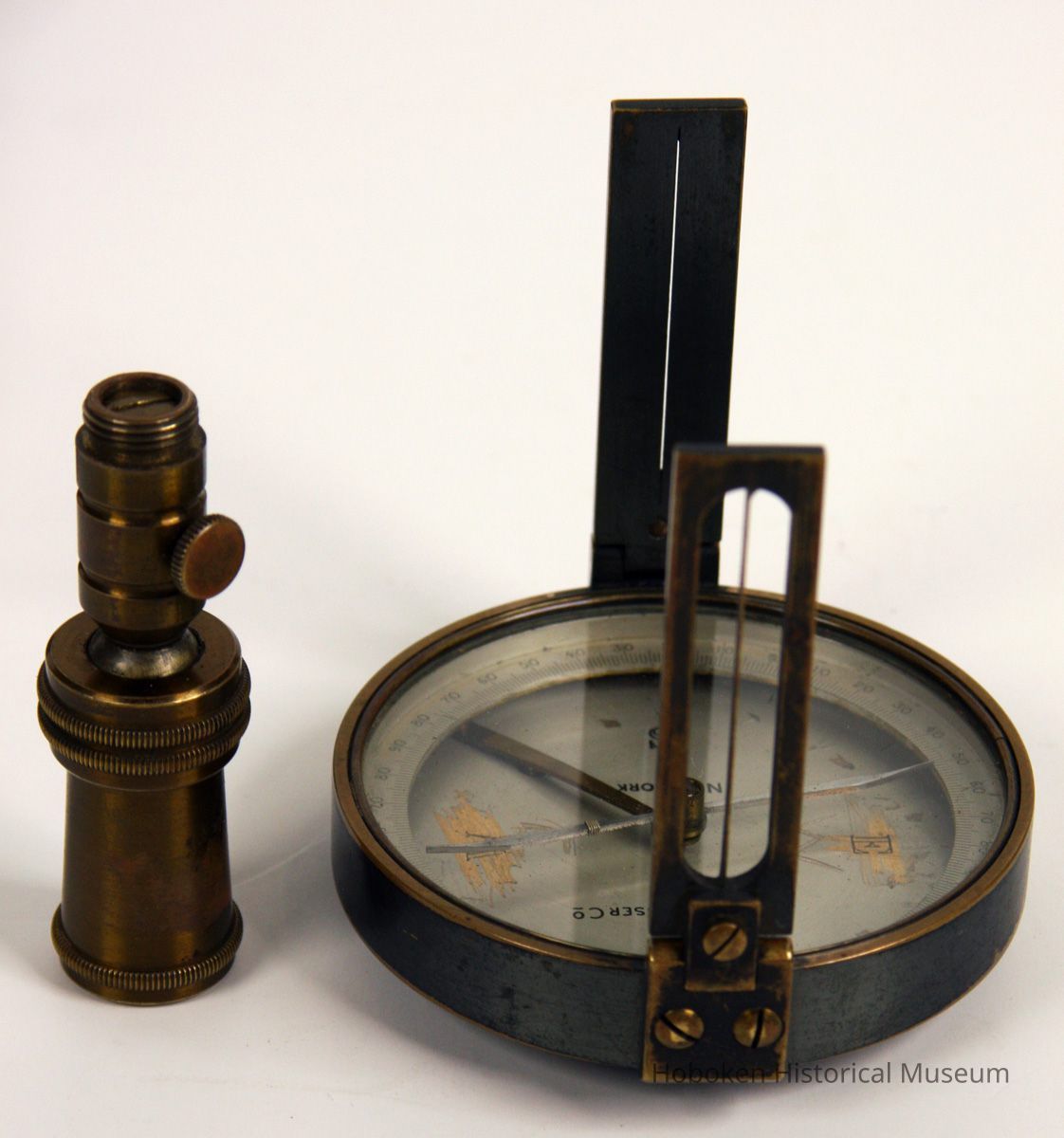
Surveying compass, model 5335, 2-1/2" needle, made by Keuffel & Esser Co., N.Y. No date, circa 1894-1900.
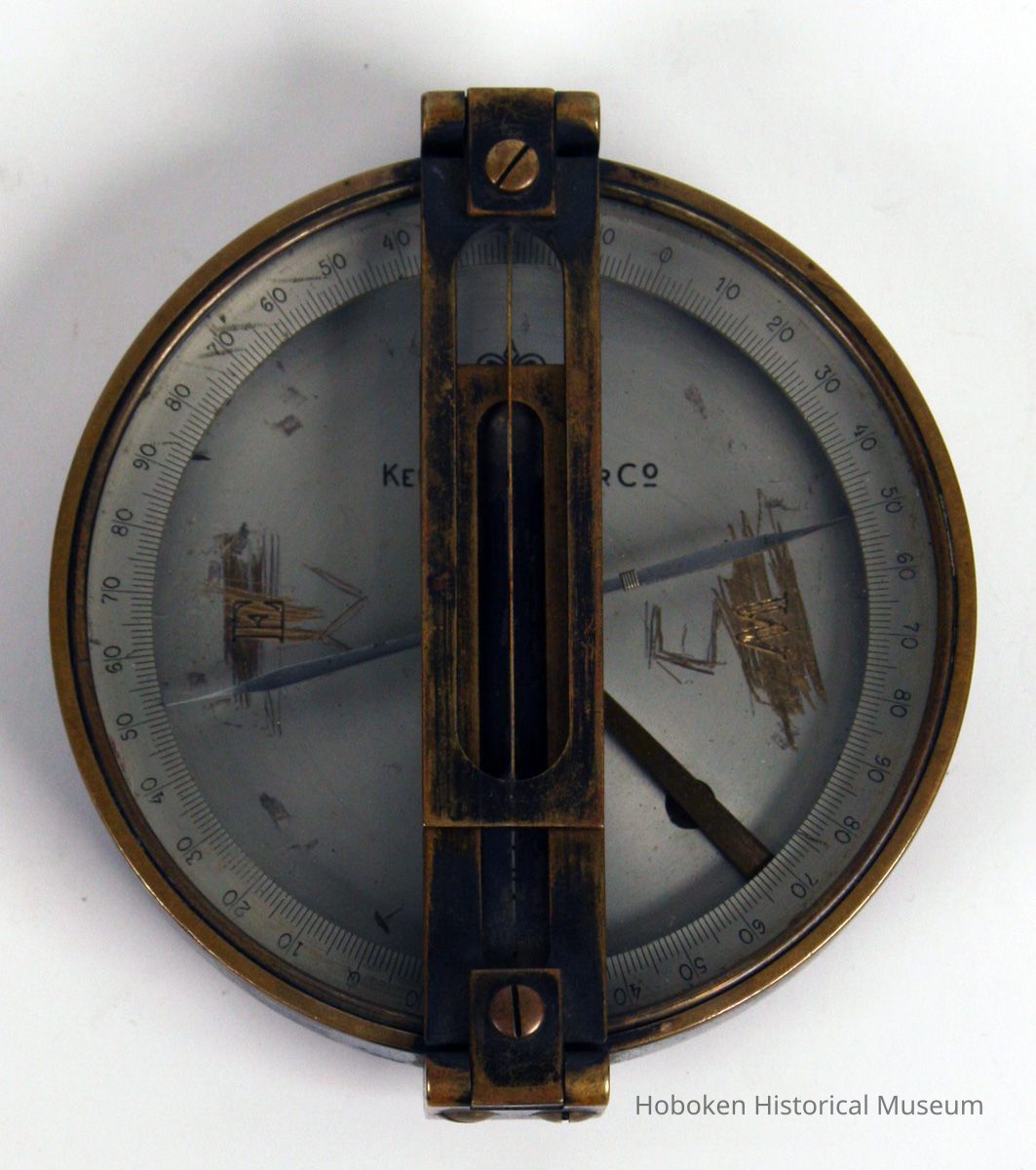
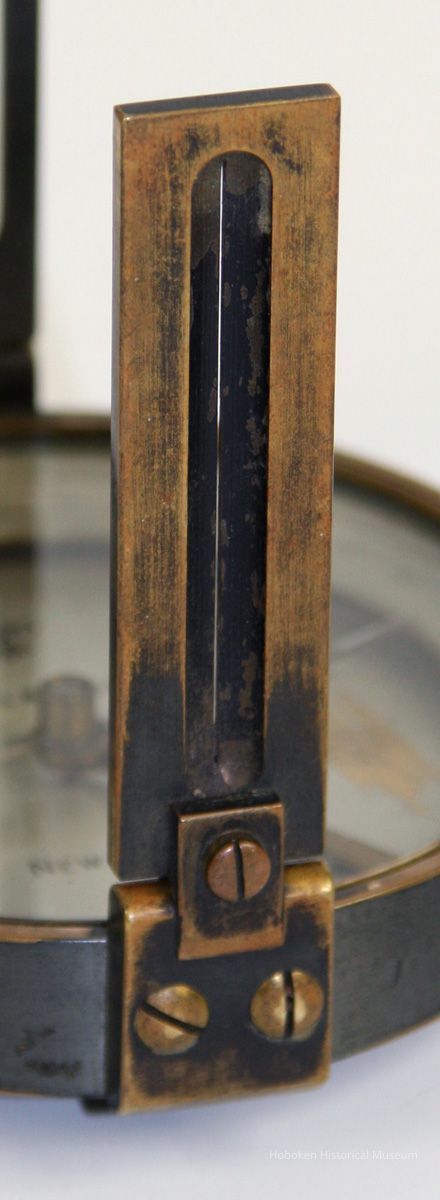
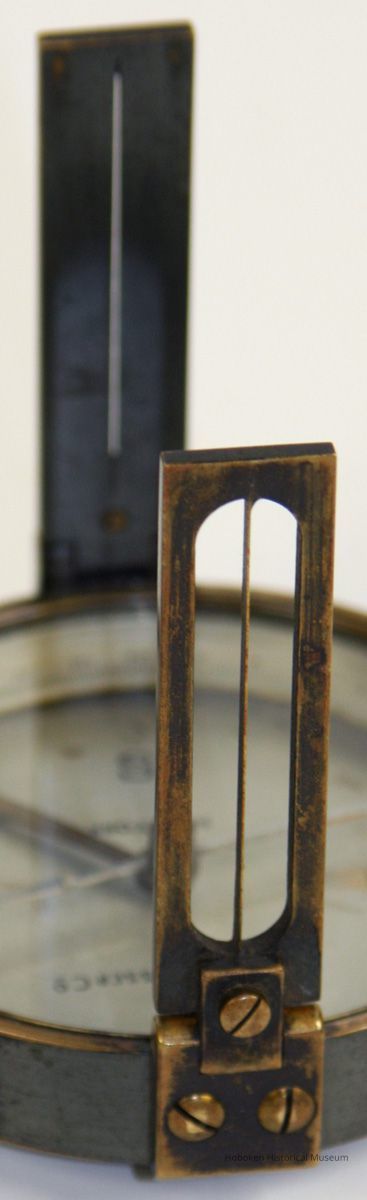
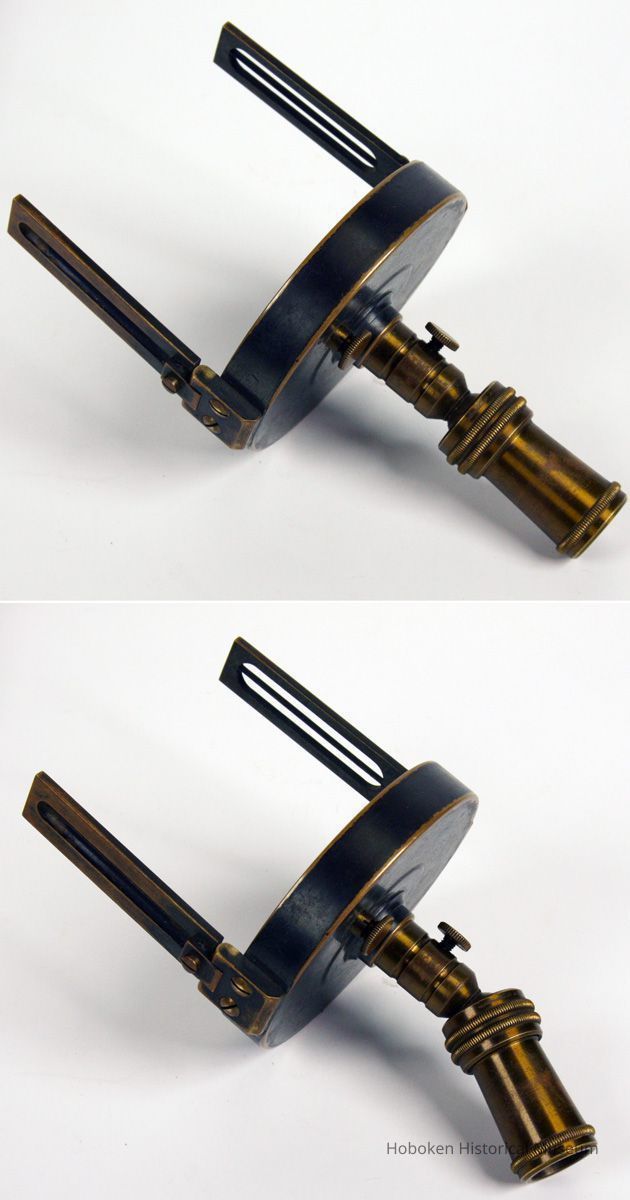
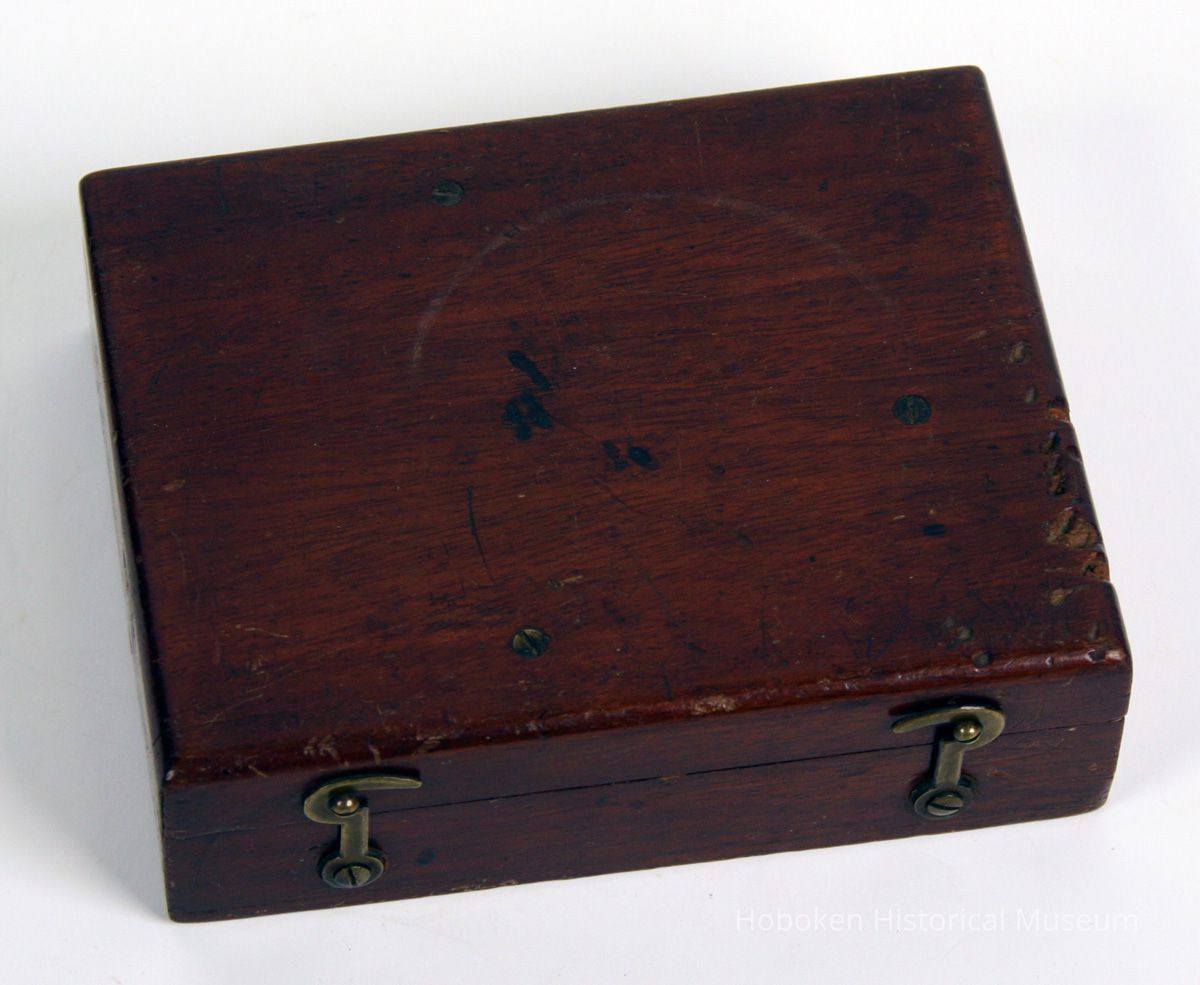
Bronze case with black finish, two folding sights; glass cover; ring graduated in degrees; needle lock screw on bottom; threaded bottom flange to accept ball joint mount. Case, 3-1/2" diameter x 1/1/8" thick with sights in folded position, 3-1/2" high with sights open; overall height with ball joint & socket mount attached, 5-15/16". With: ball joint and socket fixture (for setting on Jacob staff); original polished mahogany case (5" wide x 4" x 1-3/8" high) with hinged lid and fitted for compass and the ball joint fixture.
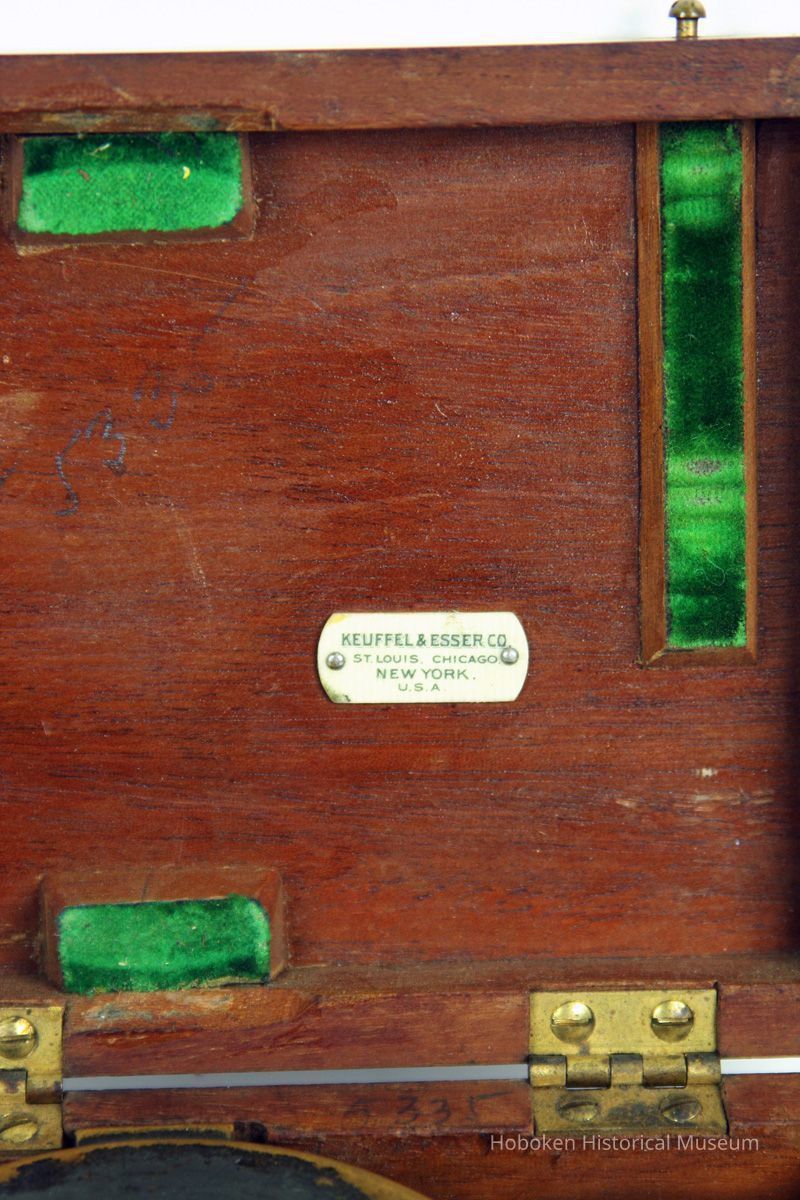
Model number does not appear on item. Written in pencil inside box lid is the model number. The object corresponds to catalogue depiction and description as found in the 35th edition of 1915 (length of needle; no levels). Also inside the lid is a 3/8" x 7/8" wide maker's plate, "ivorite" (white celluloid), printed in black with the company name, New York and U.S.A. as well as two branch offices, the most recent of which was St. Louis which opened in 1894. The next branch to open was San Francisco in 1900 and the lack of its name on this plate helps to date the manufacture of the compass as 1894-1900.
Of the many compasses offered for surveyor's, this was the smallest, simplest and least expensive.
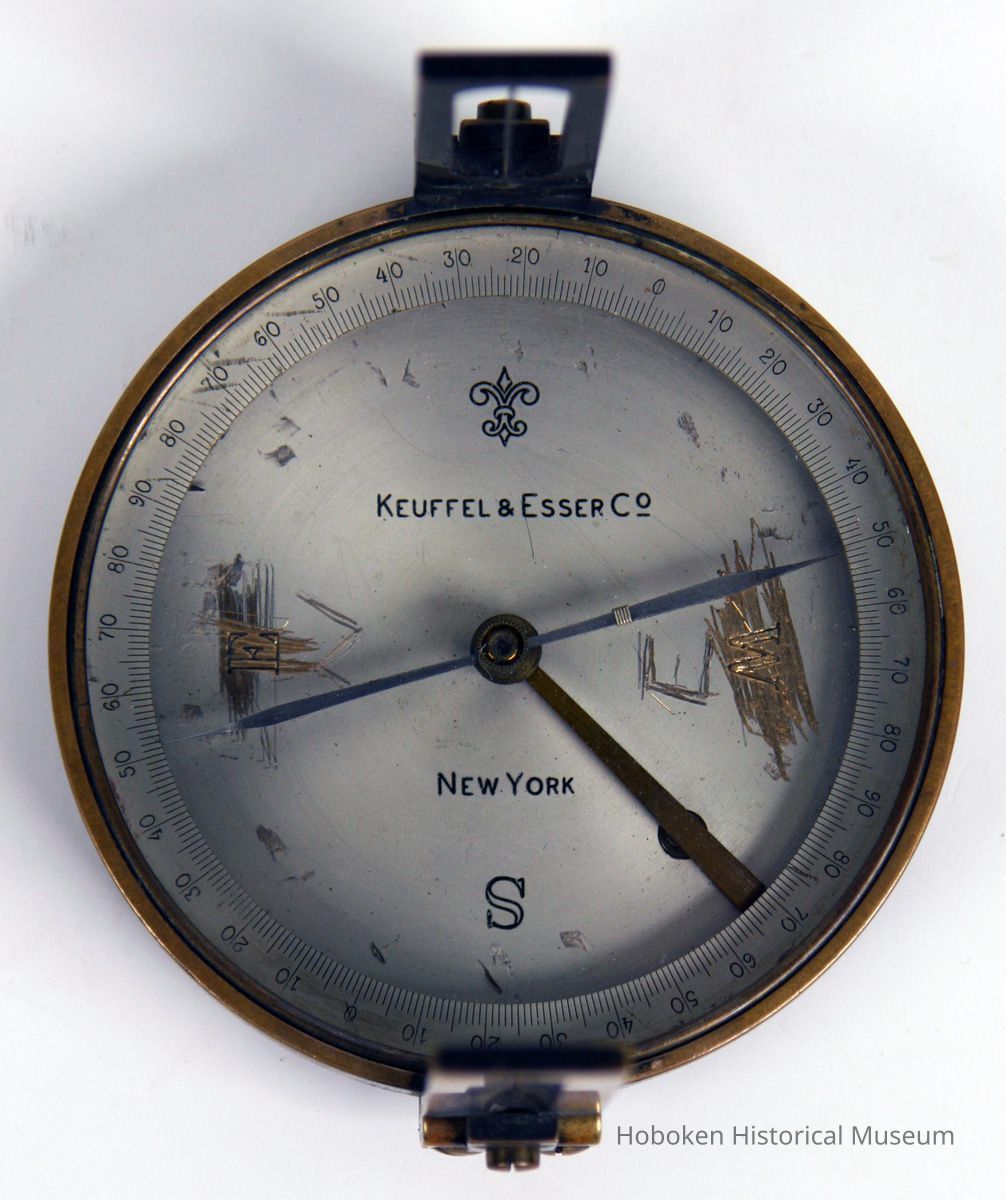
Note that on the compass face the cardinal points "E" and "W" have been scratched out and newer, crudely done markings reversing the compass points were made. This 'defect'" was apparently done by a previous owner who did not understand K&E's system or chose to use it in another way. On page 417 of the 35th edition is the company's statement on the reversed markings:
"In Surveying Compasses the East and West lettering is reversed from its position on the map. This is because the needle is the fixed point while the compass-box is revolved in directing the sights to the object observed. For instance, in sighting a point situated N.W. the needle will point N.E., but it will correctly read N.W. in accordance with the line actually sighted, because the East quadrant is marked West."
K & E main offices and factories were in Hoboken during the period when this item was made.
2009.006.0159
2009.006
Lukacs, Claire
Gift
Museum Collections. Gift of a friend of the Museum.
1894 - 1900
Date: 1894-1900
Good
Status: OK Status By: dw Status Date: 2009-07-27