
Collections Item Detail
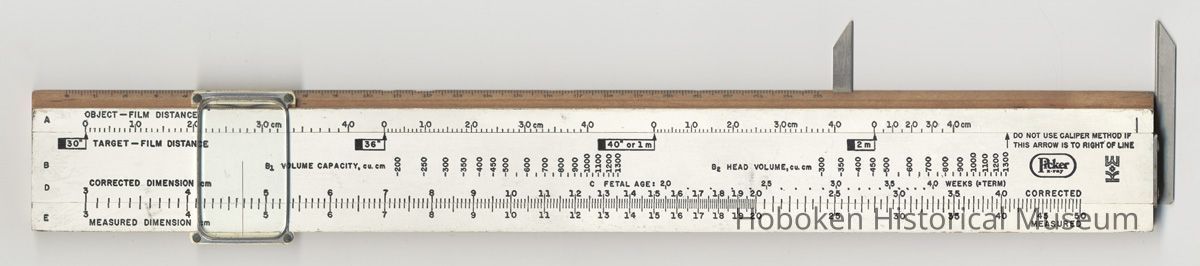
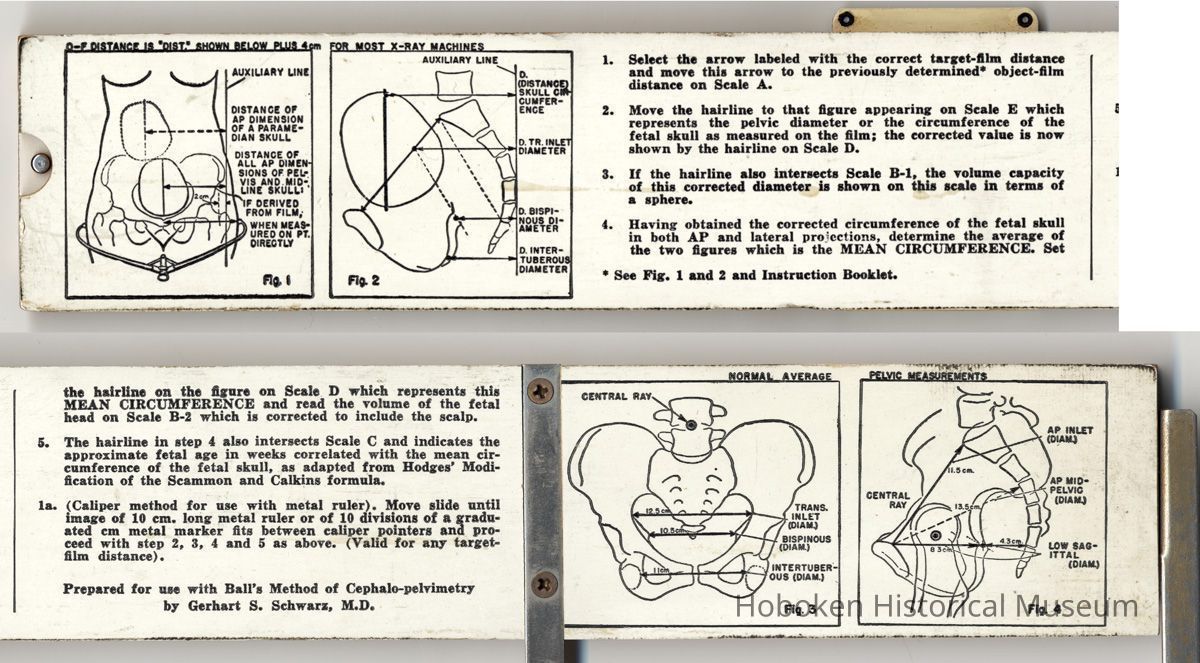
Slide rule: Picker X-ray Fetal Medical, made by K&E Co., [Hoboken], n.d., ca. 1950s-1967.
2010.007.0018
2010.007
Lukacs, Claire
Gift
Museum Collections. Gift of a friend of the Museum.
1950 - 1967
Date: 1950-1967
Good
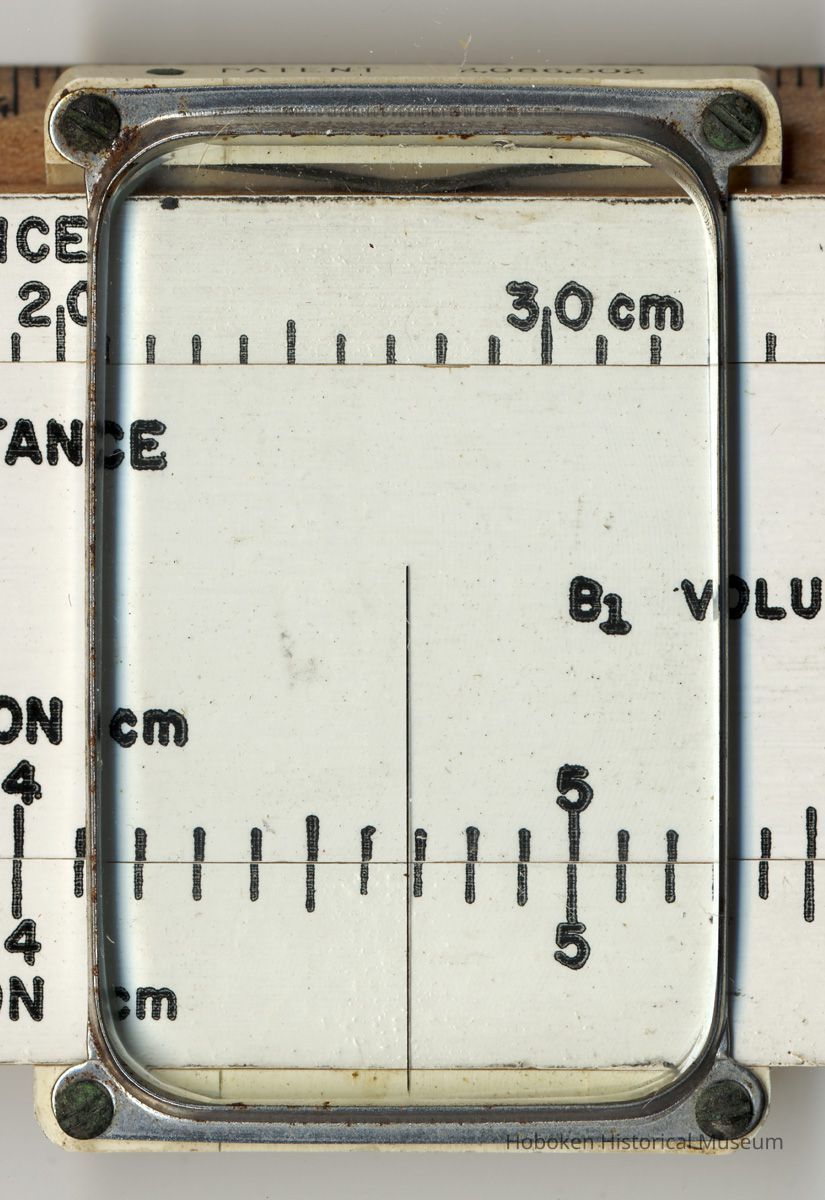
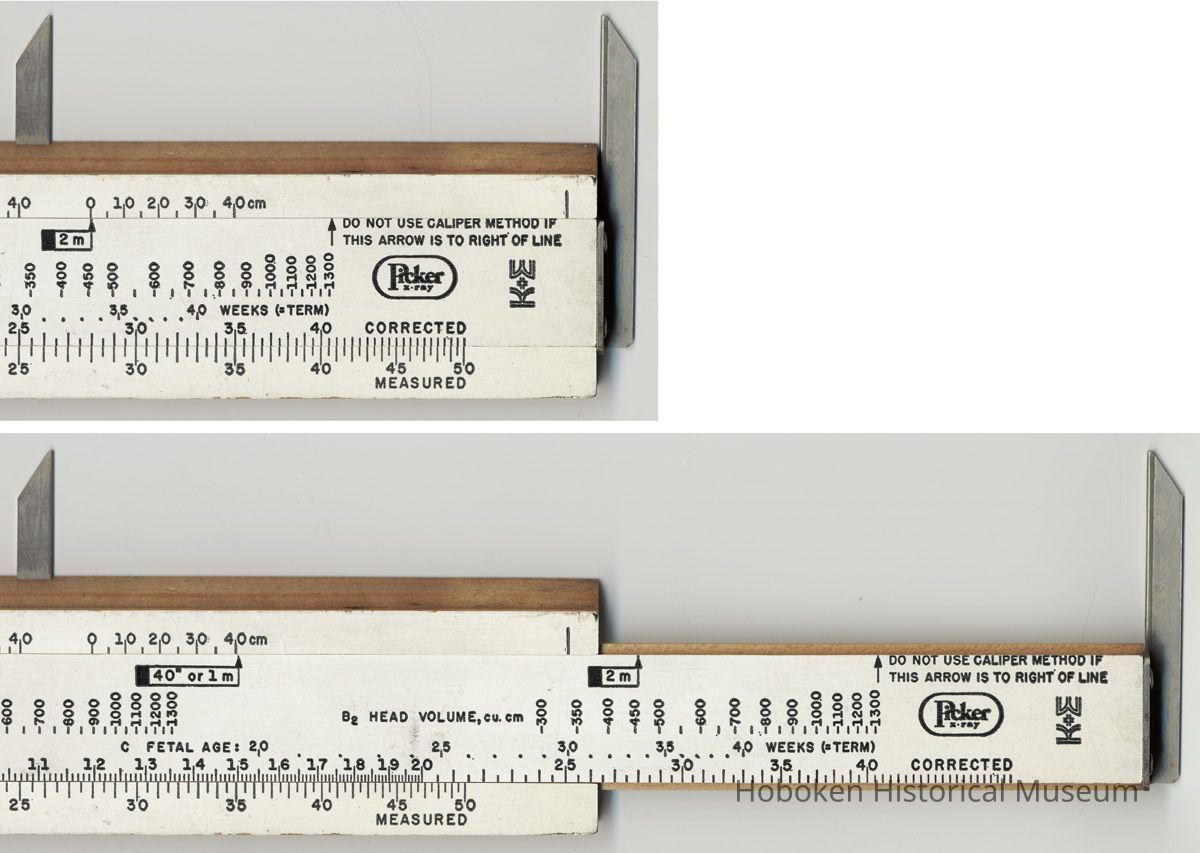
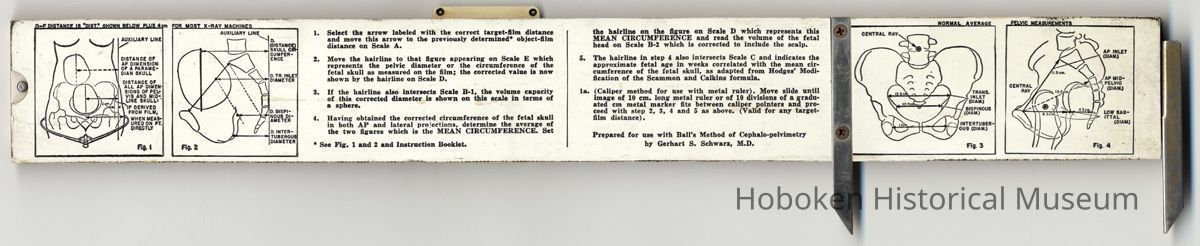
Notes: Picker X-Ray Fetal Medical slide rule, instructions for use of the rule transcribed from back: 1. Select the arrow label with the correct target-film distance and move this arrow to the previously determined* ([footnote] *See Fig. 1 and 2 and Instruction Booklet.) object-film distance on Scale A. 2. Move the hairline to that figure appearing on Scale E which represents the pelvic diameter or the cirumference of the fetal skull as measured on the film; the corrected value is now shown by the hairline on Scale D. 3. If the hairline also intersects Scale B-1. the volume capacity of this corrected diameter is shown on this scale in terms of a sphere. 4. Having obtained the corrected circumference of the fetal skull in both AP and lateral projections, determine the average of the two figures which is the MEAN CIRCUMFERENCE. Set the hairline on the figure on Scale D which represents this MEAN CIRCUMFERENCE and read the volume of the fetal head on Scale B-2 which is corrected to include the scalp. 5. The hairline in step 4 intersects Scale C and indicates the approximate fetal age in weeks correlated with the mean circumference of the fetal skull, as adapted from Hodges' Modification of the Scammon and Calkins formula." 1a. (Caliper method for use with metal ruler). Move slide until image of 10 cm. long metal ruler or of 10 divisions of a graduated cm metal marker fits between caliper pointers and proceed with step 2, 3, 4 and 5 as above. (Valid for any target-film distance). Prepared for use with Ball's Method of Cephalo-pelivitry by Gerhart S. Schwarz, M.D. [end] _____ [cataloguer's notes] The dangers of damage to fetuses and their mothers from x-ray radiation was an area of study in the mid-twentieth century. At the time that this item was produced, a concensus was developing that x-ray radiation was not appropriate for this purpose. As ultrasound imaging (along with other image technologies) was being introduced and maturing as a common tool that would replace the need for routine x-rays, this slide rule was soon to be unncessary. X-rays were still needed for certain medical conditions, but not for the typical measurements that this slide rule would facilitate. Status: OK Status By: dw Status Date: 2010-04-13
![Slide rule: Picker X-ray Fetal Medical, made by K&E Co., [Hoboken], n.d., ca. 1950s-1967. picture number 6](https://d8e7jbdw4fu0e.cloudfront.net/11047/02aceef0-fa32-11ed-a641-b3912f9925a9-wx0bGqJ.lg@2x.jpg)