Collections Item Detail
Two-Wheel Man: Recollections of Peter "Chipper" Falco.
2007.018.0026
2007.018
Staff, Produced by
Produced by Staff
Museum Collection
1st
Hoboken Oral History Project
Hoboken
2013
English
Copy No.: 1
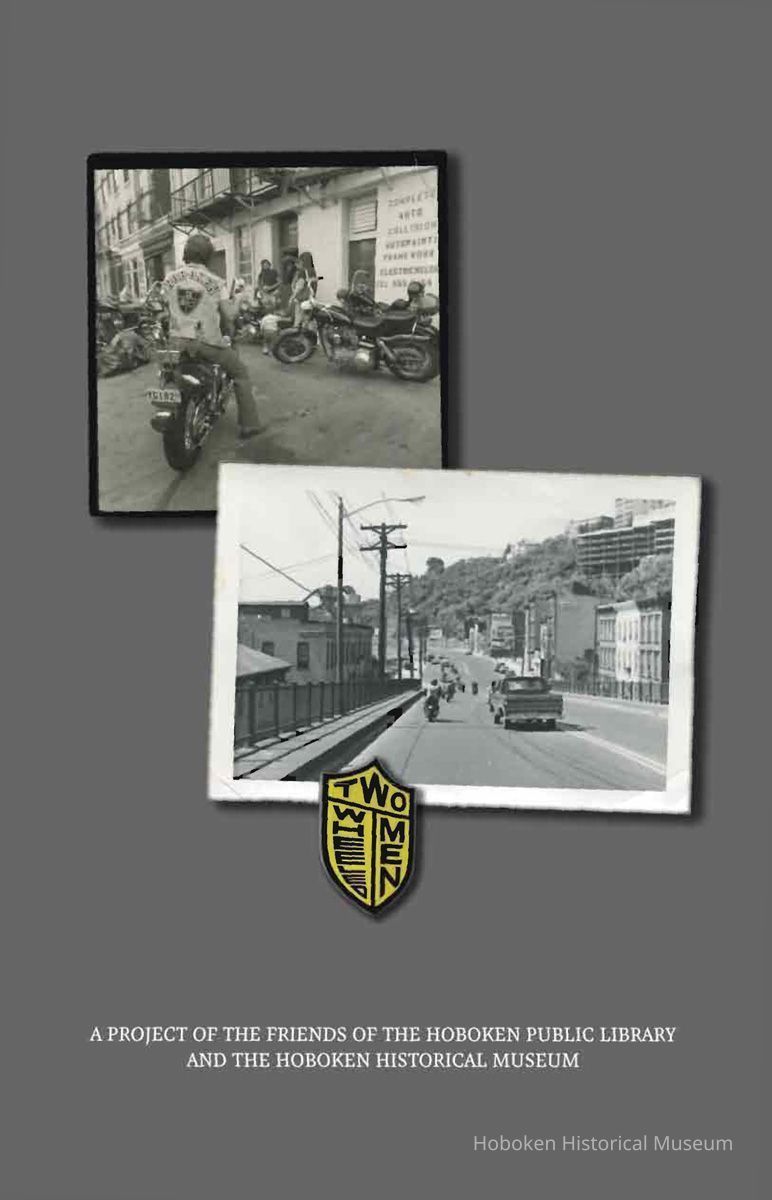
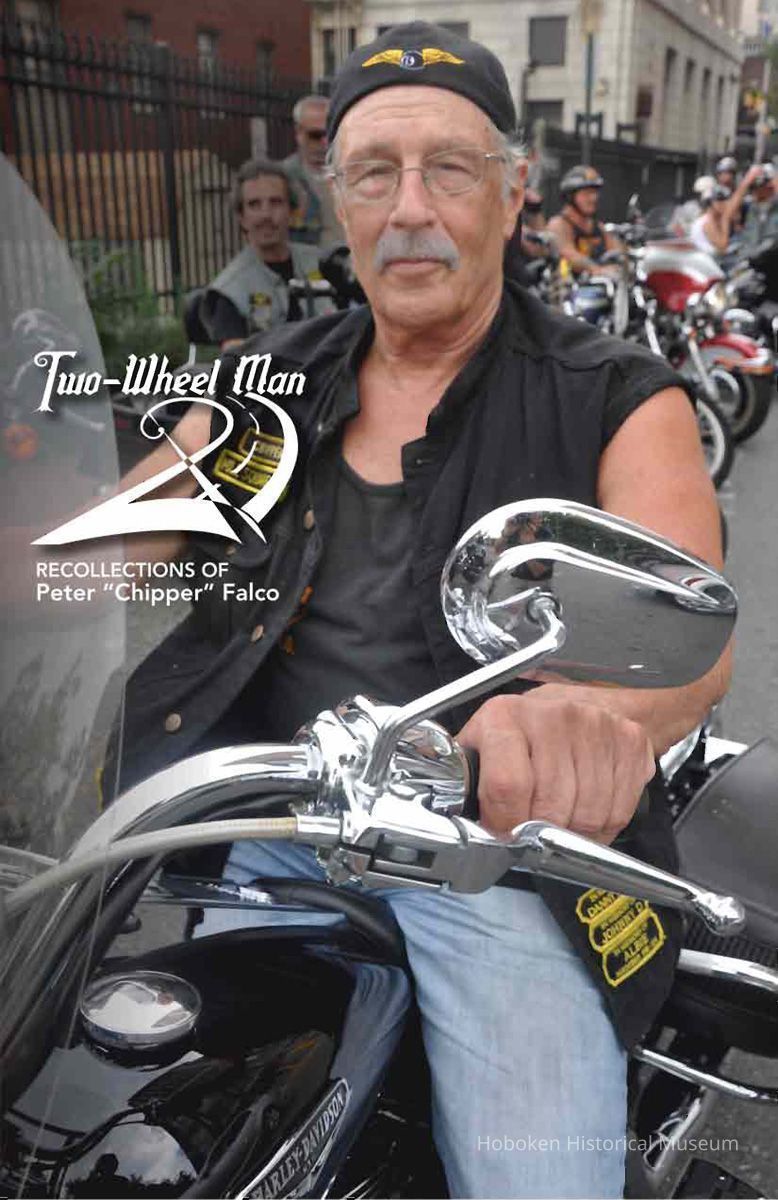
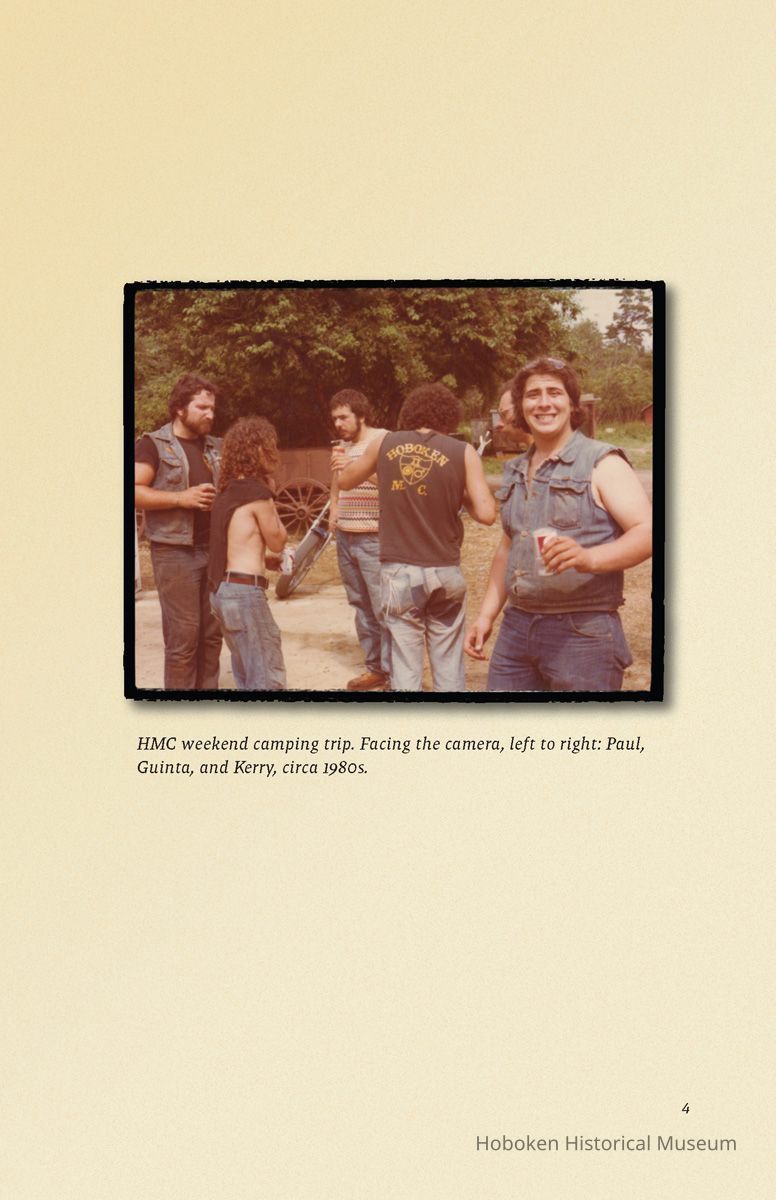
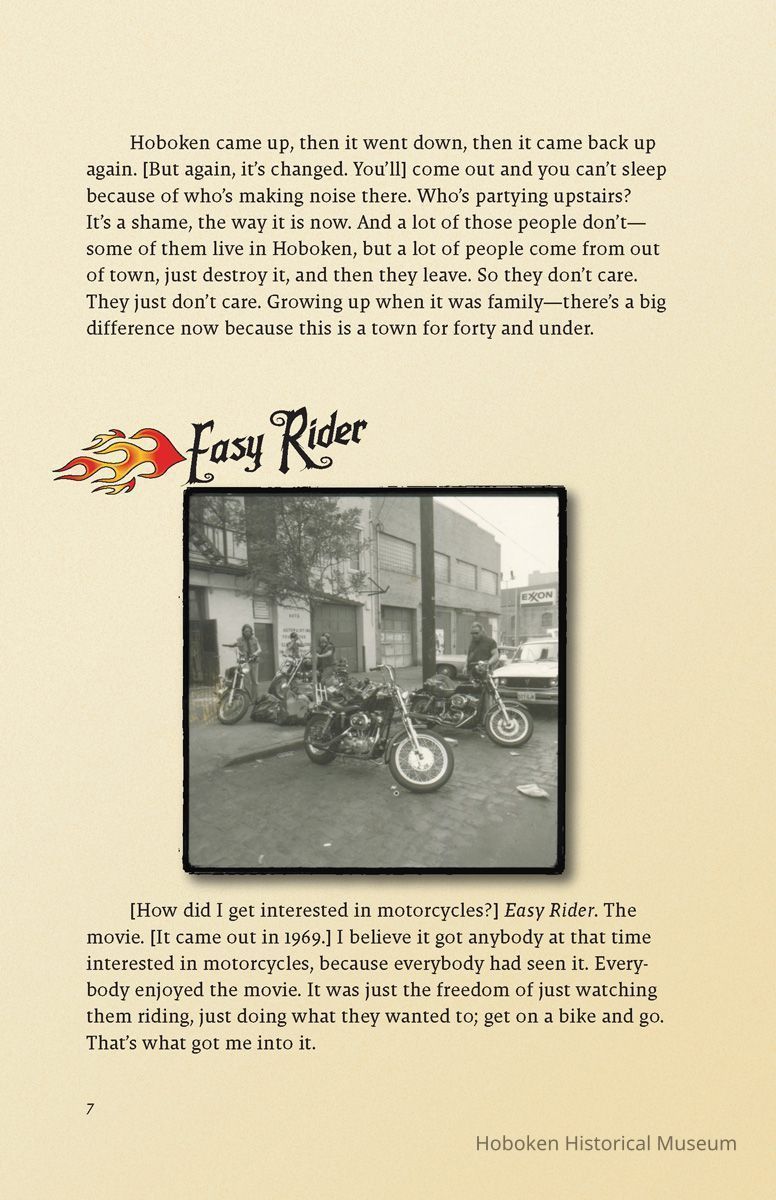
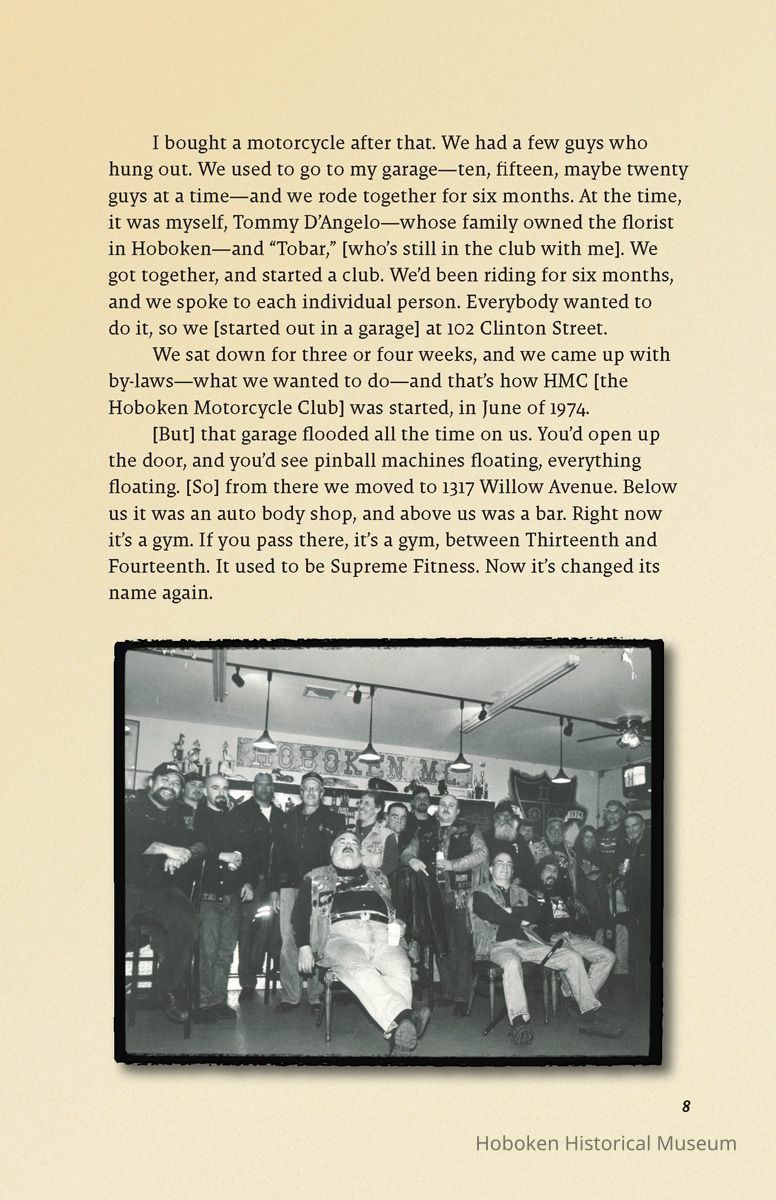
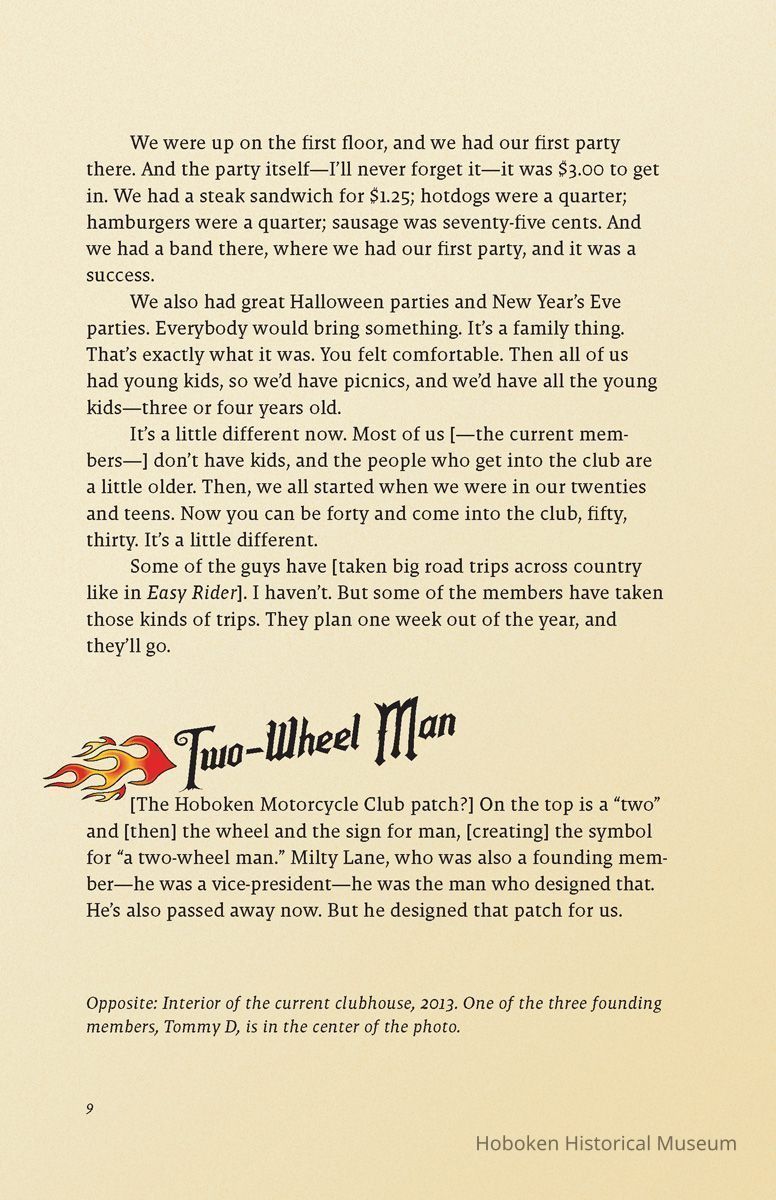
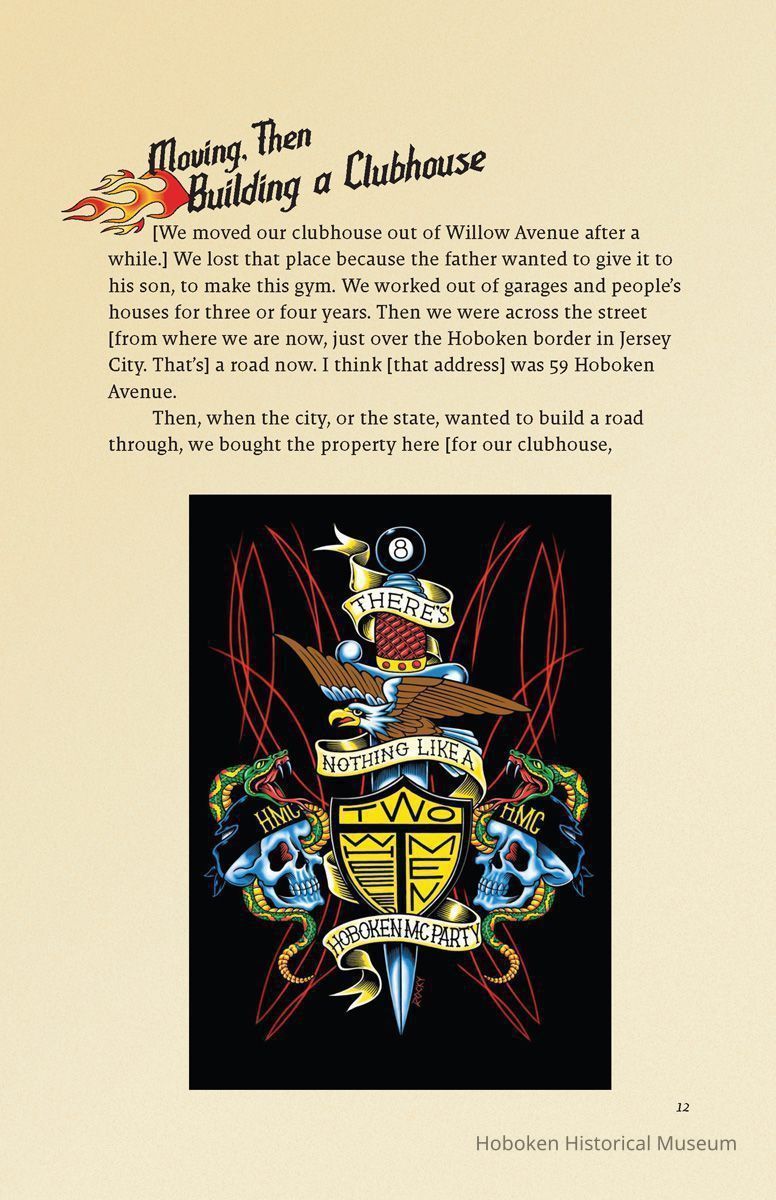
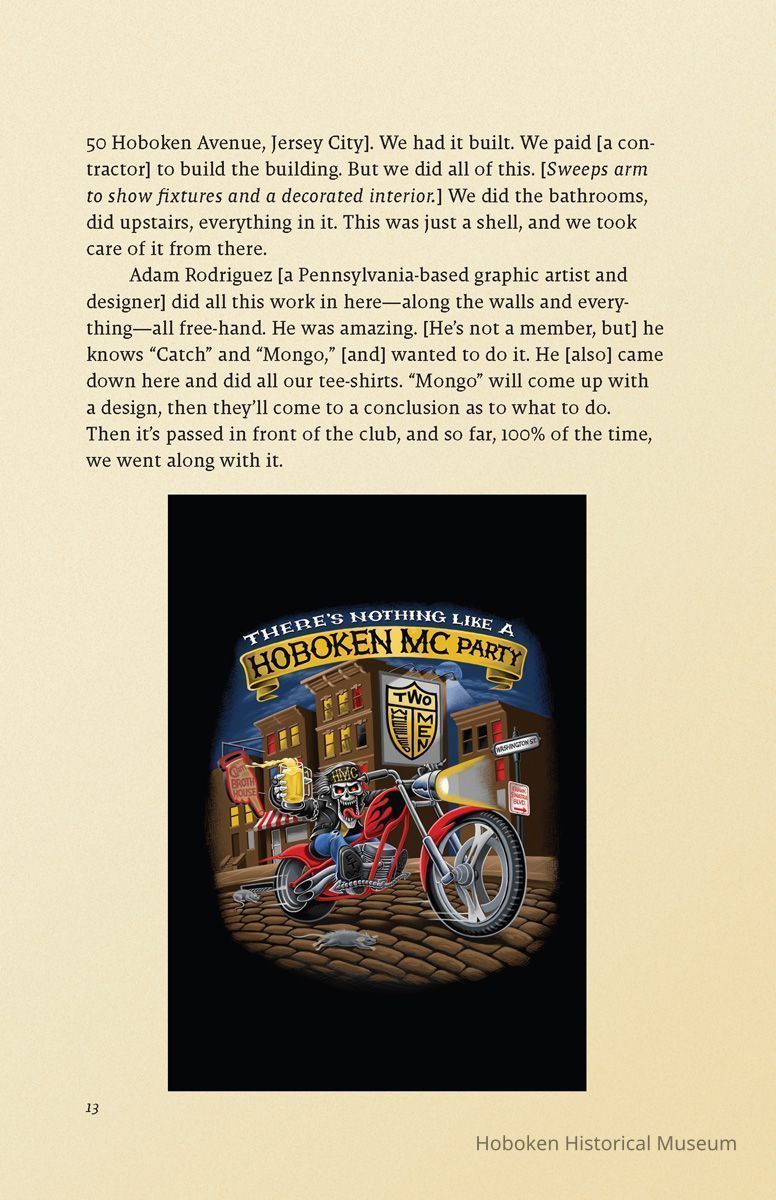
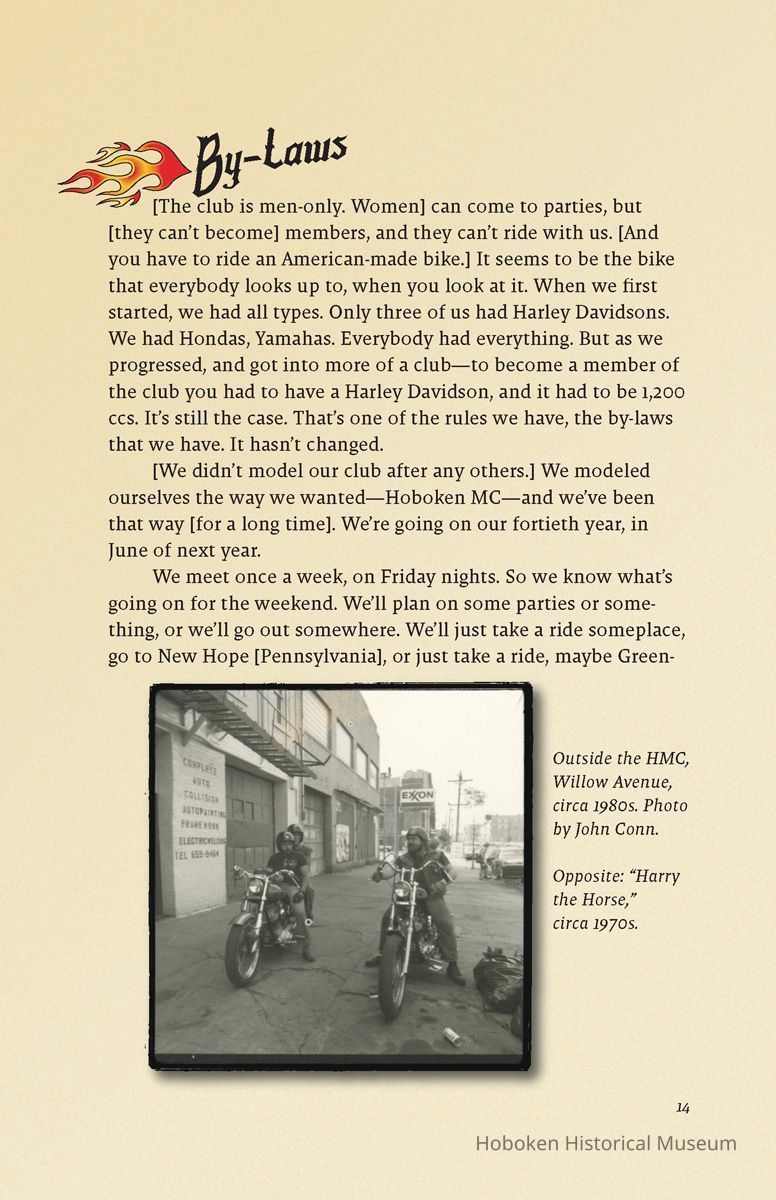
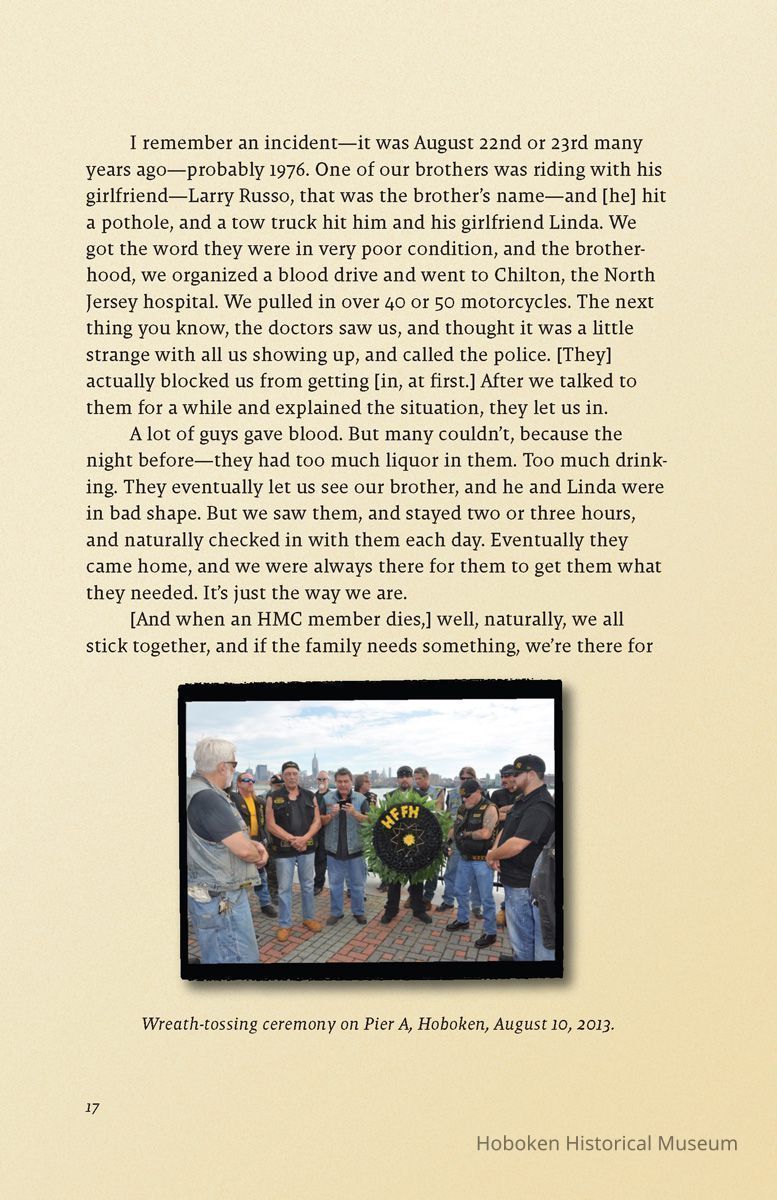
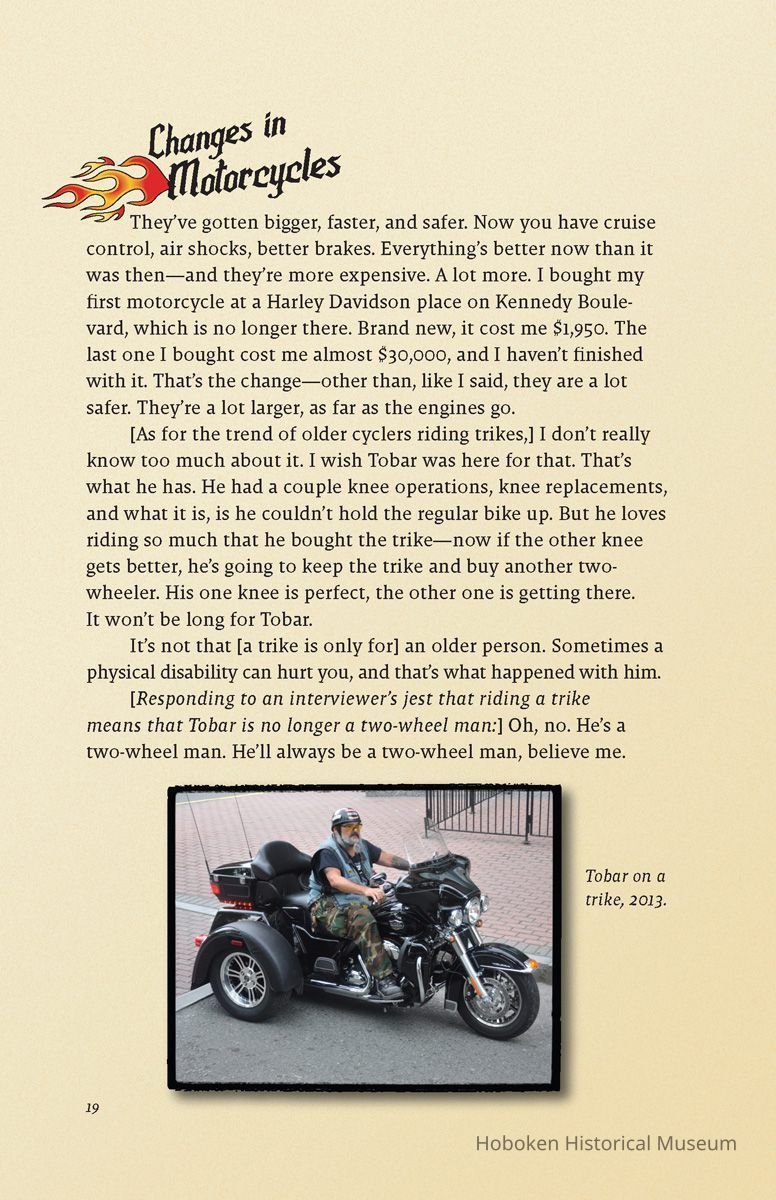
Display Value: Good Notes: Library 2007.018.0026 ==== [cover] Two-Wheel Man Recollections of Peter "Chipper" Falco. ==== page [i] Two-Wheel Man: Recollections of Peter "Chipper" Falco. A Chapbook from the "Vanishing Hoboken" Series of the Hoboken Oral History Project. ==== page [ii] Vanishing Hoboken The Hoboken Oral History Project A Project of The Hoboken Historical Museum and the Friends of the Hoboken Public Library This oral history chapbook was made possible through the support of John Wiley & Sons, Inc., the Friends of the Hoboken Public Library, and the Hoboken Historical Museum, which gratefully acknowledges receipt of General Operating Support Funds from the New Jersey Historical Commission, Department of State. The views expressed in this publication are those of the interviewee and do not necessarily reflect the views of the interviewers, the Hoboken Oral History Project and its coordinators, the Hoboken Historical Museum, the Friends of the Hoboken Public Library, John Wiley & Sons, Inc., or the New Jersey Historical Commission. ©2013 Hoboken Historical Museum and Friends of the Hoboken Public Library. (Hoboken Historical Museum, PO Box 3296, 1301 Hudson Street, Hoboken, NJ 07030. Friends of the Hoboken Public Library, 500 Park Avenue, Hoboken, NJ 07030.) HOBOKEN ORAL HISTORY PROJECT: Holly Metz (Chapbooks Editor) Melanie Best, Ruth Charnes DESIGNER: Ann Marie Manca PROOFREADER: Robin Martin Contemporary photos of Chipper Falco and Hoboken Motorcycle Club members by Robert Foster. Unless otherwise noted, all other photographs reproduced in this chapbook are courtesy of the Hoboken Motorcycle Club. Title Page: HMC members, before the 2013 Memorial Run. ==== page [1] [illustration with text] The Hoboken Motorcycle Club patch? On the top is a "two" and then the wheel and the sign for man, [creating] the symbol for "a two-wheel man." Milty Lane, who was also a founding member, he was the man who designed that. —Peter "Chipper" Falco, August 9, 2013 ==== page [2] [captioned photographs] Top: HMC weekend ride, N.J. Turnpike, circa 1970s. Bottom: Road captain Pat on the 2013 Memorial Run. ==== page 3 INTRODUCTION The Hoboken Oral History Project's "Vanishing Hoboken" chapbooks were inaugurated, in large part, in response to the dramatic changes brought about by the city's gentrification, and concerns that aspects of life in the Mile Square City would be forgotten or lost if not recorded and shared with future generations. It seems fitting, then, that our 26th chapbook should center around a club about to celebrate its 40th anniversary, and that, to secure a permanent home, it has moved just across the Hoboken border, into Jersey City—or, as Peter "Chipper" Falco, one of the original founders of the Hoboken Motorcycle Club, explained, "Once you come to where Cal's hotdog stand is, ten feet underneath that trestle, it's Jersey City. So we're in Jersey City. 50 Hoboken Avenue, Jersey City." Like most of the club's members, Chipper goes by his nickname, and we'll follow suit. In these pages, he describes some of the changes he's experienced in Hoboken, living in Sinatra's childhood home, the influence of Easy Rider, and the enduring fraternity of the club. The HMC owns its home, but Chipper noted that something far greater—the allure of the road and the sustaining friendships of the club—keeps him positive about HMC's future. "The future? There's always somebody coming," he said. "Somebody leaves, there's somebody coming. Just like now—we've got a couple of new people around. But it's been the same." The club has been run the same way for nearly forty years, with meetings every Friday, and rides every weekend. No matter where it's located, it's still the Hoboken Motorcycle Club, and its members know for sure they will always be "two-wheel men." Chipper Falco was interviewed on August 9 and August 27, 2013, by Robert Foster, with assistance by Holly Metz, at the Hoboken Motorcycle Club's clubhouse. Copies of the transcripts from which this chapbook was derived have been deposited in the Historical Collection of the Hoboken Public Library and in the archives of the Hoboken Historical Museum. ==== page 4 [captioned photograph] HMC weekend camping trip. Facing the camera, left to right: Paul, Guinta, and Kerry, circa 1980s. ==== page 5 I'm Known by "Chipper" Well, my name is Peter Falco, but I’m known by “Chipper.” Everybody who ever met me [calls me that]. That was the first name that came out of my mouth. I was born and raised in Hoboken. I've been here all my life, and seen the changes—what occurs now, what happened when I was a child. When I was growing up, actually, there was more neighborhood, more families. They were closer together. You ate at the same time, you respected the elders (which I don't really see now. That's something that seems to be gone with this generation). I'm glad I had that kind of a childhood. It was a family thing. Every Sunday you'd go to your grandmother's house. Things of that nature. It was all family-structured—your aunt's house. Every holiday, everybody would be at one house. Again, something you don't see now. I grew up in Frank Sinatra's house—415 Monroe Street—in the same apartment. My mother was interviewed there. The Jersey Journal came down, they took pictures, and they interviewed her. We lived there for about twelve years, before we moved to 531 Madison Street. I went into the army [from] there. I did two years—from January '66 to '68—[and then] I came back. Things were still the same. I worked in a trucking outfit until 1974, in October, [when] I took the police test. I finished number two. [How did I decide to take the police test?] I knew people in the police department. My brother [had] passed the test. He was on first. He looked at it, and at that time the trucking outfits— the unions—they were going south. He said, "There's really no future. Why don't you just take the test? You were in the service. You get credit for that." So I took the test and passed. [When we were younger,] there [was] not one of us who thought we were going to be police officers. My father worked construction. That's where I wanted to go, in the beginning, but it was too hard work. I'm not a person who wants to work hard. ==== page 6 [Working in the police department was] the best job I ever had—because you met people. The friendship is unbelievable. You work together. You worked the same shift. You worked in a car with a person. You got to know their families. You got to see their kids grow up—nothing you would get in an office or anything, because once you leave the office, you leave the office. It's not like the police department, where you're all striving for one thing. You work in an office, and everybody's actually looking to go higher, and they will step on your toes to go higher. [This was different.] It's very close, just like the fire department. I did thirty-two years on the police force. I retired as a lieutenant, eight years ago. [And now,] on the police force, I have my son, [and] a niece and nephews who are sergeants; my other nephew is a patrolman, and my brother is the chief of police. Second Generation Hobokenite [As I said,] in the ’50s, [Hoboken] was more family. You could leave your doors open in the '50s, which changed. It just went downhill. It started breaking up in the '60s—because Hoboken was like a jungle. Believe me. It was amazing how it deteriorated over the years. Then we had the fires [in the '70s and '80s]—I was a policeman at the time—and we always had deaths. You could expect someone to be dead in a fire. I remember twenty-two we had one time, on Clinton Street. In the one fire, we had thirteen. I was there for all those fires, so I saw them coming out. [But] my family stayed. I'm second generation. We stayed. You become used to the place. It's not like coming in now and [saying,] "Oh, I don't like the way it is.” You've seen the change, but it didn't really bother you to the effect that you were going to leave. It will always be my home. ==== page 7 Hoboken came up, then it went down, then it came back up again. [But again, it's changed. You'll] come out and you can't sleep because of who's making noise there. Who's partying upstairs? It's a shame, the way it is now. And a lot of those people don't— some of them live in Hoboken, but a lot of people come from out of town, just destroy it, and then they leave. So they don't care. They just don't care. Growing up when it was family—there's a big difference now because this is a town for forty and under. Easy Rider [How did I get interested in motorcycles?] Easy Rider. The movie. [It came out in 1969.] I believe it got anybody at that time interested in motorcycles, because everybody had seen it. Everybody enjoyed the movie. It was just the freedom of just watching them riding, just doing what they wanted to; get on a bike and go. That's what got me into it. ==== page 8 I bought a motorcycle after that. We had a few guys who hung out. We used to go to my garage—ten, fifteen, maybe twenty guys at a time—and we rode together for six months. At the time, it was myself, Tommy D'Angelo—whose family owned the florist in Hoboken—and "Tobar," [who's still in the club with me]. We got together, and started a club. We'd been riding for six months, and we spoke to each individual person. Everybody wanted to do it, so we [started out in a garage] at 102 Clinton Street. We sat down for three or four weeks, and we came up with by-laws—what we wanted to do—and that's how HMC [the Hoboken Motorcycle Club] was started, in June of 1974. [But] that garage flooded all the time on us. You'd open up the door, and you'd see pinball machines floating, everything floating. [So] from there we moved to 1317 Willow Avenue. Below us it was an auto body shop, and above us was a bar. Right now it's a gym. If you pass there, it's a gym, between Thirteenth and Fourteenth. It used to be Supreme Fitness. Now it's changed its name again. [photo - caption on page 9] ==== page 9 We were up on the first floor, and we had our first party there. And the party itself—I'll never forget it—it was $3.00 to get in. We had a steak sandwich for $1.25; hotdogs were a quarter; hamburgers were a quarter; sausage was seventy-five cents. And we had a band there, where we had our first party, and it was a success. We also had great Halloween parties and New Year's Eve parties. Everybody would bring something. It's a family thing. That's exactly what it was. You felt comfortable. Then all of us had young kids, so we'd have picnics, and we'd have all the young kids—three or four years old. It's a little different now. Most of us [—the current members—] don't have kids, and the people who get into the club are a little older. Then, we all started when we were in our twenties and teens. Now you can be forty and come into the club, fifty, thirty. It's a little different. Some of the guys have [taken big road trips across country like in Easy Rider]. I haven't. But some of the members have taken those kinds of trips. They plan one week out of the year, and they'll go. Two-Wheel Man [The Hoboken Motorcycle Club patch?] On the top is a “two” and [then] the wheel and the sign for man, [creating] the symbol for "a two-wheel man.” Milty Lane, who was also a founding member—he was a vice-president—he was the man who designed that. He's also passed away now. But he designed that patch for us. [caption for page 8 photo] Opposite: Interior of the current clubhouse, 2013. One of the three founding members, Tommy D, is in the center of the photo. ==== pages [10-11] [group photograph] caption on photo: Hoboken Motorcycle Club members at Pier A Park, Hoboken, 2013, Memorial Run. ==== page 12 Moving, Then Building a Clubhouse [We moved our clubhouse out of Willow Avenue after a while.] We lost that place because the father wanted to give it to his son, to make this gym. We worked out of garages and people's houses for three or four years. Then we were across the street [from where we are now, just over the Hoboken border in Jersey City. That's] a road now. I think [that address] was 59 Hoboken Avenue. Then, when the city, or the state, wanted to build a road through, we bought the property here [for our clubhouse, ==== page 13 50 Hoboken Avenue, Jersey City]. We had it built. We paid [a contractor] to build the building. But we did all of this. [Sweeps arm to show fixtures and a decorated interior.] We did the bathrooms, did upstairs, everything in it. This was just a shell, and we took care of it from there. Adam Rodriguez [a Pennsylvania-based graphic artist and designer] did all this work in here—along the walls and everything—all free-hand. He was amazing. [He's not a member, but] he knows "Catch” and "Mongo,” [and] wanted to do it. He [also] came down here and did all our tee-shirts. "Mongo” will come up with a design, then they'll come to a conclusion as to what to do. Then it's passed in front of the club, and so far, 100% of the time, we went along with it. ==== page 14 By-Laws [The club is men-only. Women] can come to parties, but [they can't become] members, and they can't ride with us. [And you have to ride an American-made bike.] It seems to be the bike that everybody looks up to, when you look at it. When we first started, we had all types. Only three of us had Harley Davidsons. We had Hondas, Yamahas. Everybody had everything. But as we progressed, and got into more of a club—to become a member of the club you had to have a Harley Davidson, and it had to be 1,200 ccs. It's still the case. That's one of the rules we have, the by-laws that we have. It hasn't changed. [We didn't model our club after any others.] We modeled ourselves the way we wanted—Hoboken MC—and we've been that way [for a long time]. We're going on our fortieth year, in June of next year. We meet once a week, on Friday nights. So we know what's going on for the weekend. We'll plan on some parties or something, or we'll go out somewhere. We'll just take a ride someplace, go to New Hope [Pennsylvania], or just take a ride, maybe Green- [photo caption] Outside the HMC, Willow Avenue, circa 1980s. Photo by John Conn. [caption for photo on page 15] Opposite: “Harry the Horse,” circa 1970s. ==== page 15 wood Lake. We'll stop at a place and have lunch. Or we'll go to other parties, other club parties—which we do quite a bit. The president [runs the meeting] every Friday. We have officers. We have a vice-president, we have a treasurer, secretary, sergeant at arms. Like any other organization. [We also have road captains.] I want to credit the officers running the club at this time: President Kenny Coe, Vice-President "Mongo," Sergeant at Arms "Rock," Treasurer "Jimmy the Fish," Secretary "Joe Retro" and Road Captains Pat and "Fitz." Nicknames Yes, just about everybody has a nickname. [When you ask for the last names of members,] you realize that a lot of people don't know our first names, within the club, because everybody has a nickname! Or, if they didn't have one when they came in, we gave them one, and it stuck. I couldn't tell you any last names, other than maybe three or four people in the club. Or first names, for that matter. [And I've known some of these members a long time.] I want to give credit to some of the early members. First there is "Tobar" who, [as I mentioned,] is a founding member with me and still here. "Tommy D" [was] also a founding member—36 years. He died three or four years ago and was with us till the end. We have some thirty- ==== page 16 year members, like Danny Mezzina, who we call "Muff.” "Big Pete” is a thirty-year member. We have retired members Dennis Cicola, and Larry Russo, who we call "The Rooster.” And there's Nicky Spezzacatena, who we call "Spez” for obvious reasons: because no one can pronounce it or spell it! It's almost impossible. Brotherhood [You asked about what someone might do to get kicked out of the club.] Well, if you do something against the club, or you do something—we don't want alcoholics. You give them a couple of chances. And you could send them to rehab. Or you don't want a person on drugs—which we don't have. We don't have any of that. People basically drink and have a good time. And if you do something against the club, or a member of the club, you'll get a warning. After that, the club will vote you out, if you continue. We don't need that in the club. The reputation is too good. That's why [we're] around for forty years. [And fights?] We don't get that here. Believe it or not, as long as we've been together, I don't think I've seen many fights within the club. Maybe three or four times, to be honest with you— actually physical fights. So that's not even a subject here. They respect each other. [If people argue, it ends quickly.] People would have a beer together, and then it's over. Shake hands, and it's over. [The background of our members?] It's everything. It's any job you have or any job you don't have. It's a melting pot. [But] it's all blue collar. (No, we don't have any stock traders. We never had one who even came close to that.) You have truck drivers; you have policemen (not many, only a couple); you have people who work on buildings; people who clean windows. All walks of life. [For the club members,] it's something different. It's the closeness. If somebody needs something, the club is there for them. The family needs something, the club is there for them. ==== page 17 I remember an incident—it was August 22nd or 23rd many years ago—probably 1976. One of our brothers was riding with his girlfriend—Larry Russo, that was the brother's name—and [he] hit a pothole, and a tow truck hit him and his girlfriend Linda. We got the word they were in very poor condition, and the brotherhood, we organized a blood drive and went to Chilton, the North Jersey hospital. We pulled in over 40 or 50 motorcycles. The next thing you know, the doctors saw us, and thought it was a little strange with all us showing up, and called the police. [They] actually blocked us from getting [in, at first.] After we talked to them for a while and explained the situation, they let us in. A lot of guys gave blood. But many couldn't, because the night before—they had too much liquor in them. Too much drinking. They eventually let us see our brother, and he and Linda were in bad shape. But we saw them, and stayed two or three hours, and naturally checked in with them each day. Eventually they came home, and we were always there for them to get them what they needed. It's just the way we are. [And when an HMC member dies,] well, naturally, we all stick together, and if the family needs something, we're there for [photo caption] Wreath-tossing ceremony on Pier A, Hoboken, August 10, 2013. ==== page 18 the family. We won't leave the family. We take care of everything. [We go together] to the funeral home. We're there for the whole thing, which is two days. Then we go to the funeral itself. We had one [member who died on his bike, an accident]. "Cooter" was twenty-seven years old. [Turns to a fellow member] What was Cooter's real name, Pat? Everett. [He hit] a possum or something, and he slid off the road and snapped his neck. Twenty-seven. He was only in the club two weeks. Annual Events Tomorrow we have a memorial run. What we’ll do is, [road captains] Pat and Fitz will start the roll. We'll go to all the cemeteries where our members have passed away; we'll go past a couple of the houses; then we'll come back here after the ride, maybe two, two and a half hours, and we'll come back here and we'll barbecue. We've got food coming down, and the families come down, and we hang around. That's it. We go up to Pier A, and we've got a wreath we drop in. Danny "Muff" will have a say, and we'll drop the wreath into the water, for all the members. [We do that] every year, the same time—second week in August, every year. Certain things are planned in advance. Every one of our parties, except for the first one, is the second Saturday of the month. The first one, the April Fool's party, is at the end of the month, because, usually, in the beginning of the month, you have bad weather—in April—so we do it closer to May. We also have the Toys for Tots [drive], which is the second Saturday in December. We get twenty-five to thirty bags of toys, and pass them out to various organizations—battered women, the church on Third and Bloomfield, the police department. And whatever money we get, we also donate it. Everything is donated. [We donate to several different causes.] Not only that, we also have a soccer team in Hoboken, a softball team in Jersey City. There are quite a few things we donate to. ==== page 19 Changes in Motorcycles They’ve gotten bigger, faster, and safer. Now you have cruise control, air shocks, better brakes. Everything's better now than it was then—and they're more expensive. A lot more. I bought my first motorcycle at a Harley Davidson place on Kennedy Boulevard, which is no longer there. Brand new, it cost me $1,950. The last one I bought cost me almost $30,000, and I haven't finished with it. That's the change—other than, like I said, they are a lot safer. They're a lot larger, as far as the engines go. [As for the trend of older cyclers riding trikes,] I don't really know too much about it. I wish Tobar was here for that. That's what he has. He had a couple knee operations, knee replacements, and what it is, is he couldn't hold the regular bike up. But he loves riding so much that he bought the trike—now if the other knee gets better, he's going to keep the trike and buy another twowheeler. His one knee is perfect, the other one is getting there. It won't be long for Tobar. It's not that [a trike is only for] an older person. Sometimes a physical disability can hurt you, and that's what happened with him. [Responding to an interviewer’s jest that riding a trike means that Tobar is no longer a two-wheel man:] Oh, no. He's a two-wheel man. He'll always be a two-wheel man, believe me. [photo caption] Tobar on a trike, 2013. ==== page [20] The Hoboken Oral History Project "Vanishing Hoboken," an oral history project, was initiated in 2000 by members of the Friends of the Hoboken Public Library and the Hoboken Historical Museum in response to dramatic physical, social, and economic changes in the city of Hoboken over the preceding twenty years, and to the consequent "vanishing" of certain aspects of public life. For much of the last century, Hoboken was a working-class town, home to many waves of immigrant families, and to families who journeyed from the southern regions of the U.S. and from Puerto Rico—all looking for work. Hoboken, close to ports of entry in New Jersey and New York, offered a working waterfront and many factories, as well as inexpensive housing. Each new wave of arrivals—from Germany, Ireland, Italy, Yugoslavia, Cuba, and Puerto Rico—found work on the waterfront, at the Bethlehem Steel Shipyards, Lipton Tea, Tootsie Roll, Maxwell House, or in numerous, smaller garment factories. Then the docks closed in the 1960s; and factory jobs dwindled as Hoboken's industrial base relocated over the 1970s and '80s. Maxwell House, once the largest coffee roasting plant in the world, was the last to leave, in 1992. In the go-go economy of the 1980s, Hoboken's row houses, just across the river from Manhattan, were targeted by developers to young professionals seeking an easy commute to New York City. Historically home to ever-changing waves of struggling families—who often left when they became prosperous— Hoboken began in the mid-1980s to experience a kind of reverse migration, where affluent condominium-buyers replaced poor and working class tenants, many of whom had been forced out by fire, through condo-conversion buy-outs, or through rising rents. More recently, building construction has further altered the face of Hoboken, as modern towers are rising up alongside the late-19th century row houses that once spatially defined our densely populated, mile-square city and provided its human scale. The Hoboken Oral History Project was inaugurated with the goal of capturing, through the recollections of longtime residents, "Vanishing Hoboken"—especially its disappearing identity as a working-class city and its tradition of multi-ethnic living. In 2001, with the support of the New Jersey Historical Commission, a division of the Department of State, the Hoboken Oral History Project transcribed and edited several oral histories to produce a series of "Vanishing Hoboken" chapbooks. Since 2002, twenty-five chapbooks have been published in the series, with the ==== page [21] support of the Historical Commission, the New Jersey Council for the Humanities, a state partner of the National Endowment for the Humanities, and, more recently, John Wiley & Sons, Inc. Vanishing Hoboken Chapbooks The editor of this series chose to call these small booklets "chapbooks," a now rarely heard term for a once-common object. And so, a brief explanation is now required: A chapbook, states the most recent edition of the Encyclopedia Britannica, is a ...small, inexpensive, stitched tract formerly sold by itinerant dealers, or chapmen, in Western Europe and in North America. Most chapbooks were 5 x 4 inches in size and were made up of four pages (or multiples of four), illustrated with woodcuts. They contained tales of popular heroes, legends and folklore, jests, reports of notorious crimes, ballads, almanacs, nursery rhymes, school lessons, farces, biblical tales, dream lore, and other popular matter. The texts were mostly rough and anonymous, but they formed the major parts of secular reading and now serve as a guide to the manners and morals of their times. Chapbooks began to appear in France at the end of the 15th century. Colonial America imported them from England but also produced them locally. These small booklets of mostly secular material continued to be popular until inexpensive magazines began to appear during the early 19th century. Although some of the chapbooks in the Vanishing Hoboken series are considerably longer than their earlier counterparts, others are nearly as brief. They are larger in size, to allow us to use a reader-friendly type size. But all resemble the chapbooks of yesteryear, as they contain the legends, dreams, crime reports, jokes, and folklore of our contemporaries. One day, perhaps, they might even serve as guides to the "manners and morals" of our city, during the 20th and early 21st centuries. ==== page [22] [two photos with captions] Top: Meeting at the clubhouse for the 2013 Memorial Run. Bottom: Wives and girlfriends of HMC members. [end] ==== ==== Status: OK Status By: dw Status Date: 2014-01-27
![pg [i] title](https://d8e7jbdw4fu0e.cloudfront.net/11047/82825d80-fb5f-11ed-a641-b3912f9925a9-wx0asV9.lg@2x.jpg)
![pg [ii]](https://d8e7jbdw4fu0e.cloudfront.net/11047/83b3b190-fb5f-11ed-a641-b3912f9925a9-wx0asV9.lg@2x.jpg)
![pg [1]](https://d8e7jbdw4fu0e.cloudfront.net/11047/84e57ad0-fb5f-11ed-a641-b3912f9925a9-wx0asV9.lg@2x.jpg)
![pg [2]](https://d8e7jbdw4fu0e.cloudfront.net/11047/86ec2040-fb5f-11ed-a641-b3912f9925a9-wx0asV9.lg@2x.jpg)
![pg [3] Introduction](https://d8e7jbdw4fu0e.cloudfront.net/11047/883a2410-fb5f-11ed-a641-b3912f9925a9-wx0asV9.lg@2x.jpg)
![pp [10-11]](https://d8e7jbdw4fu0e.cloudfront.net/11047/90cf6810-fb5f-11ed-a641-b3912f9925a9-wx0asV9.lg@2x.jpg)
![pg [20] The Hoboken Oral History Project](https://d8e7jbdw4fu0e.cloudfront.net/11047/9b8b83b0-fb5f-11ed-a641-b3912f9925a9-wx0asV9.lg@2x.jpg)
![pg [21]](https://d8e7jbdw4fu0e.cloudfront.net/11047/9cbcd7c0-fb5f-11ed-a641-b3912f9925a9-wx0asV9.lg@2x.jpg)
![pg [22]](https://d8e7jbdw4fu0e.cloudfront.net/11047/9dee79f0-fb5f-11ed-a641-b3912f9925a9-wx0asV9.lg@2x.jpg)